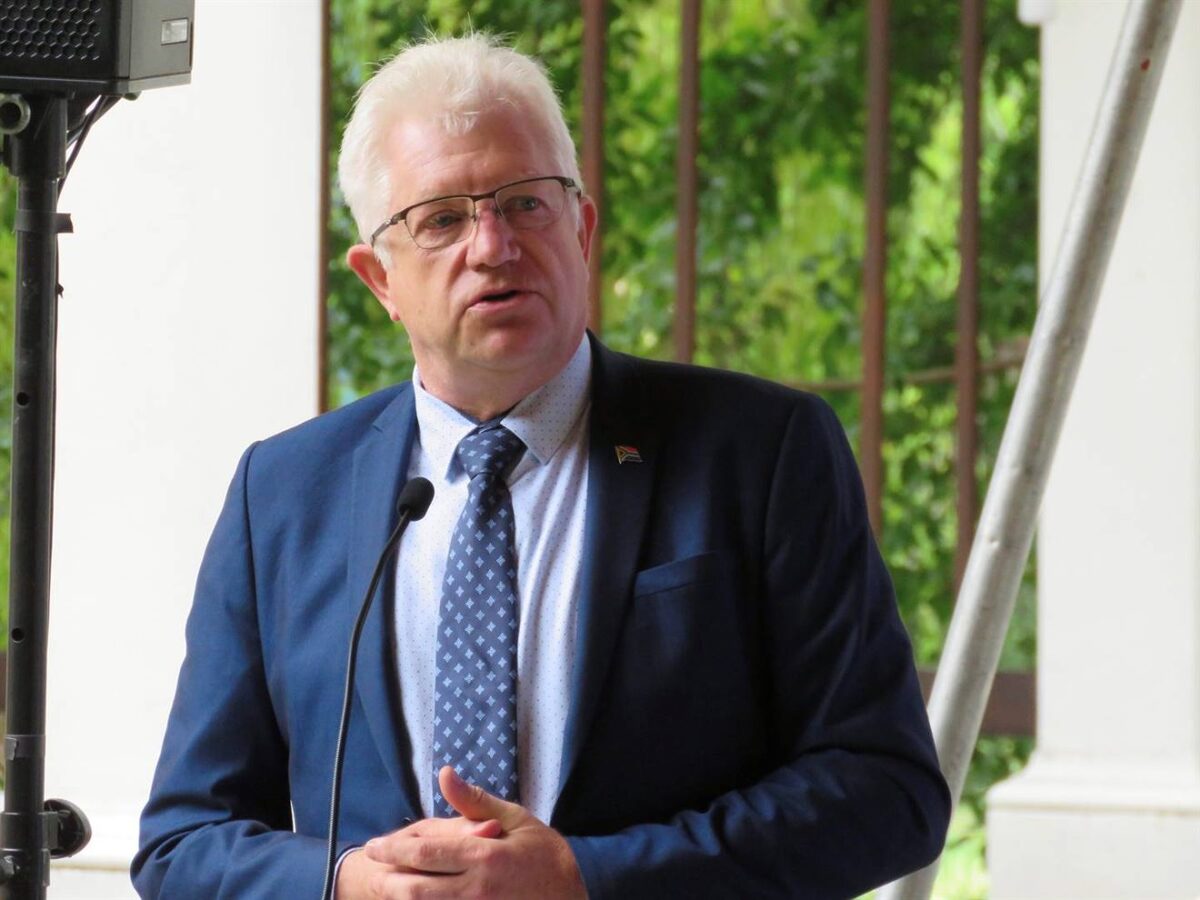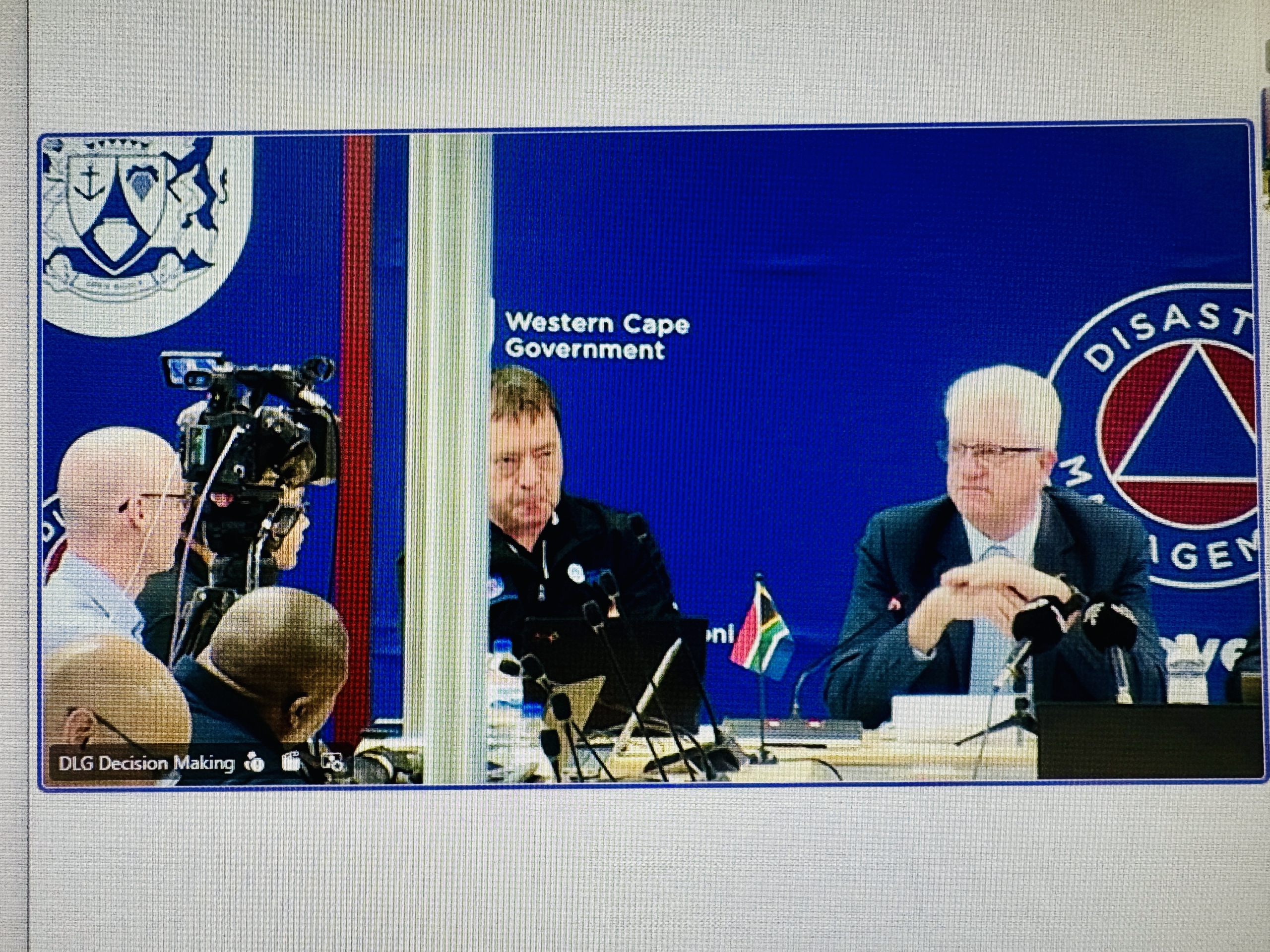
Western Cape Premier Alan Winde showcased the Western Cape Government’s El Niño–Southern Oscillation (ENSO) Summer Readiness Planning during a digital conference (Teams online public briefing) today, outlining the provincial government’s preparedness for the ENSO climate phenomenon as one of the most severe El Niño events in recorded history looms.
The digicon, scheduled from 11:00 to noon at the Provincial Disaster Management Centre, addressed readiness for the upcoming summer fire season, which has extended from four to eight months.
Winde was joined by Minister of Local Government, Environmental Affairs and Development Planning Anton Bredell, Head of Department Graham Paulse, Head of the Provincial Disaster Management Centre Dr Colin Deiner, and Chief Director: Environmental Sustainability Karen Shippey.
The South African Weather Service has warned that the El Niño pattern has developed and will strengthen rapidly, bringing a drier and warmer summer to most of the country.
The phenomenon is expected to persist until at least the end of the 2026-’27 season.
The event highlighted safety measures for the summer season the increasing unpredictability of disasters and climate change, how the El Niño oscillation will impact summer conditions, and more intensive heat waves.
A call to action
In the northern hemisphere this summer 13 000 people died due to excessive heat, according to Winde.
“Are we prepared for summer? That is the real question. Can we mitigate this risk and save lives and livelihoods? That is critical. We are preparing for and mitigating disasters. This is a call to action.
“Are we going to have the elderly at risk like in Europe, or can we mitigate this risk? A parent who is bedridden and cannot get out of bed for air ventilation, whether in an informal settlement or stuck at home on a massively hot day, we cannot lose citizens and elderly to heat. We are thinking of children on hot days, they are going to a river or dam; is there anyone looking after them? We do not want drownings.
“Are municipalities managing water restrictions according to dams and reservoirs? With more heat we use more water and electricity for air conditioning. It is tourist season, with many travellers visiting our areas. We must inform them it is an extra hot season and that we do not excessively use our water.”
Winde also urged residents to make sure your fire extinguisher and your fire hose is working.
The Southern Cape, Overberg, informal settlements and Cape Winelands are hot spot areas for fires said Head of the Provincial Disaster Management Centre Dr Colin Deiner.
Water security and fire preparedness
Bredell said the province was preparing for a hotter summer with a prolonged fire season.
“We struggle with water security, especially the volume of water in our dams and quality of water. Dam levels are at 80 percent but five percent less than last year. If next winter we have a dry winter, we can face another day zero. We spent this financial year R40.5 million allocated to municipalities and we’ve also allocated R25,2 million to groundwater resource programmes.
“We focus on a 15-year water plan. On fire, we allocated R16 million for the 2025/2026 fire season to municipalities and 112 fire trucks for municipalities. We have also looked at building our hazmat capacity and have looked at risks involving hazardous capacity in the past months for trucks transporting fuel and chemicals on the N1 and N2, with lots of resources for hazardous units if incidents occur.”
Paulse said: “We are finalising the plan and will come back to cabinet in September to have the cabinet approve the summer plan, layering water, heat and fire, determining which areas in the Western Cape are at high risk.”
Shippey reported that they are seeing an increase in droughts and their intensity, differing from previous historical events.
“We are seeing hotter days and fewer cold days. We must be smart about how we use water, especially with dam levels. Prolonged heat exposure can lead to dehydration or heat stroke, especially for young children, the elderly and pregnant women.”
City monitoring
The City has previously said it is monitoring conditions to assess whether low-level restrictions may be needed.
“We are not waiting for the next drought to start preparing. We are investing now in new water sources and better ways of managing our existing resources,” said Mayco member for water and sanitation Zahid Badroodien.
The City’s New Water Programme aims to deliver 300 million litres of additional water per day by 2036 through groundwater, reuse, desalination and nature-based solutions. The Table Mountain Group Aquifer, Cape Flats Aquifer, and Berg River-Voëlvlei Augmentation Scheme are already advancing.
The Greater Cape Town Water Fund has cleared invasive alien plants since 2019, potentially increasing available water by 30 million litres per day.
ALSO READ: Premier Winde to outline Western Cape’s summer readiness amid El Niño