
A growing coalition of non-governmental organisations and researchers is calling on the South African government to fund a proposed Maternal Support Grant (MSG) — a time-bound cash grant for pregnant women living in poverty — before a critical budget window closes this Friday, 26 June 2026.
The MSG Advocacy Coalition comprises 15 organisations, including Embrace, the Children’s Institute, Grow Great, the South African Medical Research Council (SAMRC), Heala (a coalition of groups advocating for equitable access to affordable nutritious food in South Africa) and the Institute for Economic Justice. Government departments are currently setting funding priorities for the next three years, with a first submission deadline falling this week.
A window of opportunity and a biological imperative
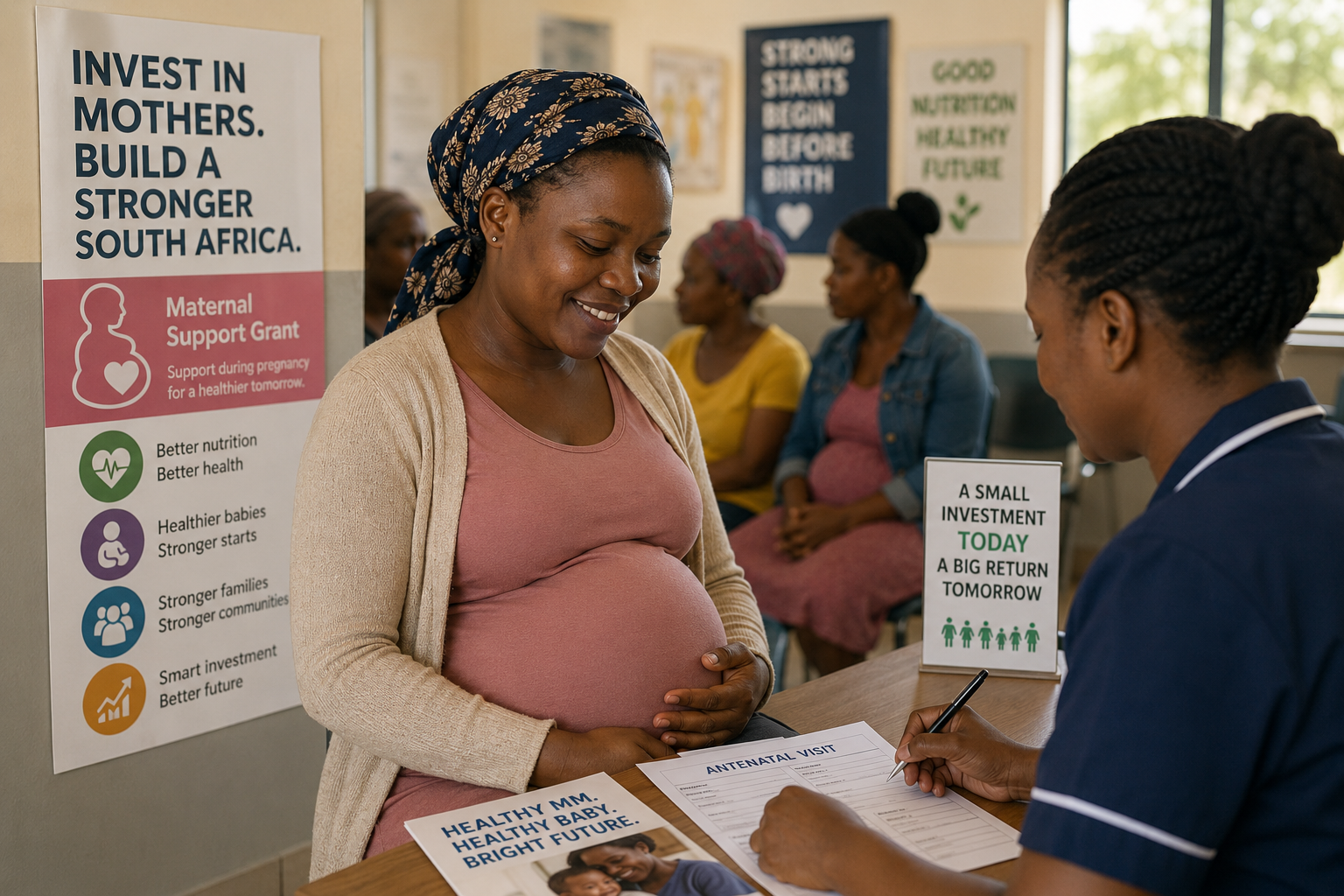
The proposed grant would provide income support to pregnant women from their first antenatal booking, delivered through the same infrastructure used for the Child Support Grant. It targets women who are unemployed, informally employed or excluded from Unemployment Insurance Fund maternity benefits and formal employment protections.
Approximately 13% of babies born in South Africa have low birth weight, a strong predictor of childhood stunting. The Department of Social Development has explored the MSG since 2012 and the government announced a mission to end stunting in February 2026.
Wanga Zembe, Chief Specialist Scientist at the SAMRC, said the evidence for income support during pregnancy is well established. “Systematic reviews show that when pregnant women receive income support they are more likely to eat better, attend antenatal clinic visits and give birth to healthier babies. This reduces low birth weight, improves early childhood development, maternal mental health and saves lives.
“If we are serious about ending stunting, we must start where it begins — during pregnancy.”
ALSO READ: Younger Grade 1 pupils more likely to repeat the year
Julie Mentor, Project Lead at Embrace, highlighted the specific protection gap the MSG is designed to fill. The grant, she stated, “addresses a specific maternity protection gap faced by women who are unemployed, informally employed or otherwise excluded from the Unemployment Insurance Fund maternity benefit and formal employment protections.” Many women face pregnancy without reliable income, stretching food, skipping meals or delaying care, she added.
The case for public investment
Proponents argue the grant’s financial returns justify the outlay. The estimated annual cost is R2 billion, yet potential public health savings could reach up to R13,8 billion per year, an estimated social return of approximately R30 for every R1 invested.
Liezel Engelbrecht, Nutrition Lead at the Hold My Hand Accelerator, framed the grant as a targeted health intervention rather than broad welfare spending. “The MSG’s primary purpose is not general income support but the protection of maternal and child health during a critical developmental window — pregnancy.”
She also emphasised the urgency of the current moment. “The window to shape the next three years of spending is now open. Securing funding for the MSG is an important step in strengthening South Africa’s social protection system and improving outcomes for mothers and children.”
ALSO READ: President commits to end child stunting as Western Cape battles highest prevalence rates
The coalition outlines four core arguments in favour of the grant: it targets a biologically sensitive period when nutrition and health have the greatest long-term impact; it is cost-effective given the projected savings; it is time-bound and fiscally manageable, focused on pregnancy and the immediate postnatal period; and it is operationally feasible, deliverable through existing health and social protection systems.
Political backing and the road ahead
President Cyril Ramaphosa has acknowledged the need for targeted support for pregnant women, including access to sufficient nutritious food, particularly protein, and the importance of building on existing systems such as the Child Support Grant.
The Department of Social Development hopes to finalise broader basic income support policy in 2027. The coalition argues that funding the MSG in the current budget cycle would represent a concrete step towards that goal and towards the government’s stated commitment to ending childhood stunting in South Africa.