

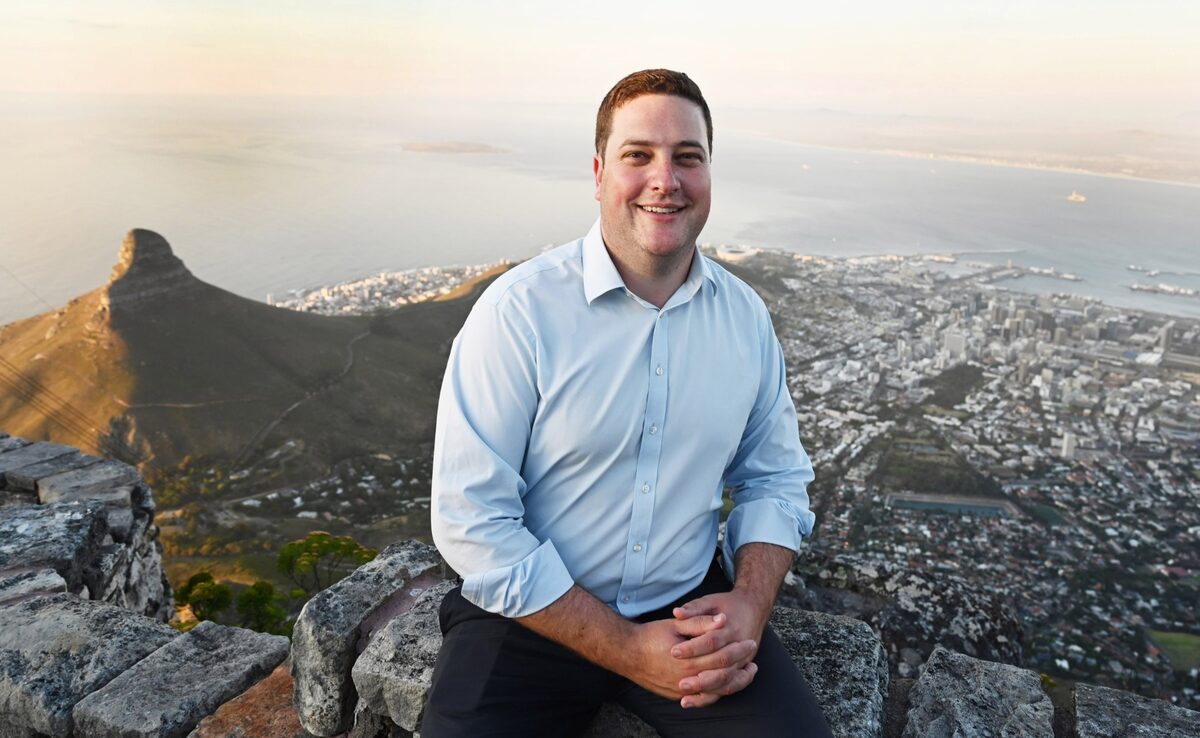
Cape Town’s planned R114 million N2 safety wall has become one of the most divisive issues of the election campaign.
Supporters are calling it a necessary safety intervention and critics argue it entrenches inequality along one of Cape Town’s busiest transport corridors. Mayor Geordin Hill-Lewis (DA) defended the project strictly as an anti-crime measure at a televised election debate on Sunday 18 October.
The debate, broadcast on eNCA’s We The Nation: Election Edition and presented by Jenna-Leigh Bilong, brought together mayoral candidates Hill-Lewis, Jerimia Thuynsma (ANC), Dr Corné Mulder (Freedom Front Plus) and Felon Christians (African Christian Democratic Party). Cheslin Daniels from the Patriotic Alliance (PA) arrived at the venue but withdrew shortly before the broadcast on instructions from the party’s national leadership.
ALSO READ: PA leader Gayton McKenzie bans local media from interviews
What the project involves
The City allocated R114.7 million in its adjustment budget for the N2 Edge safety project, which Hill-Lewis tabled before council on 29 January.
The project covers a 9 km stretch of the N2 near the airport. It includes a three-metre concrete barrier to replace a palisade fence that has been in place for more than 25 years and has fallen into disrepair.
Besides the barrier, the project includes safety barrier repairs and reinforcement, new pedestrian crossings, improved lighting and access control, safety barriers for recreational spaces, safer grazing practices and measures to reduce illegal dumping.
The City has also deployed more than 40 new metro police officers to the N2, backed by CCTV cameras, automatic number plate recognition and digital coordination for rapid response.
Mayco member for safety and security JP Smith has defended the project, saying motorists continue to face serious risks along the route.
The stretch of road has commonly been referred to as the “N2 Hell Run”.
ALSO READ: Mother’s traumatic smash-and-grab fuels N2 wall debate
Different perspectives
The eNCA debate, held in partnership with the Cape South African Jewish Board of Deputies (Cape SAJBD), focused on whether South Africa’s “best-managed city” is working for all its residents. The discussion covered economic inequality, housing backlogs and rising municipal costs, with the N2 wall one of the flashpoints.
Thuynsma accused the City of sustaining spatial apartheid and failing to equitably develop poor communities.
Hill-Lewis said the wall was necessary to protect motorists from criminals and rejected suggestions that it was an act of exclusion. He cited an eNCA poll published on the day of the broadcast showing 69.6% of Cape Town residents supported the wall, 19% opposed it and about 10% were still undecided.
“Your question said it’s controversial but it’s not,” he told Bilong.
Everyone who has driven on the N2, who feels unsafe on the N2, is immediately supportive of the idea.
Hill-Lewis said political parties and commentators who imputed different motives to the project were entitled to their views. “But that’s their issue, not our issue.”
When Bilong asked whether the wall was an admission that the City had failed to transform and develop the communities on the other side, Hill-Lewis said: “Not at all. The fact of the matter is that it is far too easy for pedestrians and people with malign intent to access a national highway. It cannot be that easy to access a national highway.”
He said it was not that easy anywhere else in the world or the country, and it had to be fixed.
ALSO READ: N2-muur het soveel meer voordele as net misdaadbekamping
Spending priorities questioned
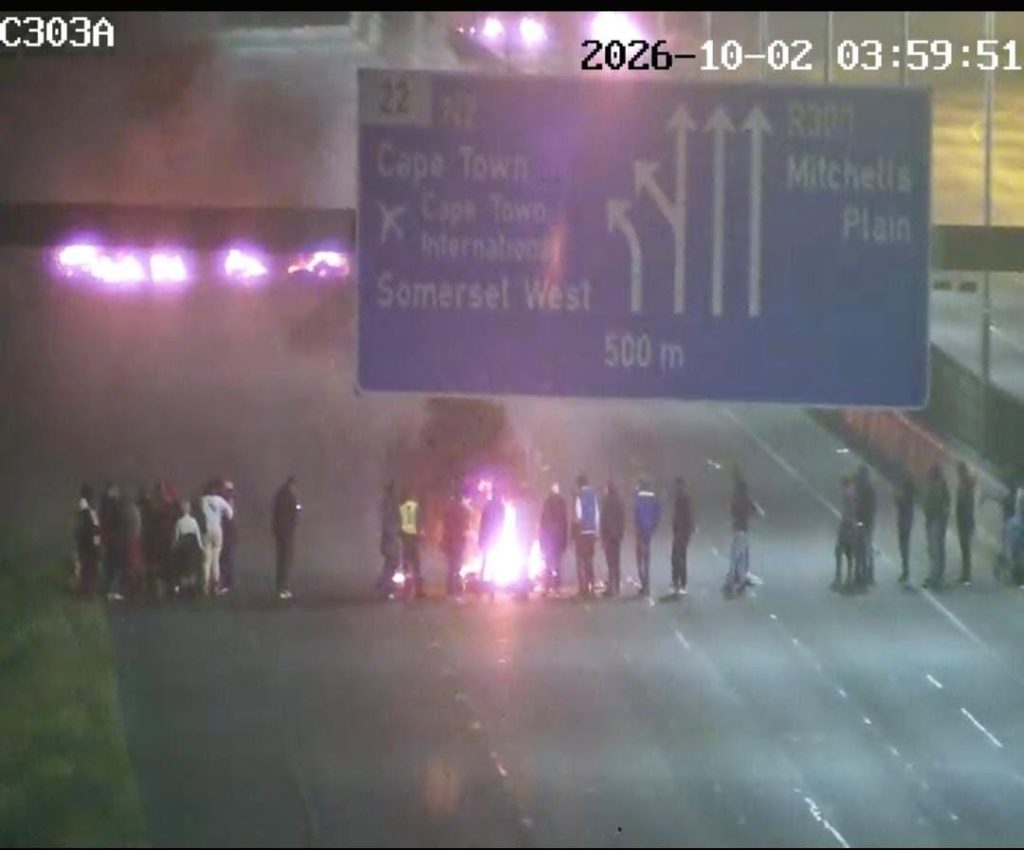
There has been opposition to the wall since the project was announced, with residents, community organisations and political parties questioning whether R114 million is the best use of public money.
Co-founder Axolile Notywala of The Movement for Collective Action and Racial Equity, known as Movement for CARE, led a protest on the Sea Point Promenade on 24 September, where residents from Khayelitsha, Manenberg and Langa said the money should rather be spent on communities battling sewage, potholes, crime and poor services.
“We want that money to be invested in us. That is our money, it’s not their money,” Notywala said.
Movement for CARE coordinator Nkosikhona Swartbooi said that the organisation was not anti-safety and recognised that crime and insecurity along the N2 were real. He called on the City to show clear evidence that a wall would significantly reduce the specific forms of violence it was dealing with.
The GOOD Party described it as a project that reflects apartheid-era spatial planning that would do little to address the root causes of crime.
Build One South Africa (BOSA) leader Mmusi Maimane said the City of Cape Town should rather redirect the money towards interventions that will make communities safer.
In an EWN report Langa resident Sisa Nobanda said he opposed the wall because it was mainly a form of segregation. “Good leadership doesn’t come with walls, it comes with solutions for the communities,” he said.
Eunice Snyders from Manenberg said the money could have gone to playparks for children. “Our children in Manenberg have nothing to do, and it seems like the City is covering poverty,” she said. “They don’t want to see poor people, the way things are looking in our community.”
ALSO READ: City faces backlash over R114m N2 security wall project
.






You must be logged in to post a comment.