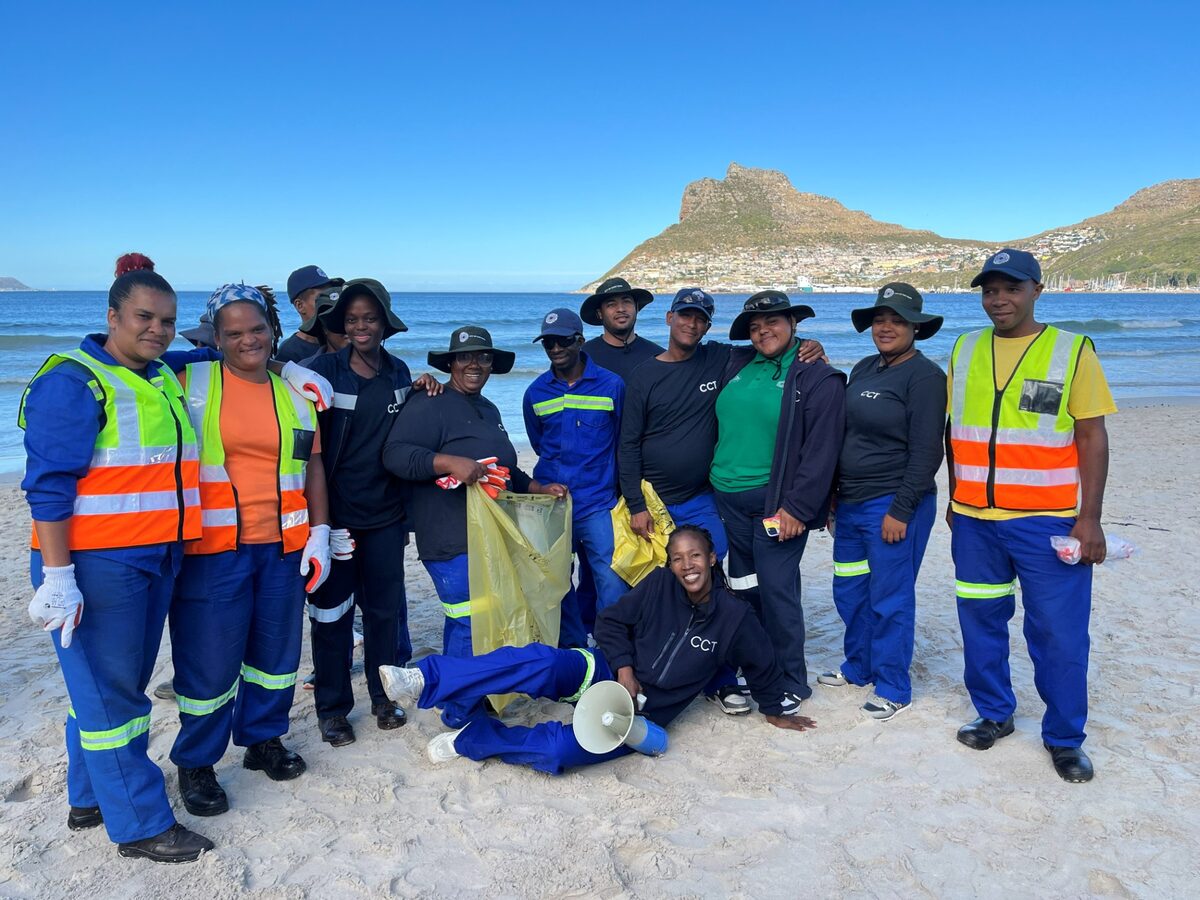
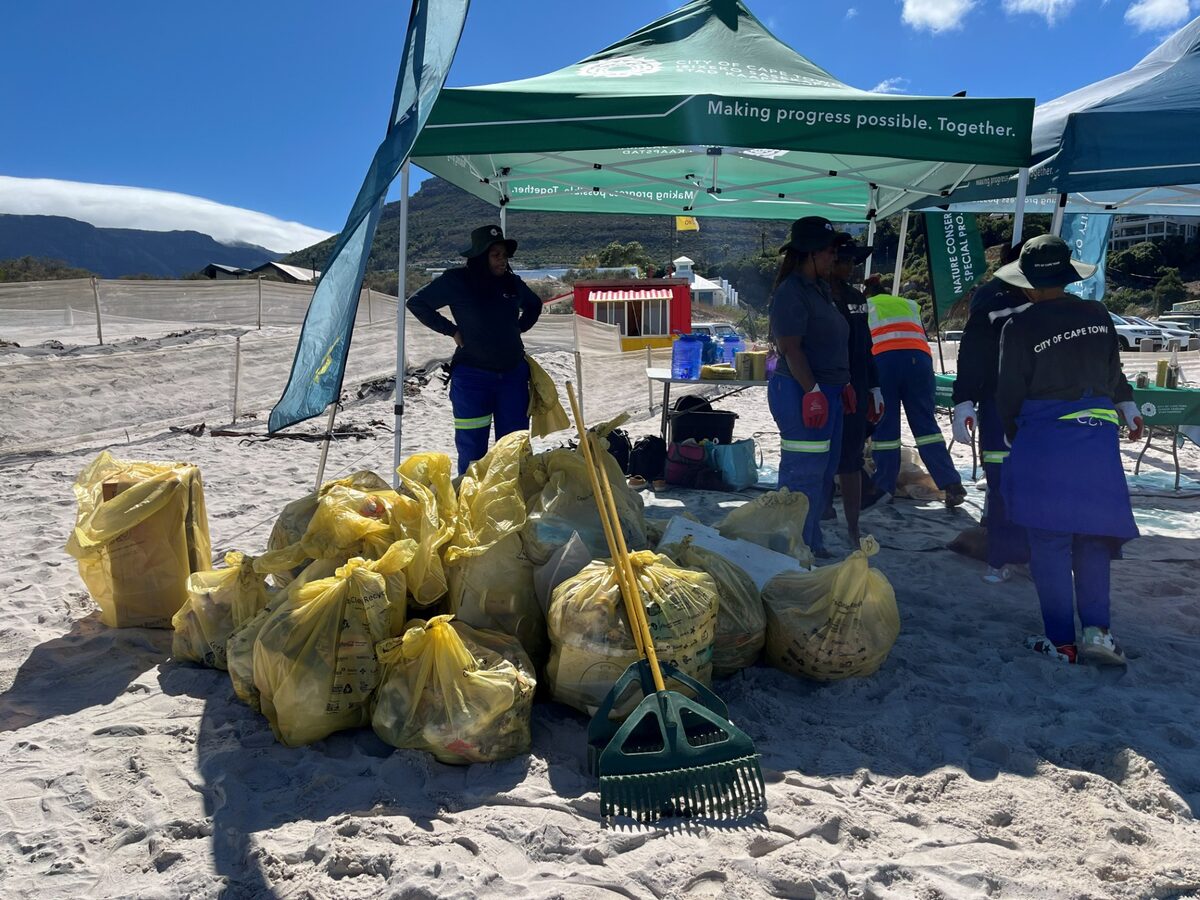
Convenience food containers and disposable coffee cups dominated waste collected during a Carbon Smart beach clean-up in Hout Bay. This event took place on Friday 27 March, the City of Cape Town said.
The City organised the clean-up which collected about 20 bags of waste in total. This initiative was in recognition of Global Recycling Day. Partners included Plastics SA and Shark Spotters, along with several City departments.
The clean-up formed part of the City’s biodiversity management branch programme. Officials focused on reducing marine pollution while raising environmental awareness.
Waste sorted and analysed
City teams collected and sorted the waste into recyclable and non-recyclable streams. They used separation bags provided by the Solid Waste Department. Officials also targeted microplastics in the sand. The sorting process highlighted the importance of separating waste at source. Participants gained a better understanding of what can be recycled.
Environmental education
Shark Spotters led an educational session on microplastics. The session explained how plastics affect marine life and ocean ecosystems. It also highlighted the link between pollution and human wellbeing.
Alderman Eddie Andrews, Deputy Mayor and Mayco member for Spatial Planning and Environment, thanked participants who contributed to the Hout Bay Carbon Smart beach clean-up. He added that pollution continues to pose a serious threat to coastal environments.
Common waste items
Convenience food containers and disposable coffee cups were among the most common items collected, however very few plastic bottles were found.
‘This is likely because these items are among the most commonly recycled and are often collected by informal waste pickers,’ Andrews said.
He also noted that the beach is cleaned twice daily by the Hout Bay Solid Waste depot.
Carbon Smart programme
The Carbon Smart Beach Clean-Up forms part of the City’s Carbon Smart Skills Development Programme. The programme focuses on sustainable practices and community empowerment. It also falls under the Expanded Public Works Programme. The initiative aims to create jobs and provide training for vulnerable communities.
Plastic impact warning
Andrews warned that plastic pollution builds up in marine environments.
“Small items like wrappers break down over time and enter the food chain,” he said. They are eaten by marine life and can eventually end up on our plates. The message is simple it is up to each and every one of us to make a difference. Even the smallest piece of litter matters.”
Read also: Muizenberg volunteers tackle plastic pollution in beach clean-up