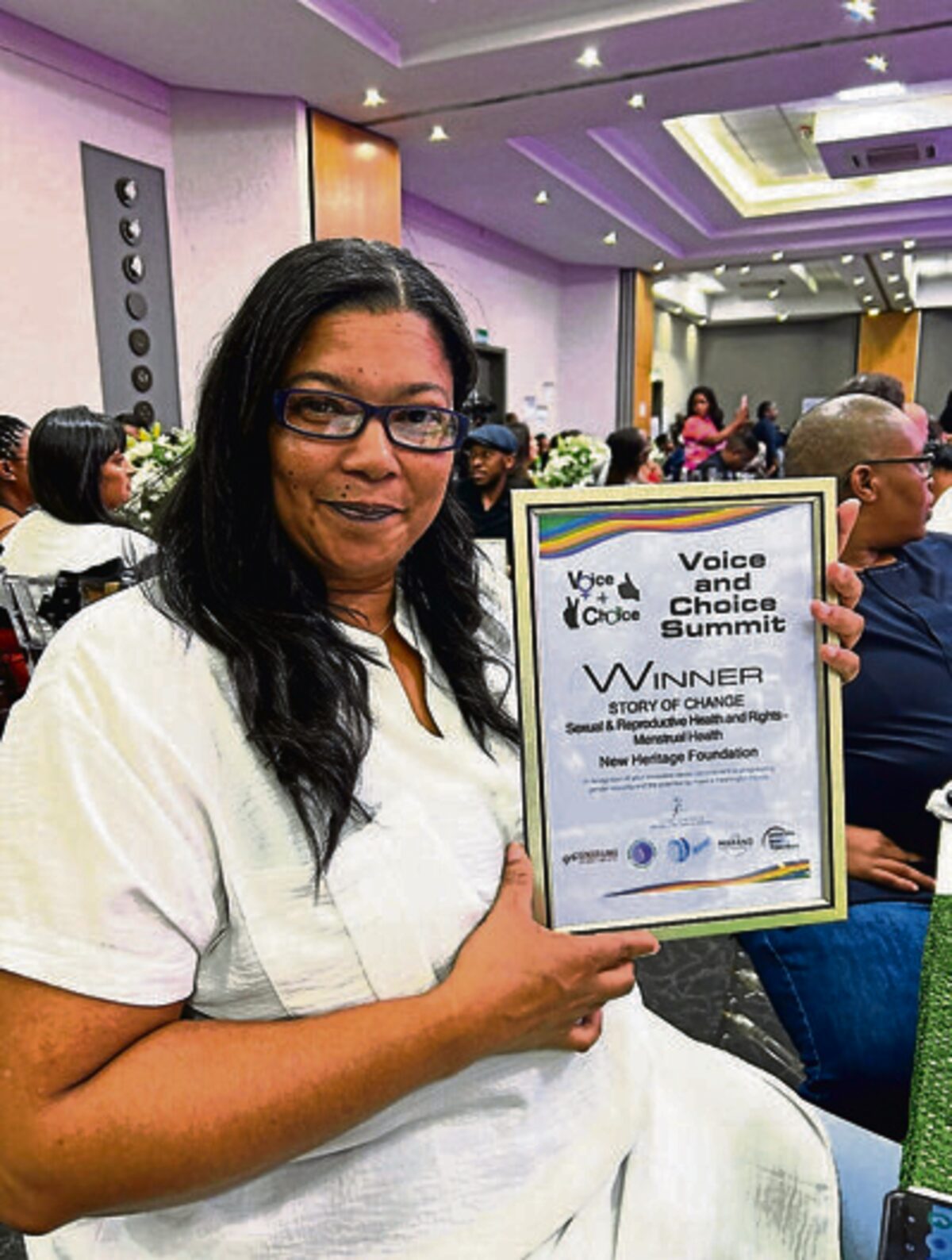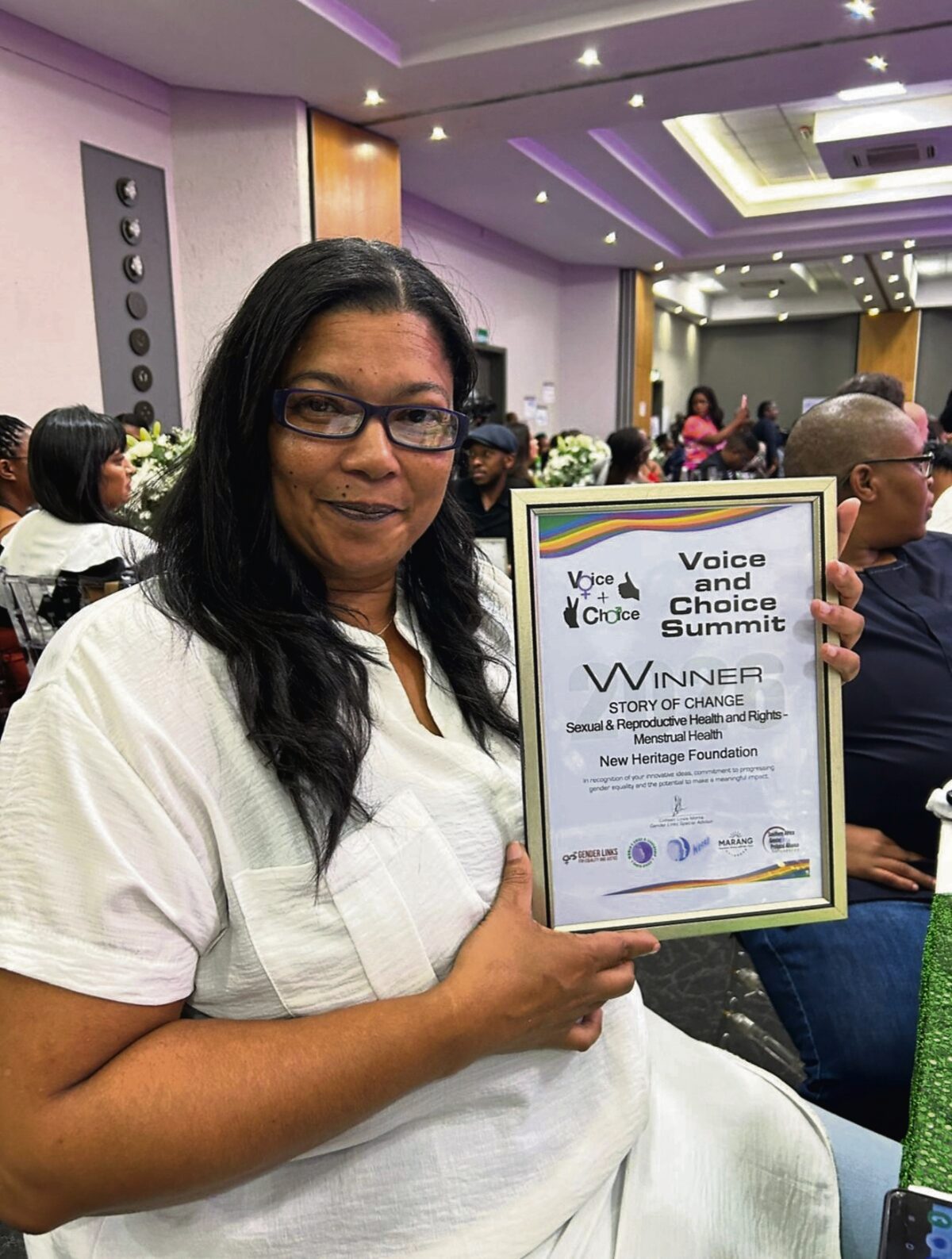
A Cape Town-based non-profit organisation (NPO), New Heritage Foundation (NHF), is making significant strides in advancing gender equality and youth empowerment after a scooping an award at the Voice and Choice Summit in Johannesburg on Tuesday 17 March.
The summit brought together over 200 activists, community leaders, entrepreneurs and media from across Africa to learn, connect and share experiences in advancing gender equality, diversity and inclusion.
The gathering concluded with the Voice and Choice Awards, recognising outstanding leadership, innovation and impact advancing gender justice across Southern Africa.
As a founder of NHF, a women-led NPO, Chantelle Goliath helps to provide sanitary pads and workshops for young girls in disadvantaged communities who lack access to these products and knowledge of how to cope with menstruation.
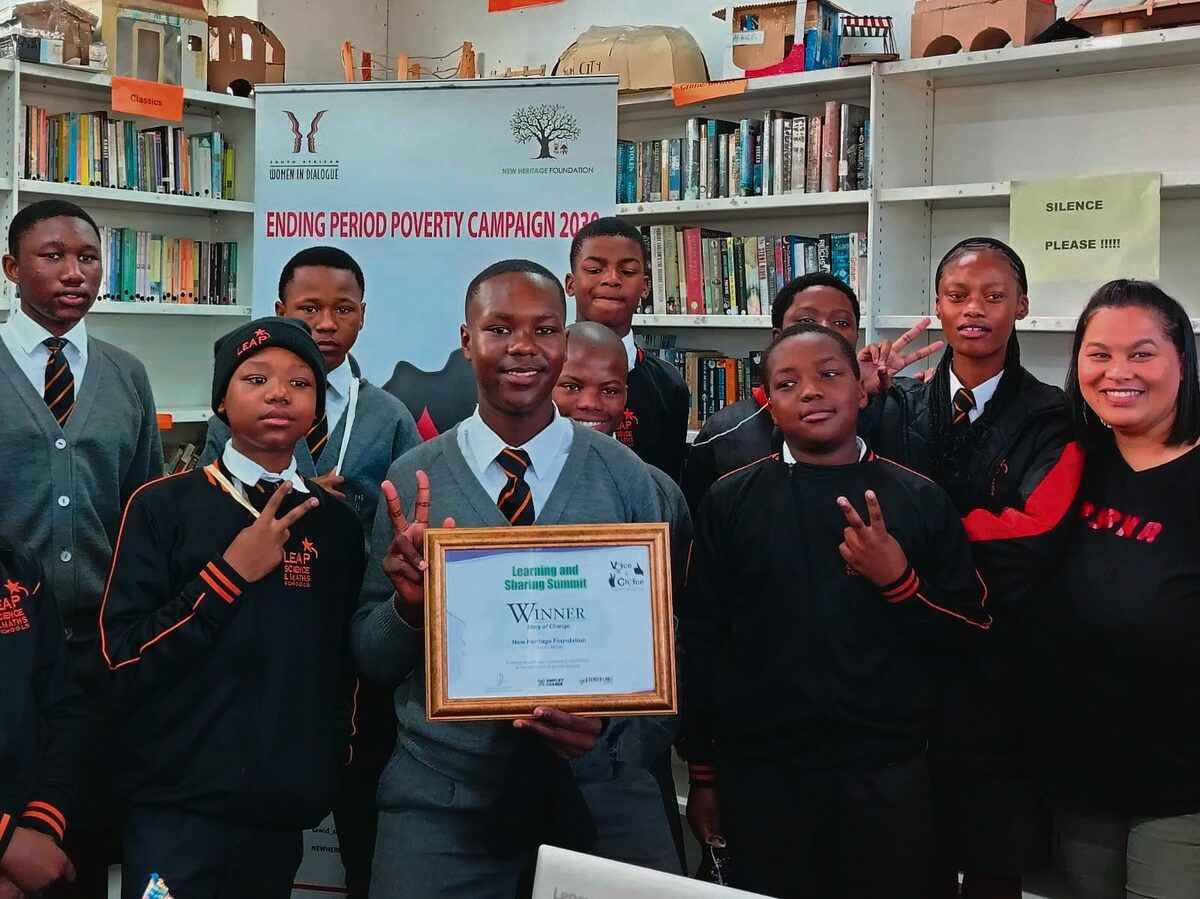
NHF is dedicated to ending period poverty. They focus on period impact initiatives, aiming to ensure no young girl or woman is left behind due to menstruation. The NPO won the Sexual Reproductive Health “Story of Change” Award for its sexual reproductive health programmes in schools.
“This is the second year we win this category award,” said Goliath.
The Grassy Park woman aims to “end period poverty in her community” and provides young girls with easier access to sanitary pads. She also educates the youth on sexual health, (“Mission to restore dignity”, People’s Post, Tuesday 17 March).
Since 2020, the NHF has partnered with Gender Links (GL), a Johannesburg-based organisation focused on promoting gender justice and women’s rights across Southern Africa. Through this partnership, the foundation has received funding, training, and development support that has shaped its growth over the past six years.
“We receive our grants from Gender Links to deliver our programmes in schools. With the Voice and Choice Summit every year, we are encouraged to enter categories in which we feel strong enough to pitch our work,” she said.
Much of this support has been channelled into programmes delivered in schools, where the organisation addresses critical gaps in sexual and reproductive health education. “Over the past six years, every part of our growth — from capacity building and grant systems to networking, collaboration, and movement building — has been shaped through the learning and development we’ve received from Gender Links,” she said.
For Goliath, their mission as an organisation is “not just about sanitary pads.”
“This is about dignity, education, and agency. We work in spaces where conversations around sexual and reproductive health are still silenced — treated as ‘home issues’ or ‘girls’ problems’. In reality, this is a societal issue. A humanity issue,” she said.
The problem stems from a lack of education through the generations.
“Many young people are navigating puberty, relationships, and health without guidance. Parents themselves were never taught. The result? High teenage pregnancy rates. Rising HIV and STI infections among youth and alarming school dropout rates among girls,” she explained.
However, through storytelling, dialogue, and education, NHF wishes to “create safe spaces where young people can ask questions, learn, and make informed decisions about their bodies and their futures.”
Last year, through the Gender Links fund,150 girls were reached and empowered and 100 boys were educated and engaged, Goliath added.
“This year, we are expanding. Another group of 150 girls will be supported and another 100 boys will be equipped with knowledge and leadership tools,” she said.
NHF’s award cements their stance as activists and acts as “validation that this work matters.”
“People are listening. That change is happening. This year, we are also strengthening our impact through collaboration. The University of Cape Town (students) will support us with social media and storytelling and we will have additional administrative support to improve reporting, data, and impact tracking. The truth is — many still don’t fully see the depth of this work.
“This award helps change that. We are not just running programmes. We are building a movement, a movement that challenges stigma. A movement that educates,” she said.