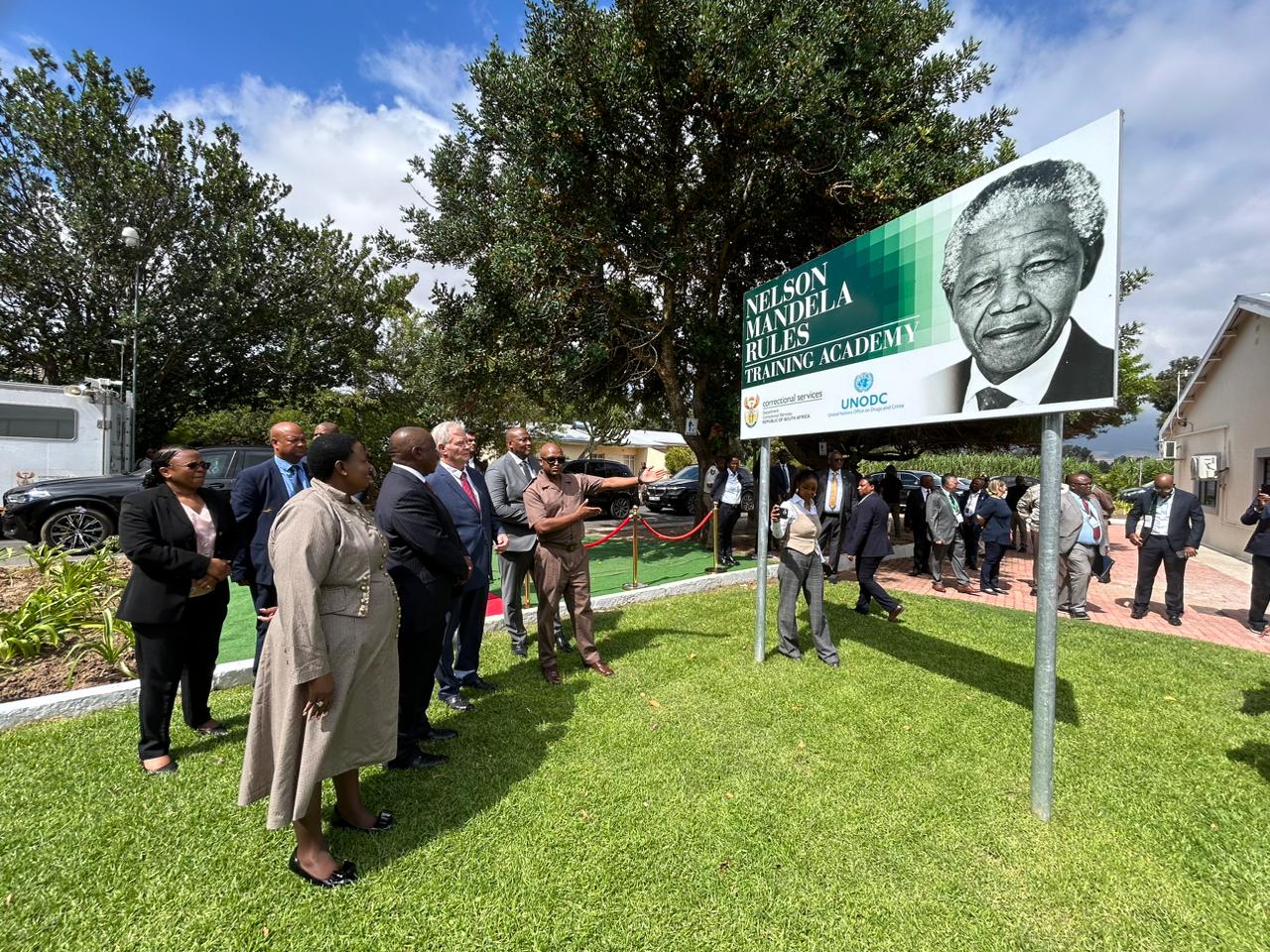
After 750 days of various stages of lockdown, President Cyril Ramaphosa has finally announced the end of the Covid-19 state of disaster.
Ramaphosa said on Monday (April 4) several measures of the lockdown’s adjusted level 1 regulations will remain in place for the next 30 days as part of a transitional period after the end of the disaster.
He said after 750 days, the requirement for a National State of Disaster to be declared could no longer be met, and the powers granted to the government under disaster legislation “should be maintained only as long as they are absolutely necessary.”
Ramaphosa said South Africa had entered a new phase of the pandemic, illustrated by the number of fatalities being recorded. During the third wave in July 2021, the highest average daily number of coronavirus-related deaths was 420. That dropped to 240 during the fourth wave in February 2022 and to 12 this week.
The President said due to the decline in statistics and the importance of recovering the economy, the days of austerity measures were numbered.
He declared a National State of Disaster on 15 March 2020, after 61 cases had been recorded across the country, and banned travel from high-risk countries.
Days later he imposed a strict lockdown, which closed non-essential shops and businesses, and confined people to their homes unless they were seeking medical services, buying food or collecting a grant. Soldiers were deployed and the sale of alcohol and tobacco products was banned.
Cooperative Governance and Traditional Affairs Minister Nkosazana Dlamini Zuma extended the National State of Disaster on a month-by-month basis after the initial three-month period expired.
Professor Salim Abdool Karim, who chaired the ministerial advisory committee (MAC) on Covid-19, has said the National State of Disaster allowed the country to implement restrictions, such as restricting gatherings and closing schools, in the early days of the pandemic, to prevent the health-care system from being overwhelmed.
The National State of Disaster also led to regulations now regarded nonsensical, such as a ban on the sale of open-toed shoes and cooked chicken. As long ago as December 2020, the MAC sent an advisory to the health minister on an exit strategy from the National State of Disaster.
On Monday, Ramaphosa defended the National State of Disaster, saying “such a response, no doubt, was necessary” while lives were at risk.
He said it “enabled and empowered government to take the measures that prevented many more people from becoming severely ill and saved countless lives.
A summary of the new conditions and restrictive measures that fall away:
. Masks must still be worn inside, but masks outside are not mandatory.. Rules in terms of the capacity of a venue remain in place for social events. This means half (50%) of the venue’s capacity if visitors are vaccinated or can deliver a negative Covid test, not older than 72 hours. In the case where a vaccination policy does not apply, a restriction of 1 000 visitors applies indoors and 2 000 outside.. Foreign visitors must be able to show their vaccination certificate or a negative Covid test not older than 72 hours, if they want to enter the country.. The R350 grant for the relief of social distress is still available.. The permit regarding the validity of a learner’s licence, driver’s licence card, licence plate, professional driving permit and registration of a motor vehicle, remains in place.
All other measures have already expired.
* South Africa recorded 685 new Covid-19 cases on Monday and two new deaths, bringing the official death toll to 100 052. Excess death figures published by the Medical Research Council suggest more than 300 000 people in the country could have died due to coronavirus. Ramaphosa warned people to remain vigilant, and encouraged people to be vaccinated.