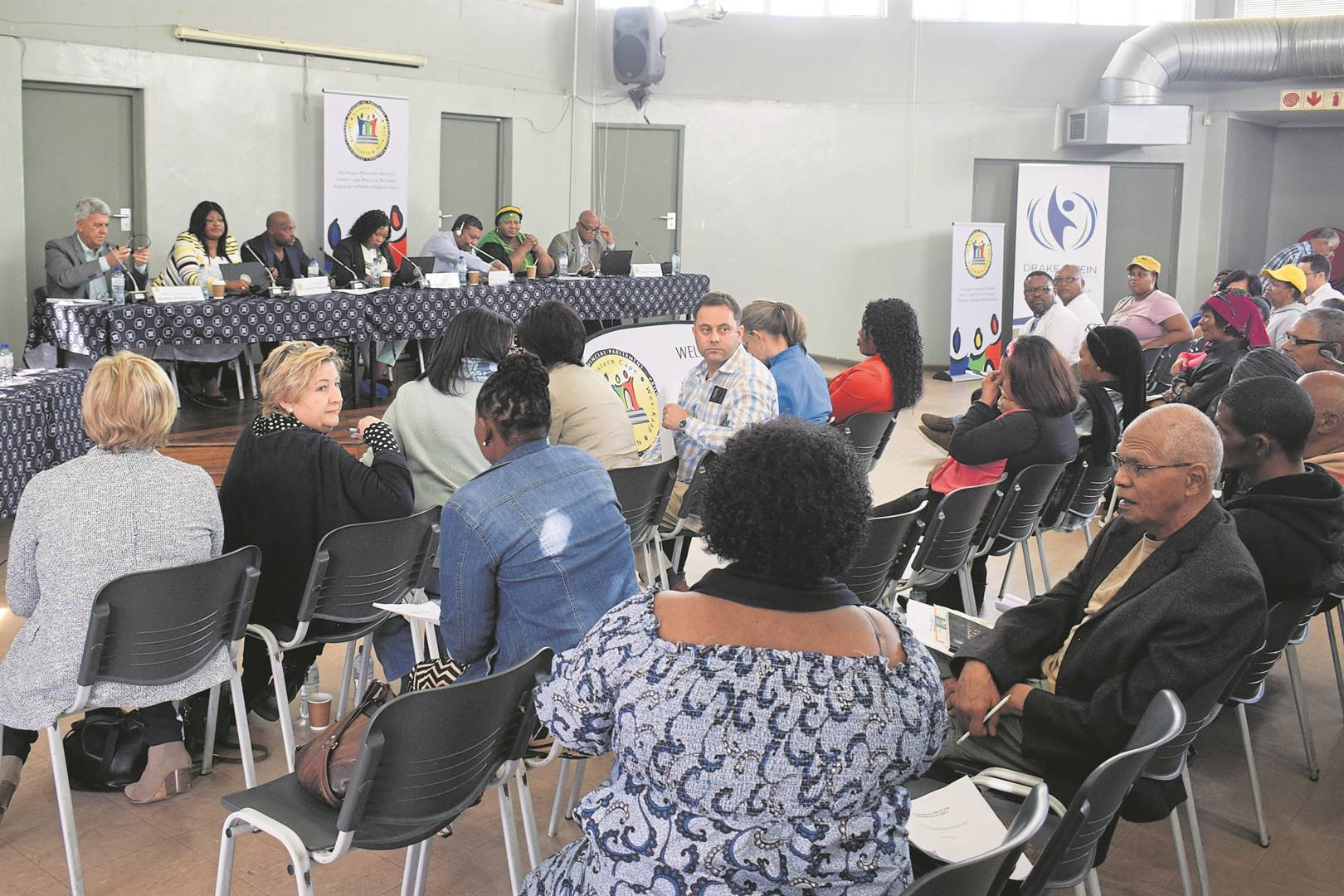
There were mixed reactions on the workability and practicality of the newly passed and controversial National Health Insurance (NHI) Bill when residents of Paarl and surrounding areas had an opportunity to engage with the national health department and the Western Cape provincial legislature during a public hearing held in Mbekweni on Friday (29 September).
The bill aims to establish an NHI fund that will be fed through prepayments aimed at creating sustainable and affordable universal access to quality health care in both the private and public sector.
The bill was passed by the National Assembly in June and is currently with the National Council of Provinces (NCOP) for public participation.
Though parliament have not stated so, the NHI fund will likely be funded by taxpayers through a payroll system.
The Western Cape Provincial Legislature has since held several public engagements across the province.
During its public hearing at the Thusong Centre in Mbekweni on Friday, those attending said they travelled as far as Worcester, De Doorns and Stellenbosch either to express their support or concerns with the bill.
Benny Macholo, managing director of Dithaba Consultants and Actuaries, said the NHI fund (in principle) is a good model for addressing the imbalances in the country’s health-care system, but that it has some flaws within the context of South Africa.
“In countries with a well-established health-care fund similar to that of the NHI there is usually a very low unemployment rate. In South Africa we’re faced with an unemployment rate of 32% yet we’re saying that the NHI will receive its funding through tax.
“As much as I understand the necessity of the fund, there are flaws that need to be acknowledged. People’s salaries need to be considered. Even you as members of Parliament are taxed for about 45% of your salary. That is a lot of money, so we need to take a step back with this bill.”
Macholo further challenged the provisions made in the bill that the NHI’s board and its chairperson shall be appointed by the minister of health.
He said the board needs to be appointed by cabinet after which it shall appoint its own chairperson “to ensure transparency, accountability and fairness”.
Elsie Klaasens, who drove all the way from Worcester to attend the hearing, expressed her concern on how much will eventually be deduction to contribute to the fund.
“What about our farm workers and pensioners who earn just about enough to put bread on the table? Pensioners receive about R2 000 a month. The unemployed receive R350 from government through the social relief grant – if you qualify for it. Will our people be able to make this monthly contribution with the few rand they earn?”
Others attending used the opportunity to express this concerns over the existing issues within the provinces’ public-health facilities and proposed that the provincial government rather shift its focus and resources towards these existing issues.
Gerrit Pretorius, a member of the provincial legislature for the DA in the province, chaired the hearing and told Paarl Post that more engagements are likely to take place as people do not fully understand what the fund entails.
“Not many people, even after these engagements, really know and appreciate what the bill is about. A lot more will have to be done for people to fully understand what the NHI is all about and how it will be implemented.
“I think people are desperate, and rightfully so, about healthcare in general. I do, however, still believe that the Western Cape has the best healthcare facilities. There are some issues but we’re working on that until the NHI is implemented.”
Pretorius says though the bill will still go through several processes before its approval and implementation, he believes that “the fund will open up the medical field for as many people as possible on an equal basis”.