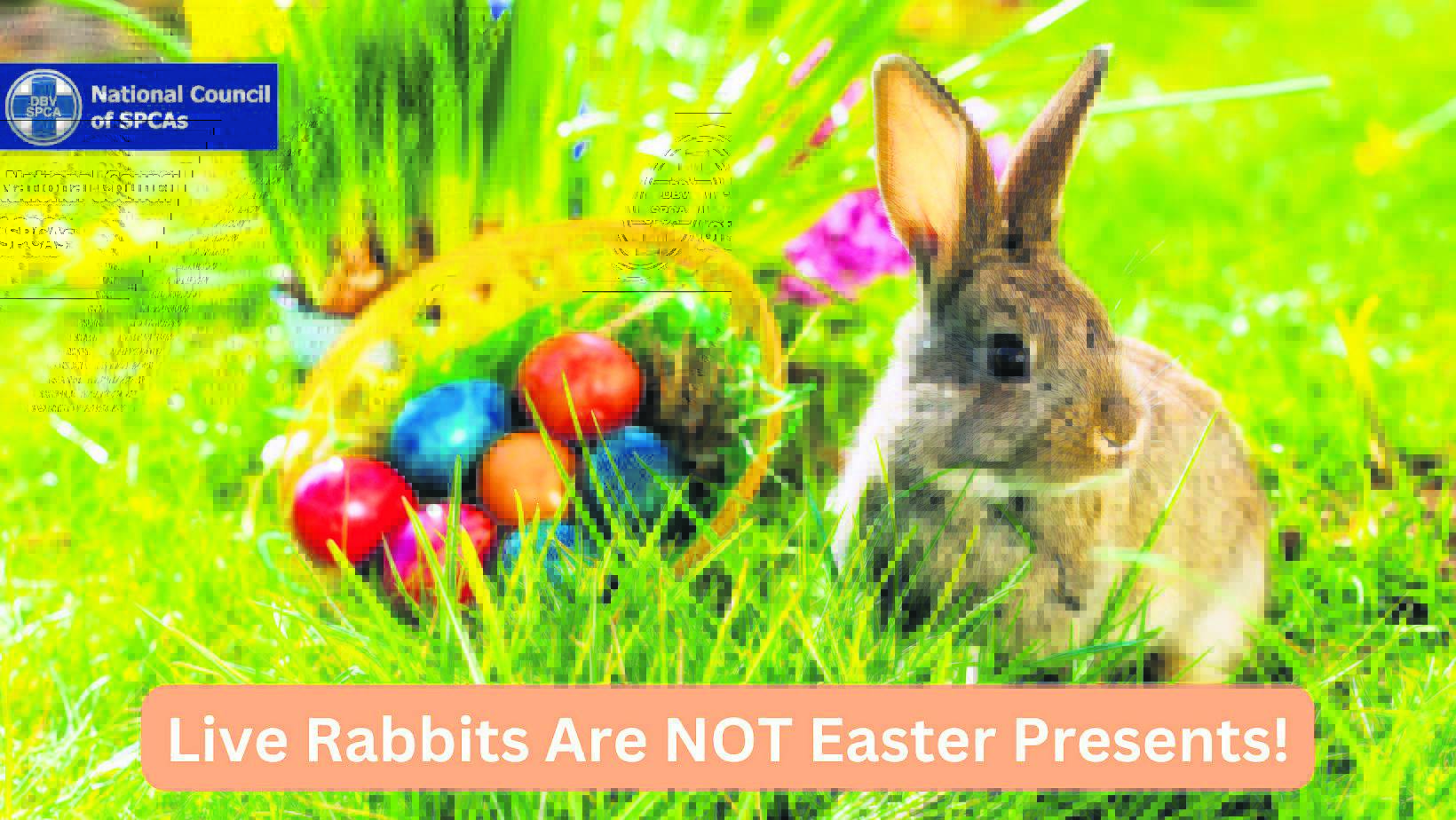
With Easter celebrated this weekend, the Wellington SPCA would like to extend a friendly yet stern reminder to residents not to give a live rabbit as an Easter gift.
According to the SPCA 95% of rabbits gifted during Easter don’t make it to their first birthday.
The NSPCA also shared a reminder on its Facebook page that rabbits are not toys.
“A week after Easter the sweets will be forgotten,” the post said. “Sadly, so will the rabbit.
“Rabbits are not children’s toys, nor are they pets for people who do not have the knowledge and experience to look after them. They are a 10-year commitment that comes with a lot of requirements and responsibility.”
To further create awareness the Wellington SPCA also shared on its Facebook page that rabbits are the third most popular pets after dogs and cats and also the third most abandoned.
“Stuffed toys may be a far more ethical option or the chocolate variety of bunnies.”
According to Elizabeth Down, Office Manager at the Wellington SPCA, the shelter already had two rabbits and another four were surrendered to them late last week, “as they keep multiplying and the family can no longer care for them”.
Down also explains the fragile digestive system of a rabbit could result in many expensive trips to the vet.
“They also have a knack for destruction, and your home and garden will bear the consequences of a rabbit that is bored or frustrated,” she said.
Down shared a few tips to remember when considering getting a rabbit.
Remember:. Rabbits are not “low-maintenance” pets or easy.. Most children lose interest in a live bunny after only a few weeks.. Rabbits need regular veterinary care by a vet with additional training in exotics. . Rabbits have an average lifespan of 8-12 years.. Rabbits are more expensive to own than cats.. Unsterilised rabbits have 6 to 8 babies every 28 days, unsterilised rabbits are territorial and aggressive.. Rabbits are animals of prey; they don’t really like to be held.. Rabbits really should be free roaming indoors and outdoors, and are not confined to a hutch or a cage.. Rabbits are cute and cuddly, but they are a predatory species and do not enjoy being picked up and held. Bites and scratches are therefore highly likely.
The Wellington SPCA also shared tips on Easter pet hazards by Dr Karen Becker:. Chocolate goodies
Dogs are much more often the victims of chocolate poisoning than cats because dogs like sweet-tasting things, and they’re indiscriminate eaters. Even small amounts of chocolate can cause adverse reactions in pets, and the darker the chocolate the more theobromine it contains.. Easter candy, baked goods and other products contain xylitol. Sadly, xylitol poisoning in dogs is reaching epidemic proportions. Just a few years ago, xylitol could be found in less than a hundred products, but today it can be found in a wide range of products. Xylitol is a sweetener that is highly toxic to dogs. . Easter basket grass and other fillers.
The plastic grass used in Easter baskets can look tasty to pets, but it can’t be absorbed in their bodies. This means it can become lodged at any point along the gastrointestinal (GI) tract and create serious problems.. Easter lilies
A variety of lilies can potentially be toxic/deadly to pets, especially cats, but dogs too. Non-toxic varieties of lilies include the Calla, Peace and Peruvian. If a kitty swallows even a tiny amount of any portion of these plants, including the pollen, kidney failure can result.. Easter dinner
Most types of traditional holiday feasts for humans are entirely too fatty and otherwise problematic for dogs and cats. Easter dinners are no exception, especially when they include things like honey-glazed ham, scalloped potatoes, macaroni and cheese, bread, buns and desserts, and ingredients include onions, garlic, leeks and chives, grapes, raisins, sultanas and currants, and macadamia nuts. Cooked bones are also a no-no, along with alcohol.. Easter gardening supplies
If you plan any yard work be sure to avoid exposing your pet to chemical fertilisers, herbicides and pesticides. If you know or suspect your pet has eaten a potentially toxic substance, immediately contact your veterinarian.