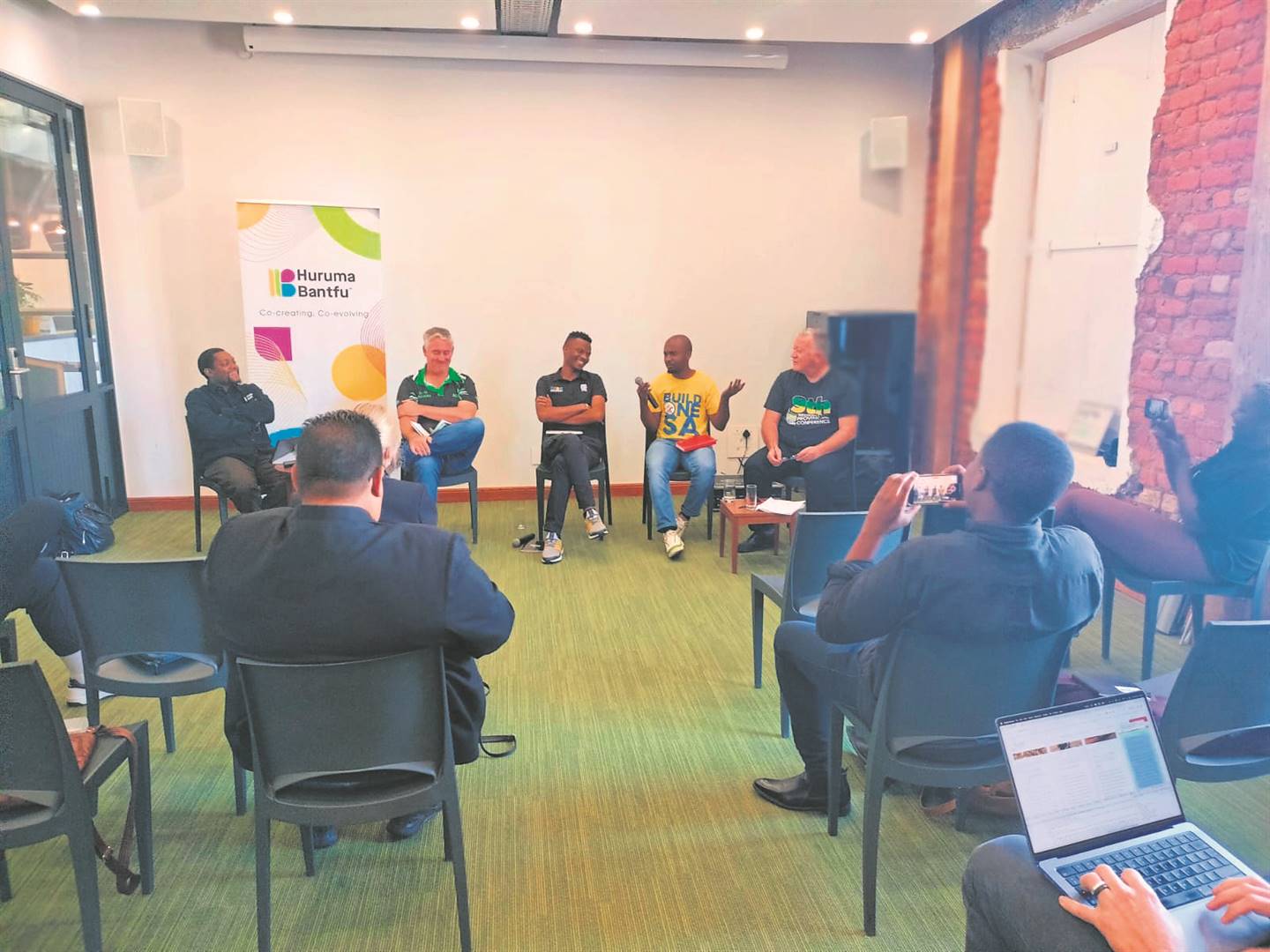
Huruma Bantfu, a private company that focuses on collaborative solution building, held an entrepreneurial debate in Paarl on 8 February, when political parties and local entrepreneurs discussed entrepreneurial strategies.
This debate, in light of the national election, was an important platform as business owners could scrutinise each of the political parties’ manifesto’s, and give them a chance to explain how they will promote entrepreneurship post-election on a national scale should they be voted into Parliament.
Sandile Tshabalala, co-founder of Huruma Bantfu was the presenter who led the conversation among the four political parties present, namely Action Society, Rise Mzanzi, the African National Congress (ANC) and Build One SA.
According to Tshabalala all political parties were invited, but those who could not attend, cited the South African National Address (Sona) as one of the reasons as it was held on the same day.
Some of the promises made in manifesto’s of the four political parties include:
- Planning to create two million jobs through establishing economic zones, according to Build One SA’s representative, Kwandile Sikhosana.
- Supporting a mixed economy where state-owned enterprises (SOEs) and private businesses will work together, according to Cameron Dugmore of the ANC.
- Action SA’s Andrew Clayton explained that the party will amend certain stipulations in the labour regulations act, particularly pertaining to small and medium enterprises’ (SMMEs) funding opportunities. Clayton added that the party will also focus on “reversing” brain-drain by welcoming foreign business owners into the country through enticing them with tax exemption. This, however, was not well received by the ANC who argued how welcoming billionaires and enriching them further through tax exemption will “sustain the country”. This was a question Action SA struggled to answer. Another point of contention for the ANC was the fact that Action SA would welcome “rich immigrants”, but would be picky about who, referring to Zimbabwean or Pakistani expats for example. Action SA’s rebuttal was that it would welcome all “legal” foreign business owners. “We are not xenophobic; you can come here, but come here legally,” Clayton said. “We [Action SA] want skilled people whether they are rich, poor, black or white.”
During the latter half of the discussion, the four political parties could debate each other’s manifesto’s which resulted in an argument between Build One SA, Action SA and the ANC.
Sikhosana accused the ANC of “just practising good personal relations” by attending events such as this, rather than “fixing the [country’s] problems”.
Action SA also took to the floor accusing the ANC, saying South Africa’s infrastructure, specifically referring to Eskom and Transnet, is falling apart and, in light of this, entrepreneurs cannot thrive.
Dugmore retaliated by saying the party is “slowly fixing the problems as more railway lines are being restored, specifically between Cape Town and Stellenbosch” and “recovery periods between disasters are shorter and shorter.
“[The ANC] celebrates young black people leaving [the country] that want to grow. [The ANC] does not flee from brain drain,” Dugmore also said.
Questions arising during the entrepreneurial debate mainly came from the various political parties’ representatives than the entrepreneurs themselves, who opted, to listen instead.