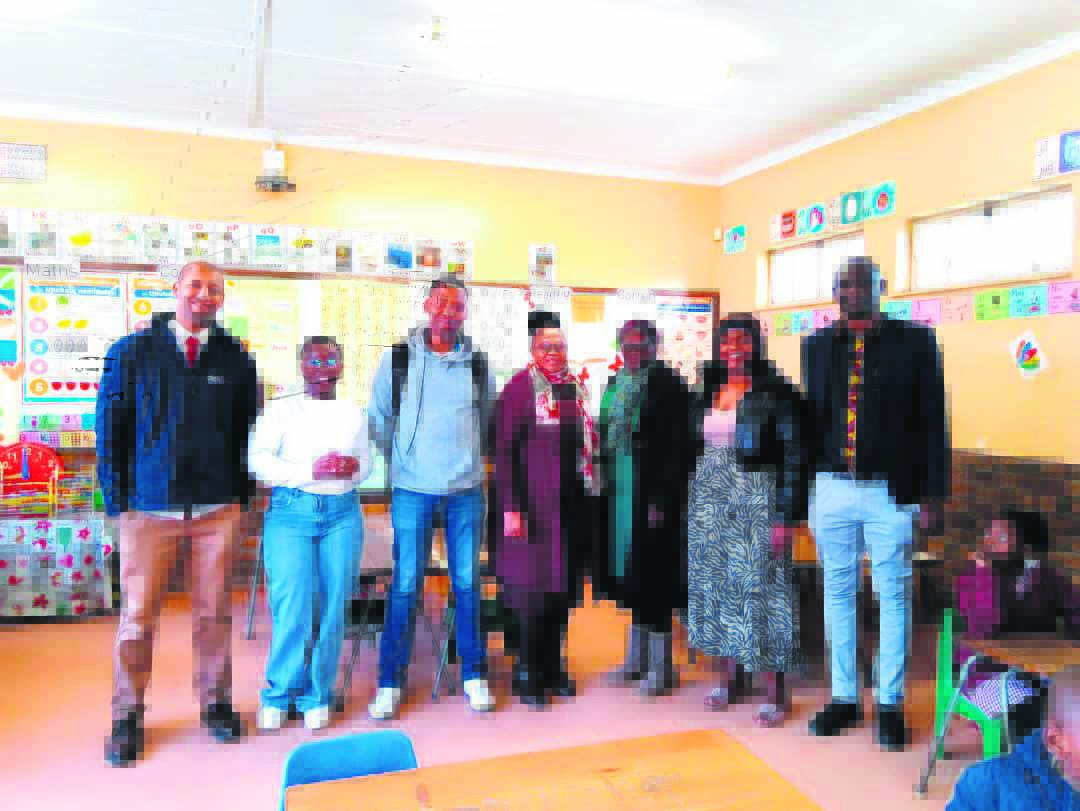
The Drakenstein Child Health Study (DCHS), led by the University of Cape Town’s Department of Paediatrics and Child Health, opened a R1 million multipurpose sports field at Langabuya Primary School, Mbekweni, which serves a low socioeconomic community, on 25 July.
The project reflects the study’s commitment to supporting the community and provides a multipurpose field for learners, many of whom are part of the DCHS.
Soccer field
Professor Heather Zar, Principal Investigator of the DCHS, said the soccer field was at the top of Langabuya Primary’s wishlist when she first met with the school principal a decade ago. Since then, several requests have been met, including repainting the school, building a library and training a librarian from the local community, donating computers and providing teacher training.Construction of the R1 million field began in early 2025 and was completed in May.

The study
The DCHS, launched in 2010, is the first of its kind in Africa, tracking children’s health from birth through adolescence in low- to middle-income settings. It follows mothers and their children from pregnancy with regular health checks to understand the factors that promote health, contribute to illness, and shape long-term outcomes.
Zar explained that unlike many international studies that focus on a single issue such as asthma or nutrition, the DCHS takes a broad approach. “Our cohort examines the full spectrum of child health – from mental and physical health to growth, cardiometabolic outcomes, neurodevelopment and lung health as well as the intersection of maternal and child health. For each of these areas, we have developed strong measures.”
Study focus
The study specifically focuses on mothers , and on their children, from low socioeconomic communities.
Approximately 1 100 mothers were enrolled, attending either the Mbekweni Community Day Centre (CDC) or the TC Newman CDC, with a dropout rate of only 10% over 10 years.
Mothers and children are very invested in the study which enhances their health due to regular health screening for mothers and children, close follow-up and access to a study phone at all times.
According to Professor Zar, several potential sites were considered for the study, but ultimately these two areas in Paarl were chosen for several reasons:
• The sites are representative of low socioeconomic communities and the health challenges these face, but there is a very strong primary health care program of immunisation and prevention of mother to child HIV transmission run by the Western Cape Health Department (WCHD);
• The community’s willingness and enthusiasm to participate;
• Discussions with the WCHD regarding available space where the study could operate without disrupting but rather supporting clinical services;
• The differences between the two groups of mothers (those attending TC Newman and those at Mbekweni CDC) who are distinct communities with different challenges; and
• Lack of research on maternal and child health in this area despite the many health challenges.
Study findings
The DCHS, originally supported by the Gates Foundation, initially set out to investigate the causes and drivers of pneumonia in children living in low- and middle-income settings such as Mbekweni and Paarl East.
Despite the introduction of vaccines targeting major bacterial causes, results showed that one in two children developed pneumonia within their first two years of life.
Significantly, Respiratory Syncytial Virus (RSV) (rather than bacteria) emerged as the leading cause. This discovery, now confirmed globally, has informed the development of new interventions, including a maternal RSV vaccine recently approved in South Africa to protect infants during their first six months of life.
Another significant finding is that childhood pneumonia has lasting effects on lung health. DCHS researchers discovered that each episode of pneumonia reduces a child’s lung function, potentially setting them on a lifelong path of impaired respiratory health.
The study highlights that conditions such as Chronic Obstructive Pulmonary disease (COPD) – once thought to be primarily caused by adult smoking – can in fact be traced back to early-life pneumonia. With 15–20% of South African adolescents already affected by asthma and the high prevalence of COPD in early adulthood, the findings underlie the urgent need to prevent and treat pneumonia in childhood to reduce the long-term burden of respiratory disease.
Similarly high rates of TB, of neurodevelopmental impairment, of psychosocial distress, of nutritional impairment and of several adverse exposures that impact on health have been identified, all of which may impact on long term health, and allowing for new or strengthened strategies to optimise health.
Zar explained that the DCHS will continue for the future, dependent on funding. Currently participants are followed through adolescence to understand how early life infections or other adverse exposures predispose to the development of non-communicable diseases such as asthma in adolescence. It would be ideal to follow participants through having their own children to see how their grandmother and mothers’ health and specific exposures affected them, she added.