When load shedding first started in South Africa a few years ago many residents found ways to cope without two hours of electricity, but in recent weeks the increased hours without electricity have got many residents and businesses fuming.
Residents have not only been pointing fingers at national government for not taking charge of the electricity crisis in the country, but they are also looking at their local municipality for answers.
The City of Cape Town recently put plans in place to generate electricity for its residents, and Drakenstein Municipality says it too is exploring a number of avenues to purchase alternative energy from suppliers.
Conrad Poole, Executive Mayor of Drakenstein Municipality, recently joined other mayors in writing to President Cyril Ramaphosa in support of a call for cabinet to declare a state of disaster on Eskom and the energy sector.
In his letter, Poole stated the Eskom load shedding and interrupted supply of electricity in Drakenstein have a severe and negative impact on business confidence and the local economy. “It impacts negatively on municipalities’ revenue due to the fact that many businesses and residential households are moving off the grid for a more reliable power supply,” he wrote.
“For the whole Drakenstein area to receive a continuous supply of electricity (24/7) the area needs a total demand supply of 185 MVA throughout the month. Alternatively, when Eskom applies load shedding Drakenstein will need a percentage of load related to the specific stage called, for the total duration, and not only the time slots as South Africans are familiar with according to the schedules.”
The municipality said it is working together with the Western Cape Government to investigate an affordable combination of renewable energy resources – such as solar power and wind power – and alternative options, such as using gas instead of electricity.
In his Budget Speech on 30 May Poole said: “In April this year council resolved that tenders will be issued to solicit proposals from independent power producers to generate and supply alternative energy to Drakenstein Municipality.
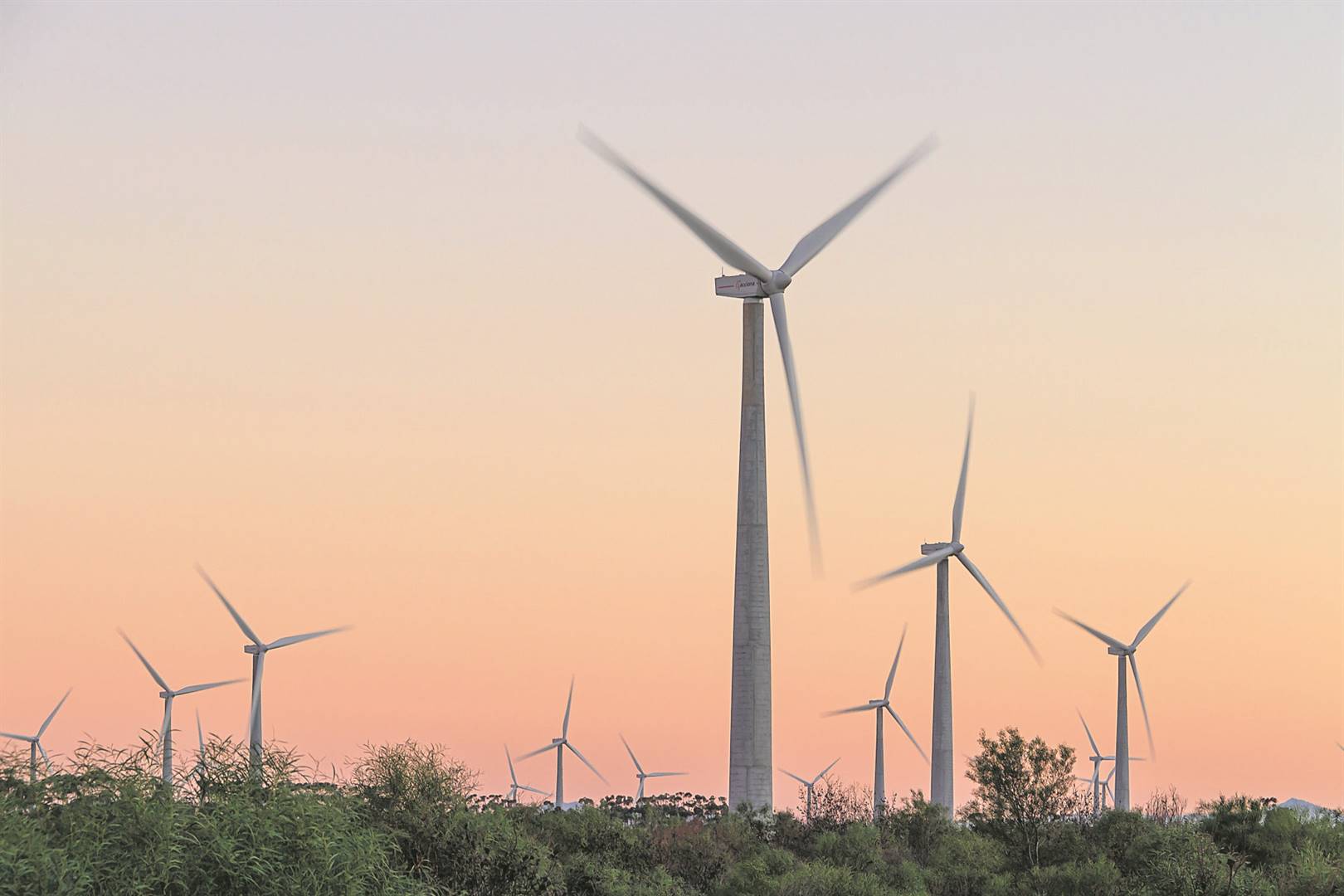
“The municipality identified five potential alternative energy projects (through wind and solar generation) which can deliver 135 MW as part of the municipality’s alternative energy supply and decrease the disruptive impact of continued load shedding.
“The municipality also applied for grant funding to install solar panels on municipal buildings as an alternative energy supply,” Poole said.
Drakenstein Municipality is one of four Western Cape municipalities that are participating in the Provincial Government’s Energy Resilience Programme.
The municipality has already identified suitable projects in the Drakenstein area which have been evaluated through the provincial project’s pre-feasibility process. A number of these projects have also been selected as pilot projects.
An item in this regard recently served before the Municipality’s Mayoral Committee. Its purpose was to inform Council about an investigation launched by the Provincial Government’s Municipal Resilience Team to perform two pioneering projects to produce electricity within Drakenstein: Pioneering Project 1 and Pioneering Project 5.
Its further purpose was to obtain council’s approval to proceed with the procurement process of alternative energy.
It was recommended that, in terms of Pioneering Project 1, council approves the issuing of tenders to call for proposals from suppliers to build generating facilities and supply electricity to the municipality. It was also recommended that a further report be submitted to council on the Pioneering Project 5 where a number of municipalities are proposed to jointly establish a process to purchase electricity from a number of independent power producers.
Poole cautions, however, that the municipality needs to work carefully with public funds. “We have taken a firm and positive step in the right direction,” he said.
Carel Lotz, Acting Executive Director: Engineering Services, at Drakenstein Municipality explained that even though the municipality is looking at different options to purchase alternative energy from independent generators, at a hopefully cheaper purchase cost, it will unfortunately not be able to completely alleviate the Eskom load shedding.
Lotz also explained the generation of hydroelectricity, as in Cape Town, is not possible in Drakenstein.
“Unfortunately, Drakenstein Municipality does not have the above-mentioned format of water capacity or infrastructure for hydroelectricity generation,” he said.
The Municipality, however, also started installing uninterrupted power supply (UPS) equipment at traffic lights so they work during load shedding or when cables are stolen.
According to the municipality, the installation of UPS equipment is currently at approximately 30% of Drakenstein’s traffic lights, and a programme is in place eventually to provide all lights in the municipal area (covering Paarl, Wellington, Mbekweni, Saron, Gouda, Hermon and Simondium) with this equipment.
Unfortunately, the UPS can supply power only for a maximum of 2½ hours. In case a power cut lasts longer, as currently with the introduction of Eskom Stage 6 loadshedding, traffic lights would not be working continuously.
When that happens road users should use all intersections as three- or four-way stops, and the municipality will place stop signs at these points as far as possible. The municipality said that it would unfortunately not be possible to cover all points.
Lotz said the municipality is also looking at the possibility of equipping street lights with solar generators and battery functions. “But they are terribly expensive, and where they are already installed they are also targeted by theft.”
He said the municipality is already carrying out electricity saving actions in various areas such as replacing street lights with “LED” lights that consume much less energy.
“The municipal buildings’ lighting has already been replaced with energy-saving lights, and energy-saving motors are being installed at the sewage plants. Then we also control a geyser ripple relay system to manage the water heaters and achieve savings.”