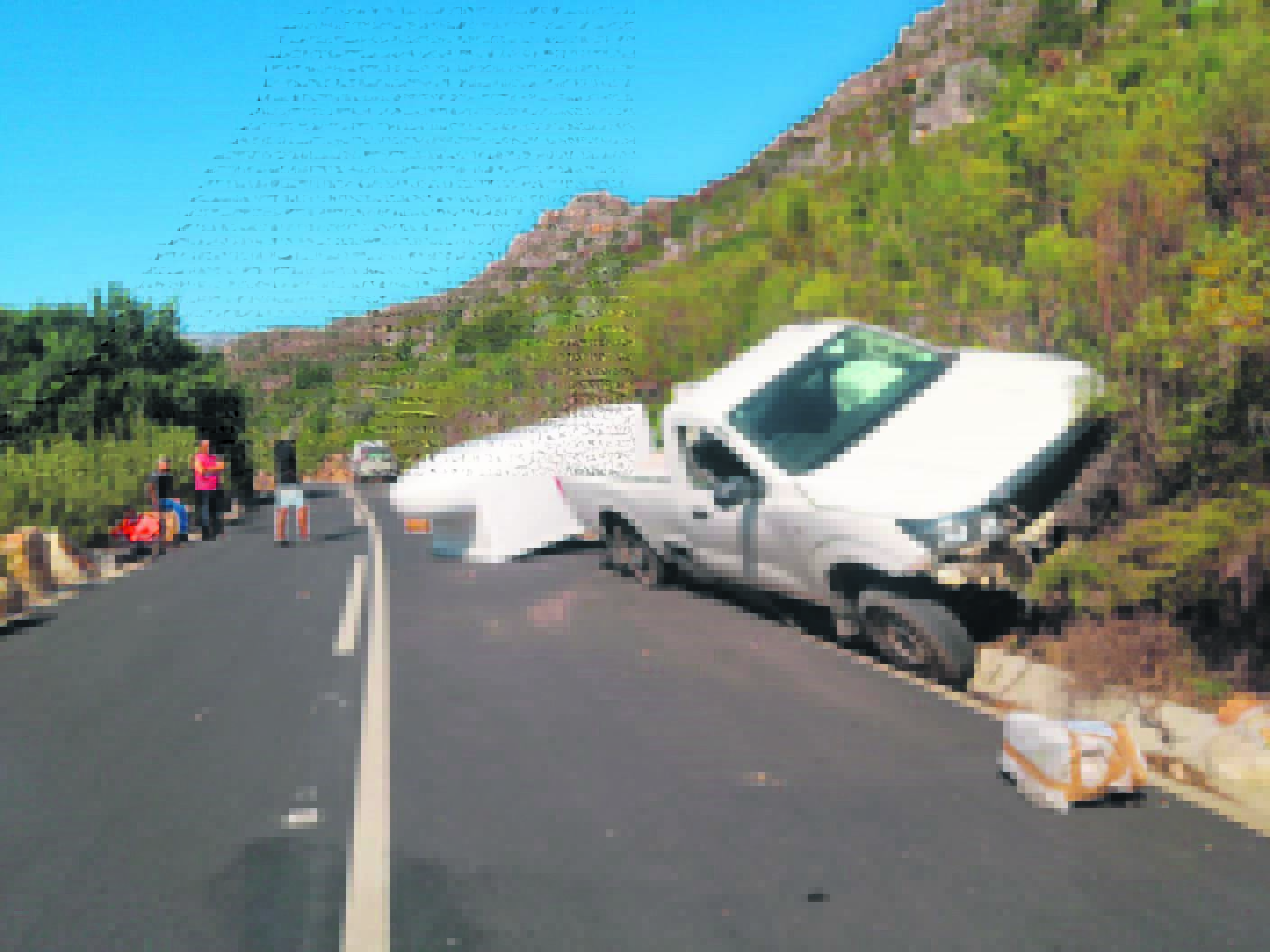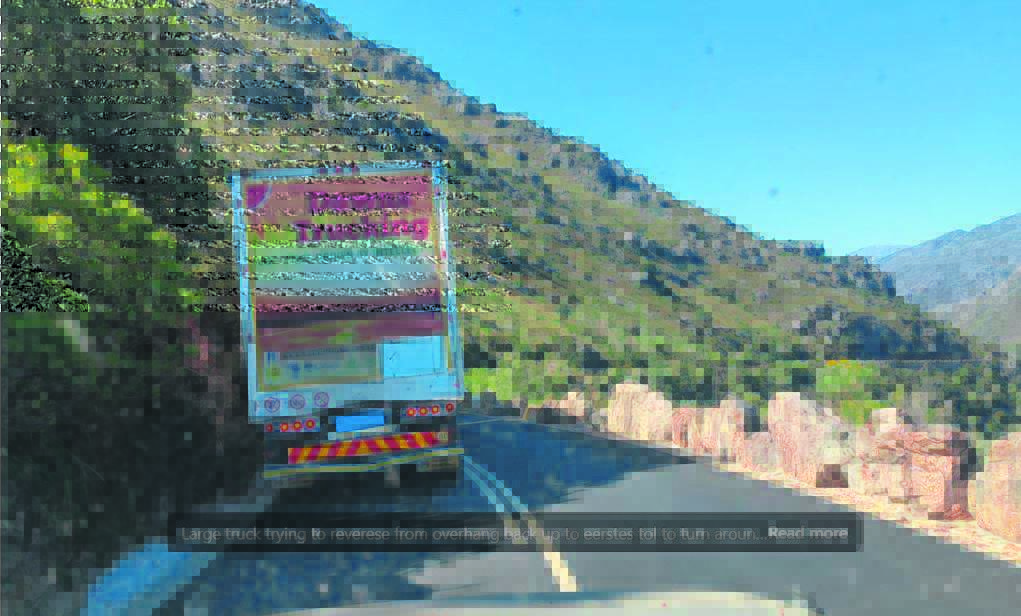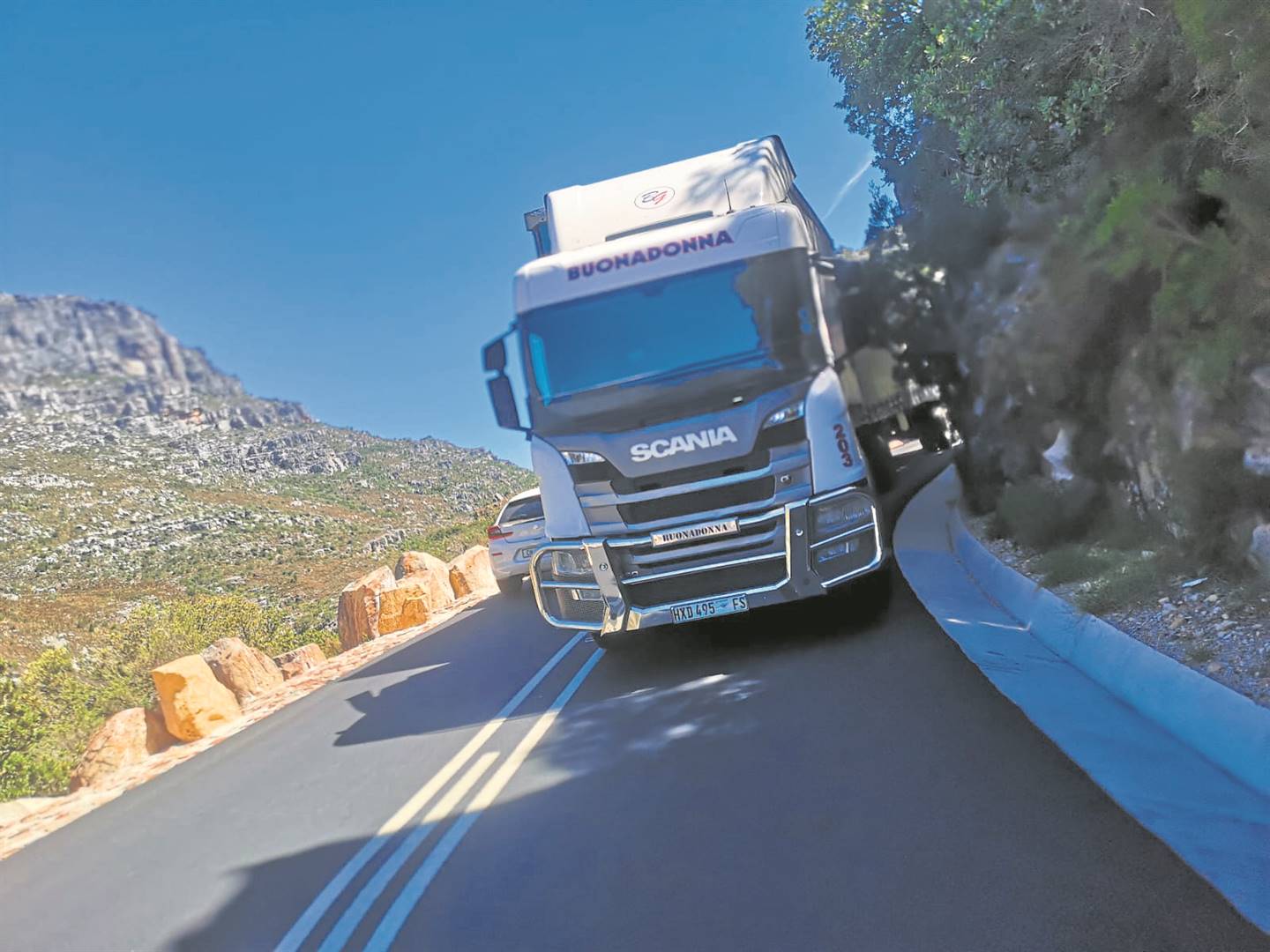
Once again the Paarl Post pressed the issue of Bains Kloof Pass being closed by large trucks getting stuck daily, this time prompting a quick response from the Department of Transport and Public Works.
A Bains Kloof resident, Andy Connell, again sent proof of another incident last Wednesday afternoon on 1 March at around 15:00.
He described the problem as a daily issue causing delays and damage on the Bains Kloof Pass.
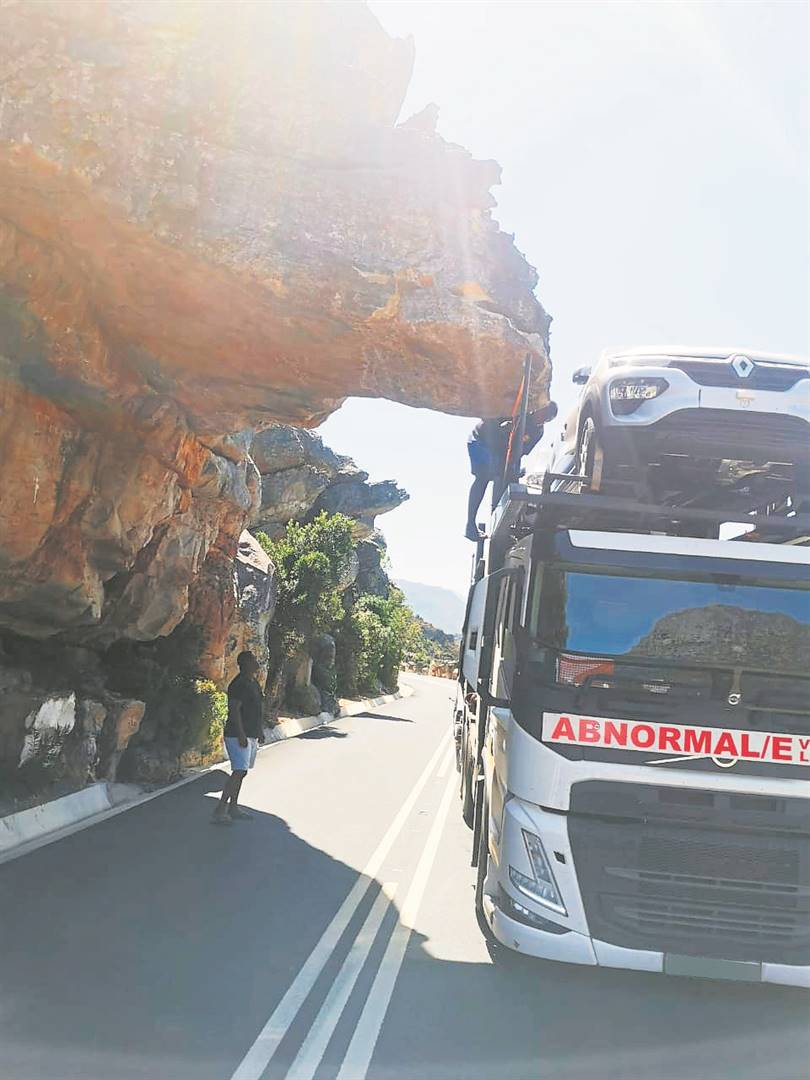
“I stopped posting because there is now one truck a day from either direction getting into grief on R301 Bains Kloof Pass. This interlink is stuck at the overhang (Dacres Pulpit) on a blind corner with no hazard lights, tri-angles or a driver.”
In this incident the interlink truck got stuck on the pass from Wellington, direction Ceres. Connell thought it possible the driver’s absence from the scene meant he must have gone to find signal.
“Its in a bad position,” he added, “it has not been reported to authorities. They do nothing anyway.”
This issue has been covered in the Paarl Post time and time again on a nearly weekly basis.
From what has been observed and looking at the sheer volume of complaints of trucks repeatedly transgressing without hesitation, it seems as though logistic companies face zero repercussions.
Spokesperson for the department Jandré Bakker said it had taken steps to mitigate the daily damage being sustained.
“The Department of Transport and Public Works (DTPW) has already engaged long-distance trucking firms and associations explaining the impact on other commuters when drivers disregard restriction signs and the possible repercussions which include claims for damages.”
Bakker reiterates that if investigation into the pass reveals signs of damage sustained after such an incident such damage may be claimed from the companies in question.
“The DTPW is also engaging travel/map applications to add a warning message on certain routes such as Bains Kloof Pass, as the allegation is that the drivers state that they followed the shortest route as per these applications.”
But according to Bakker “the reality remains that despite an application indicating a shorter route, the driver had to actively disregard the restrictions.”