Invasive wasps causing trouble in the Cape Town area for the past years have now swarmed into Paarl and Wellington.
Local residents often take to social media to ask for advice regarding wasps on their property and how to remove them.
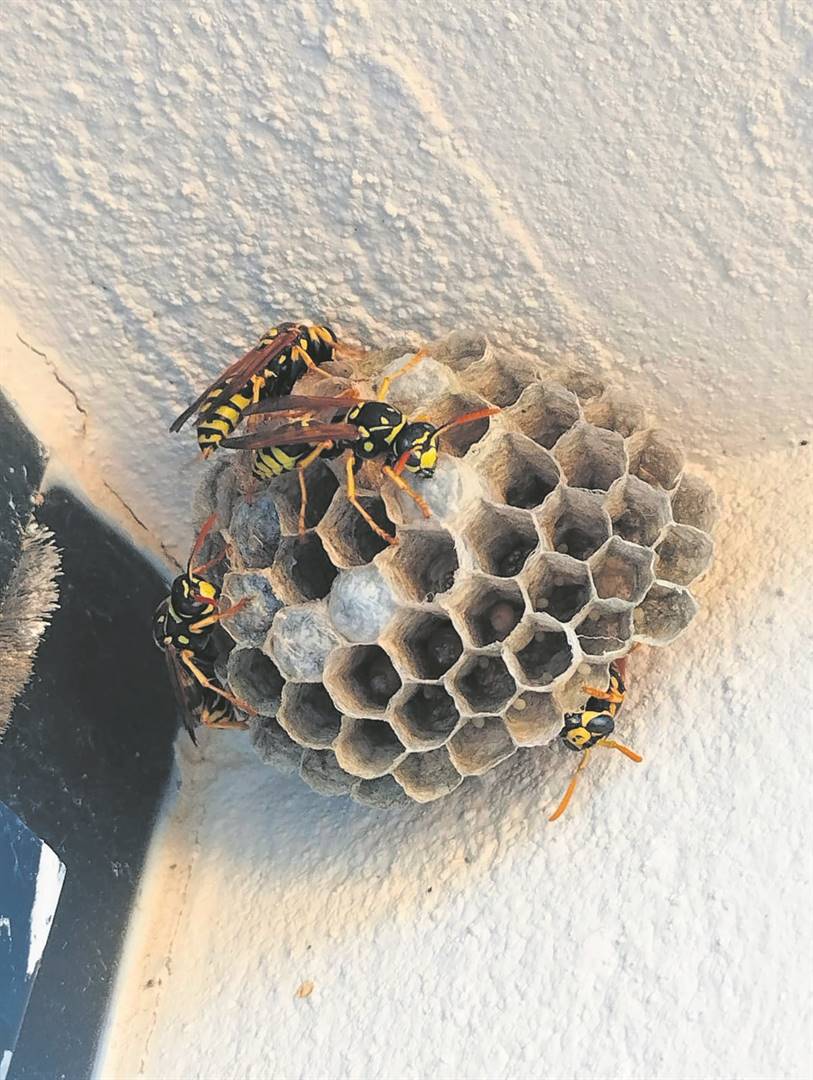
Two invasive wasp species are seen around Drakenstein. The more common one observed is the European paper wasp and the less common one is the German wasp. This wasp is longer than a honey bee, with a narrow body and yellow /orange antennae. It is usually seen hovering above ground in places that receive abundant sunlight, for example above lawns.
Residents have also spotted them building their nests mostly in washing line poles, under roof eaves and mail boxes. The nest is a papery, honeycomb-like, single-layered structure with visible cells. They attack if threatened, but luckily they do not swarm or chase a target.
Dr Ruan Veldtman, senior scientist at the South African National Biodiversity Institute (Sanbi), previously said that the large influx of these wasps into the Cape Peninsula and Boland has reached pandemic status. He said that the wasps presumably arrived in Cape Town about eight years ago, having nested on ship containers.
The large numbers that are now found in gardens make the likelihood of people being stung by them a real danger. Various locals have landed up in hospital after these stings, due to allergic reactions.
Veldtman said Sanbi has a project in place to eliminate these wasps by a spraying programme which is currently under way in Grabouw and Franschhoek.
A present it is peak season for these wasps.
Drakenstein Municipality can assist residents telephonically with any enquiries related to wasps and give them advice on how to deal with them. Our Nature Conservation section can be contacted on 021 807 6231.
Here are some guidelines:
How to keep out wasps:
. To prevent wasps from entering your house, keep the doors and windows shut. Ensure fly-screens are fitted and secure.
. Seal gaps around the house to reduce possible entrance sites for European Wasps and other home pests from entering the home.
. Regularly monitor where potential nesting may occur.
. Keep pools covered when not in use to prevent wasps from falling in while trying to get a drink.
. Avoid eating outdoors when there are signs of European Wasps.
. Do not leave food or drinks (especially soft drink cans) unattended or uncovered. Wasps have been known to enter an open drink can and may then be swallowed accidentally.
. Do not leave pet food outside for extended periods of time. Feed pets indoors if possible.
. Keep compost and garbage bin lids firmly secured.
. Pick up any fallen fruit from fruit trees and dispose of in a secure and lidded compost or rubbish bin.
. Inform neighbours to be on the lookout for European Wasps to prevent other nearby nest colonies from returning.
Consider companion planting of wasp-deterring plants such as:
. Eucalyptus (shrub forms)
. Lemongrass
. Marigolds
. Mint
. Pennyroyal
. Thyme
. Wormwood (Artemisia sp.)