Bark stripping is a relatively unknown issue to the general public and is one that is of great detriment to our trees.
It has also through the years become quite common practice in Drakenstein, with valuable trees being stripped of their bark, which often eventually will leave these very valuable giants to die.
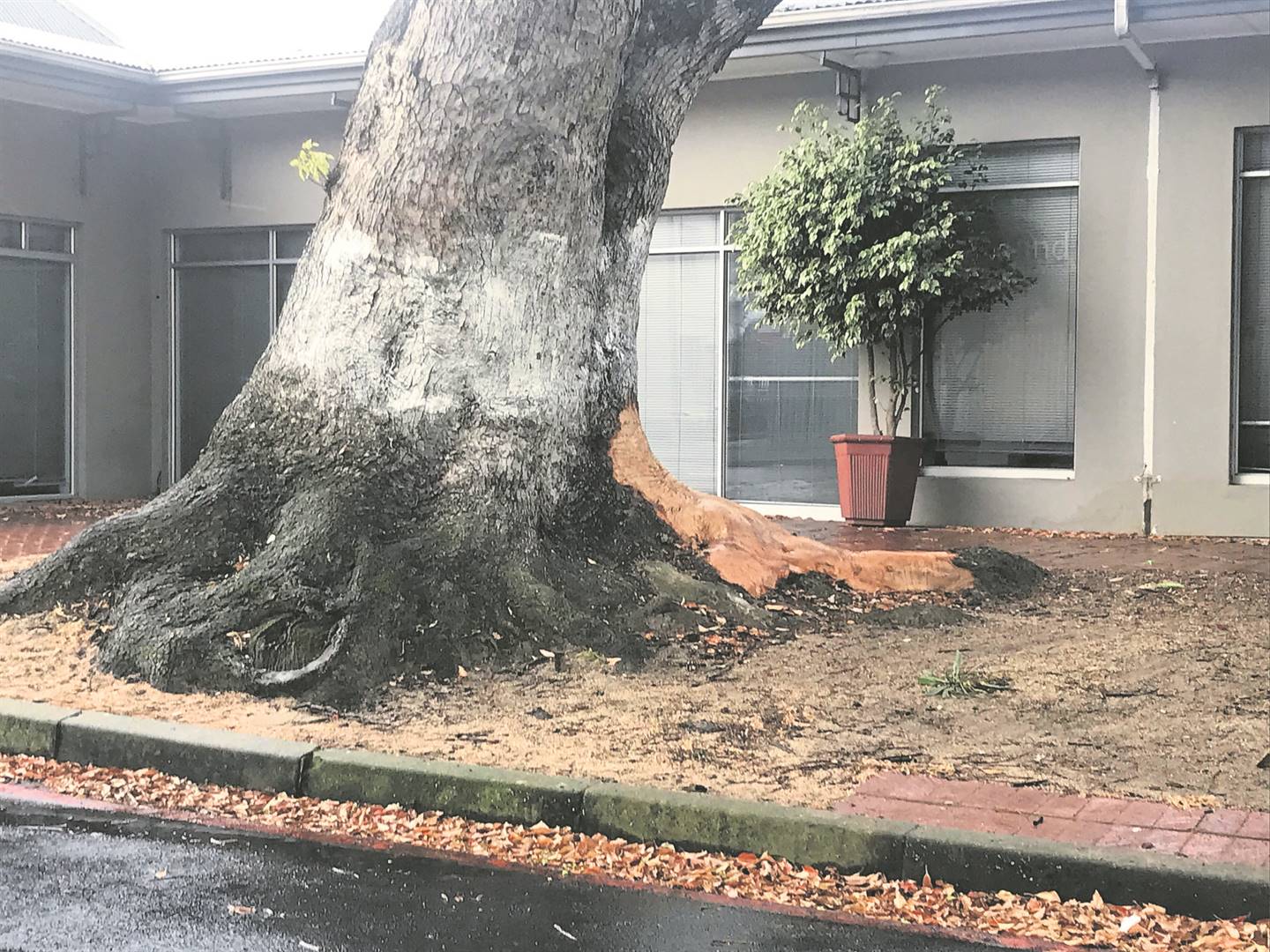
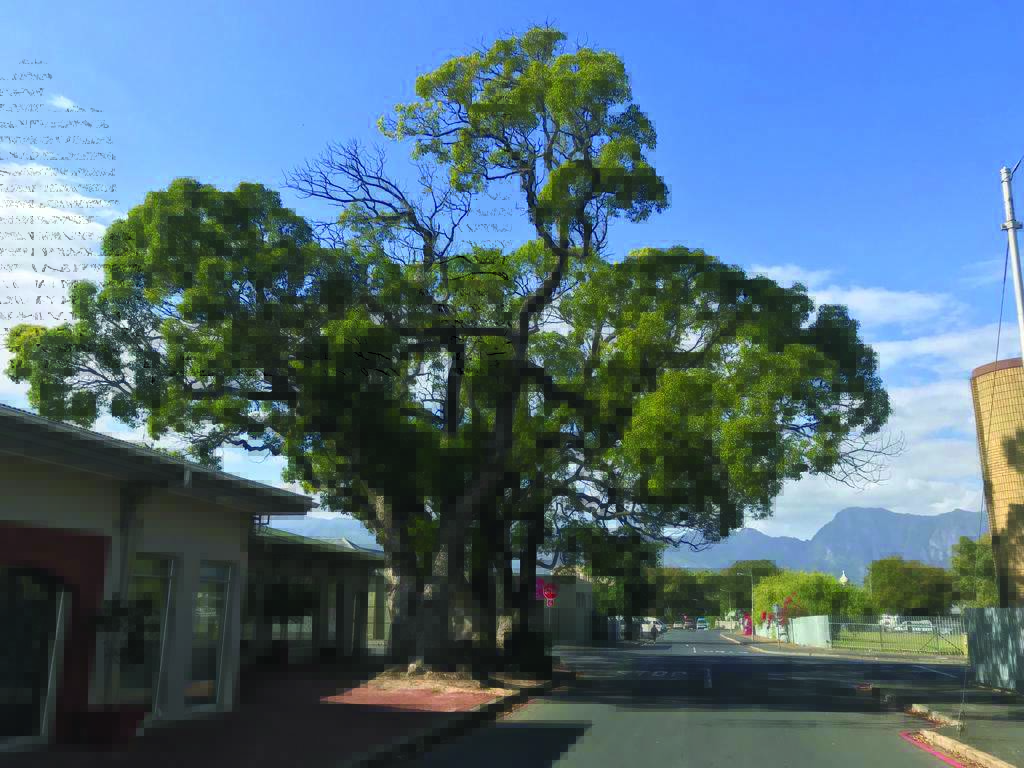
A disturbing example of this are the very old Camphor trees on the corner of Van der Lingen and Breda streets in Paarl, which have been badly ring-barked. These trees are estimated to be about 200 years old. One of these trees is now showing signs it is dying, most probably because of the damage done to it.
Bark stripping is the illegal stripping and harvesting of the bark of a tree for individual profit. Trees that are specifically targeted tend to have a thinner bark – for example, Fever trees, Camphor trees, and Norfolk Pines. A thinner bark is not only easier to strip off and harvest, but also easier to pulverise.
Ring barking is where an entire circumference strip or section of bark from a tree is removed, ultimately resulting in the death of that tree. This has seen many trees in areas around Drakenstein under threat, as the stripping of its bark exposes the complex tissues underneath to the elements. The tree is, therefore also at risk of viral or bacterial infection, growth is stunted and the tree is ultimately resigned to a slow death.
Not only does bark stripping damage the tree itself, but also creates a ripple effect that spreads through an entire forest ecosystem. Animals and insects all rely on the trees for survival, but with more and more trees dying their natural habitat is threatened. Dead trees also pose a fire hazard, which is a risk in an area such as Newlands Forest in Cape Town, which is dense with dry leaves and foliage.
Bark plays an integral role in a tree’s overall survival by protecting its delicate and complex systems beneath the bark from the elements, insects, and wildlife. Tree bark is also a source of food for many animals who eat the bark or feed off the insects living in it. The bark also houses entire ecosystems on its surface and inside its many grooves and fissures. Animals, insects, moss, fungi and micro-organisms alike all make their homes in and thrive in the bark.
What is tree bark used for?
Due to the vast variety of different textures of a tree bark its uses are as diverse. It has been used for centuries, to make everything from rope, dyes and paints, canoes, ground covering, decoration and even maps. In South Africa tree bark and roots are also used for cultural and medicinal purposes. The bark is harvested, dried out and can also be made into a powder form.
Between 60-80% of South Africa’s population use traditional medicine, and the bark is used for various ailments from topical treatments for skin to the treatment of heart and lung problems. Bark accounts for much of the plant matter traded in traditional medicine.
This is not to say, however, that traditional healers are necessarily bark strippers themselves, as the bark is often sold by private traders.
Drakenstein Municipality’s Parks Division regularly paints tree bark throughout the municipal area to deter bark strippers from damaging trees. The paint makes the bark less desirable for their needs.
This especially includes many new trees planted on highways. Last week the municipality painted trees in the Berg River Boulevard and will also now pay attention to the trees in Breda Street.
The municipality encourages members of the public to report tree-bark poaching to the Parks Division on 021 807 7739.
Source: Greenpop.org