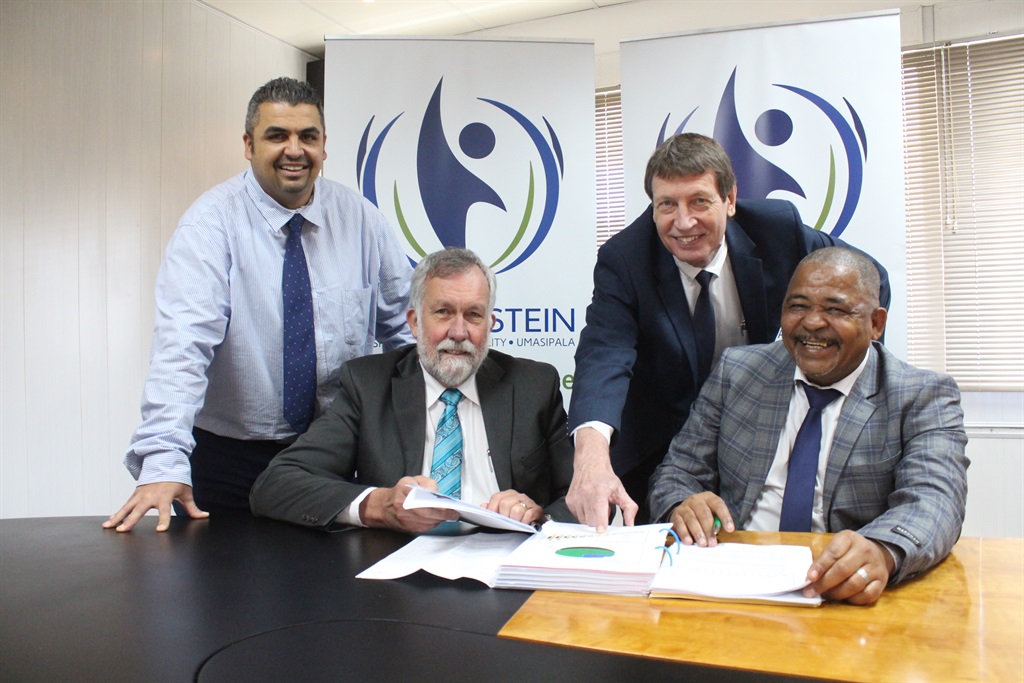
On Monday the 2022-’23 budget and tariff increases were approved by the Drakenstein municipal council after the majority of councillors voted in favour of the budget and tariff increases.
Most other parties, such as the ANC, VF Plus, CDR and GOOD, voted against the approval of the budget with only two other parties backing the DA majority.
Come 1 July residents of Drakenstein will have to pay 6,9% more for water, 7,5% more for refuse removal, 6,9% more for sewerage and sanitation, and 7,47% more for electricity. For the second year in a row there will be no increase in the propery rates tariff.
“It is important to note that Provincial Treasury, after assessing our draft budget, was not in favour of the 0% increase in property rates,” Mayor Conrad Poole said during his budget speech. “However, we believe it is in the best interests of our ratepayers.” He also said in addition to the 0% increase, the special rebate for retired persons has been lowered from 70 to 60 years of age, subject to the qualifying criteria.
Earlier this year Eskom applied to Nersa for electricity bills to be increased by 20,5%, but Drakenstein along with various other municipalities raised their objections against the unaffordable increase request.
“I am happy to report that we were successful, and Nersa approved an increase of 8,61%. The Municipality will therefore pay 8,61% more for electricity in the new financial year. To offer further relief to our ratepayers, we decided to increase electricity by 7,47%.” The electricity tariff is still subject to Nersa’s approval. According to Poole in April this year Council resolved that tenders will be issued to solicit proposals from independent power producers to generate and supply alternative energy to Drakenstein Municipality. “The alternative energy will then improve the stability of electricity supply to our consumers. The Municipality identified five potential alternative energy projects (through wind and solar generation) which has a total of 135MW supply which can become part of the municipality’s alternative energy supply and decrease the disruptive impact of the continued load shedding. The municipality also applied for grant funding to install solar panels on municipal buildings as an alternative energy supply,” he said. Poole said that robust internal and external financial discussions took place as well as benchmarking exercises with neighbouring municipalities to ensure that Drakenstein implement fair and affordable tariffs. He said the total approved budget for the 2022-’23 financial year amounts to R3 billion, comprising of a R2,87 billion operating and R130,6 million capital budget. “To fund the capital projects, we recommend not to take up new external loans over the next two years. This will ensure that our current gearing ratio decreases to an estimated 53,8% in 2022-’23 and to an estimated 41,7% in the 2024-’25 financial year below the national norm of 45%.” In the new financial year the Expanded Public Works Programme (EPWP) will create approximately 1 118 job opportunities at an estimated cost of R19,7 million of which R4,1 million is contributed by the national Department of Transport and Public Works EPWP grant and R15,6 million from Drakenstein.
“The roll-out of ward projects will ensure a further 630 work opportunities could be created in solid waste cleaning and parks maintenance projects in wards.”
Poole also said that the resilience of the Municipality is tested and affirmed continuously.
He said: “The downturn in the economy that was prevalent before the outbreak of the Covid-19 pandemic, the lockdown regulations that limited economic activity and the conflict between Russia and Ukraine are just some of the factors that are causing inflation and interest rate hikes. Locally it is mostly felt with the sharp increases in fuel, cooking oil and wheat. The national fiscus is shrinking due to increased government debt, resulting in a reduction in national and provincial grants. In these trying times I urge the political leadership, senior management and staff of Drakenstein to continue working as a unit to ensure excellent service delivery.”
Poole said a renewed focus will be placed on good governance, communication and service delivery, and the role and responsibility of ward councillors. Hence, performance contracts for ward councillors will monitor and evaluate their functions as ward representatives. Furthermore, a revised management model was introduced and distributed to all councillors, clarifying the roles and responsibilities of the mayoral committee members, ward councillors and ward committees on the interaction with the community and administration.
Each ward in Drakenstein will receive R200 000 per ward, of which R30 000 is allocated to ward committee stipends and the remainder, R170 000, will be allocated to specific approved projects.
Poole made it clear in his speech that housing is a National and Provincial Government function, which is performed by the municipality on behalf of National Government with financial assistance from the national fiscus. With this in mind he said a grant allocation of R47 million was awarded to the municipality for the 2022-’23 financial year, which will be used to service sites in Fairyland, Siyahlala, Carterville and complete the planning for Mbekweni Erf 557, Saron, Paarl East and Simondium.
R57 million will be spent directly by the Provincial Government on the Vlakkeland Housing Project.
Poole said the municipality will also improve access to basic services (R3,2 million), providing services at the Schoongezicht Emergency Housing Project (R10,8 million) and maintenance of aged municipal rental stock and those damaged by fire (R3 million).
For water and sanitation services the municipality made a R31,6 million provision in the budget.
In the budget R29,9 million is allocated for electricity infrastructure projects.
The following provision has been made for waste management projects: R500 000 for purchasing street refuse bins to combat littering; R650 000 for the construction of mini drop-off facilities in high-density and informal areas to provide a disposal facility in communities; R4,5 million for the construction of organic waste diversion infrastructure to comply with new waste legislation and R2 million for the purchasing of International Organisation for Standardisation containers to transport waste between the Paarl Refuse Transfer Station and disposal facilities.
The budget includes R16,5 million for the maintenance of roads and stormwater infrastructure.
The municipality will also provide R20 million towards the upgrading of Main Road 201 to a dual carriageway between the N1 and the Kliprug Road.
In all, R9,4 million is set aside for the infrastructure of sport, parks and cemeteries and special focus will be placed on the phased development of De Kraal. The main capital projects includes the upgrading and construction of swimming pools and sport infrastructure (R6,2 million) and investing in much needed small plant tools and equipment to ensure maintenance can be done more effectively (R3 million).
The budget also makes provision for indigent households, community projects, tourism development, public safety, social development and more.
“The proposed final budget is pro-poor, supports economic and social development and ensures financial sustainability,” Poole said.