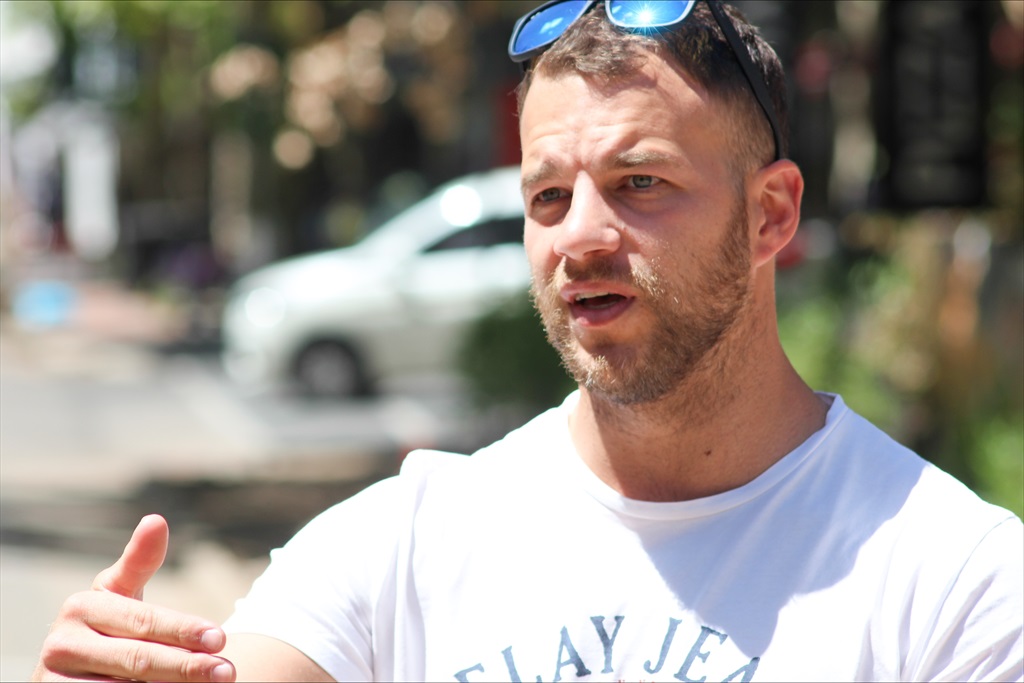
If there is one lesson the June and September floods of 2023 taught us it is that one should always be prepared for any emergency, so it is crucial that everyone equip themselves with basic health and safety training, which could save lives and property during natural disasters.
This according to Kurt Maske, a paramedic who is also largely involved with voluntary rescue and disaster-management operations in the Boland region and several parts of the Western Cape.
Paarl Post spoke to Maske on the back of his voluntary involvement in coordinating disaster relief during this year’s devastating floods.
Maske, whose property in Franschhoek was also affected by the Heritage-weekend floods, said it was a natural disaster no-one was prepared for.
“Franschhoek was completely cut off from its surrounding areas,” he said. “There were some areas that were without water and electricity for almost a week.
“Since I was also involved with disaster relief in June I quickly managed to reconvene the group of volunteers that were mobilised at that time (June). I had them all on a WhatsApp group.“With the power being out for almost a week our internet was essentially also affected. Franschhoek had no means of communication for certain days and that alone was very difficult.
“Apart from the medical emergencies that we did not get at times, we also struggled to communicate with volunteers on what areas need to be covered.”
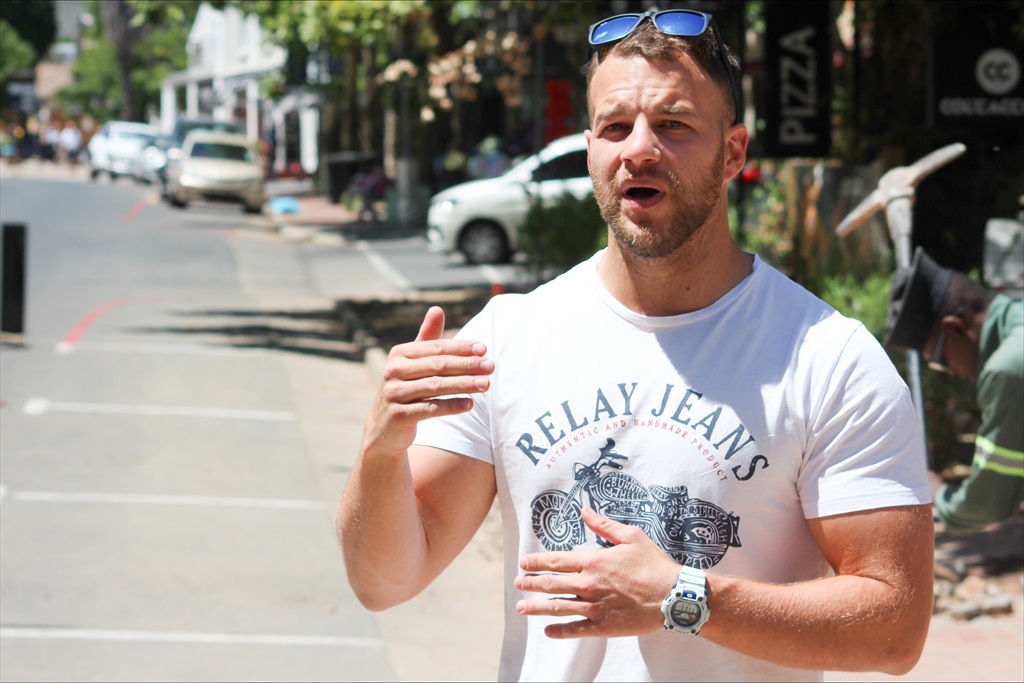
Maske said preparation and precaution during severe weather conditions is key.
“You have to ensure that essential devices are charged, that you have extra power supplies, generators if needed and non-perishable food items. These items should be able to sustain you for at least a month.
“Also ensure that your vehicle has enough fuel or that you have a backup supply of fuel. We saw how Franschhoek was completely cut off on both entrances, which made entry impossible for vehicles that would have to fill up pump stations.”
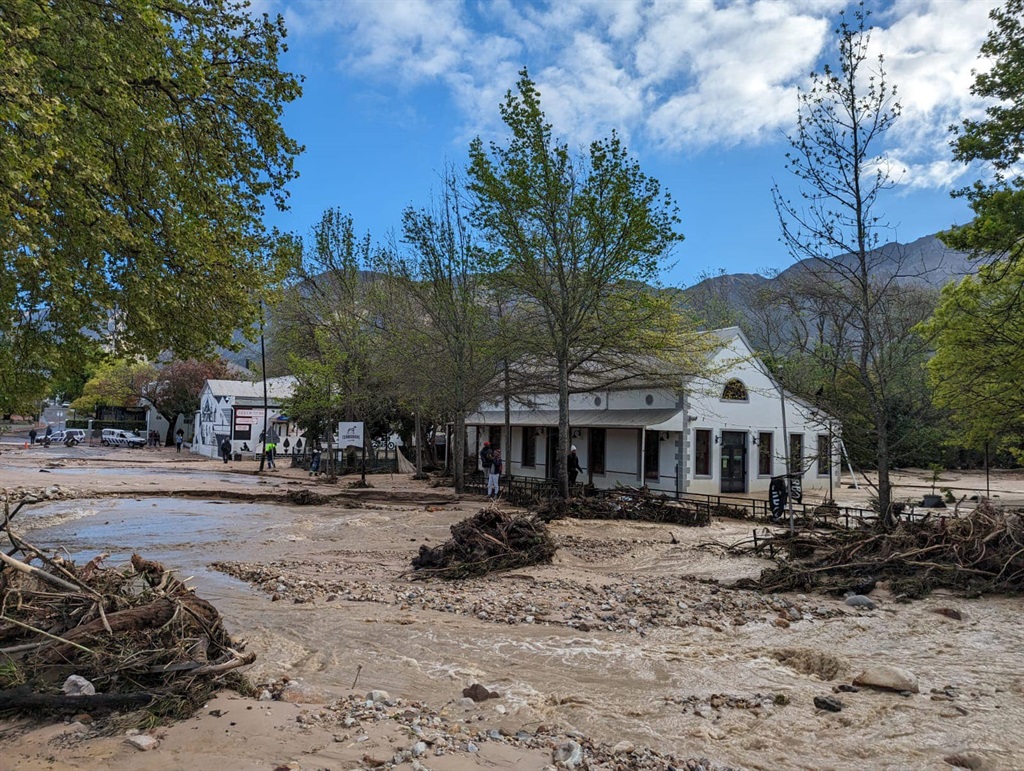
He said his efforts to coordinate disaster relief in September was facilitated by his network of volunteers.
“The key is to identify certain role players in the town and in communities that are willing to step up in the case of an emergency. There were houses that were completely destroyed but the way people came together was absolutely incredible.
“We saw how even those in the private sector came out and assisted where possible. Companies offered their services, residents opened their homes for flood affected victims and assisted with food and water supplies at absolutely no cost.”
Maske added that there was a lesson to be learned from these disasters.
“It was a wake-up call to us and I think to everyone. No-one saw it coming. I hope people realise now they need to be prepared for such things. Luckily, we don’t have many natural disasters in South Africa, but when it happens its usually quite severe.
“I would, therefore, advise people to go for basic first-aid training and obtain essential emergency items so that they are at least somewhat prepared.”
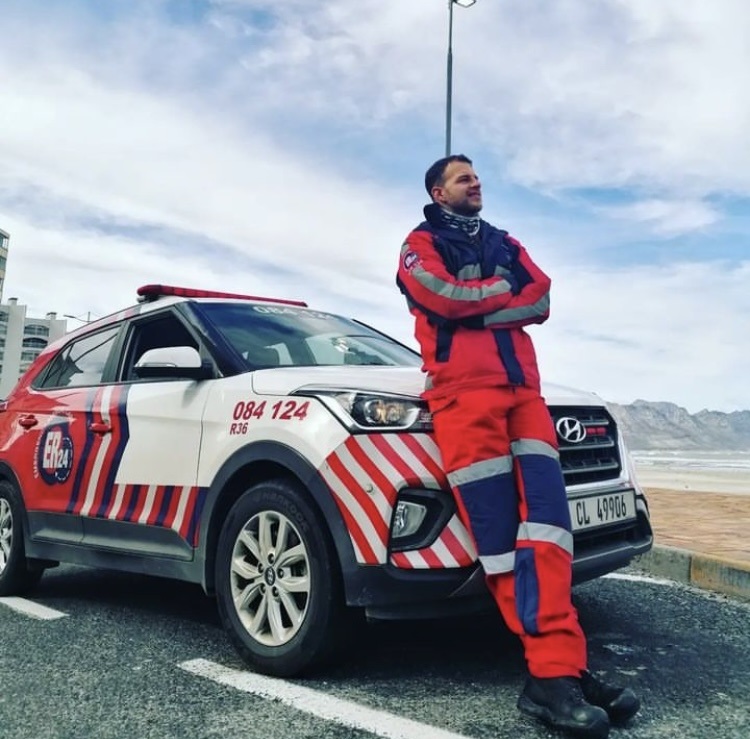
He was a permanent emergency and advanced life-support paramedic at ER24 until the end of September this year.
An opportunity to go overseas then came along, one that enables him now to work on a two-months on, two-months off basis.
During his two months off he returns home and remains actively involved with emergency response at ER24 who has assigned him an emergency response vehicle, which he now uses to provide advanced life support in several areas across the Cape Winelands, Cape Peninsula and Breede River.
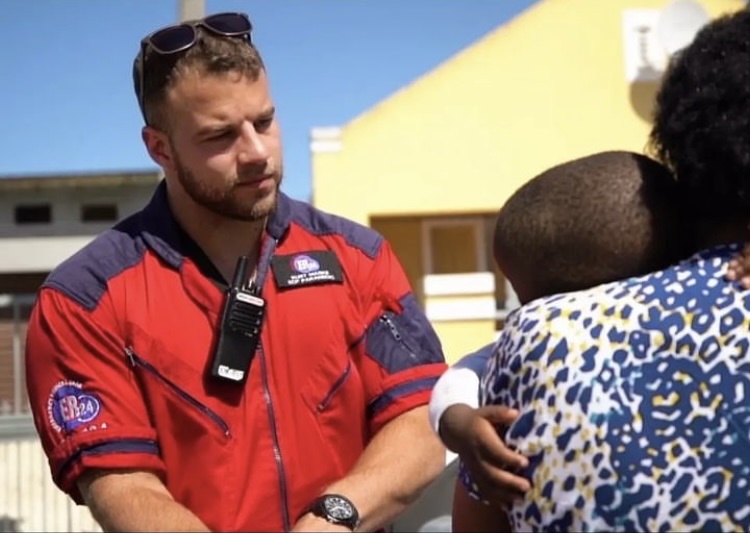
Maske grew up in Franschhoek, where he matriculated from Bridge High School. He said it was the limited availability of emergency-response teams in Franschhoek that sparked his interest in becoming a paramedic.
He obtained his BHSc degree in Advanced Life Support at Durban University of Technology in 2019.
Maske is also a reservist with the South African Police Service (SAPS).