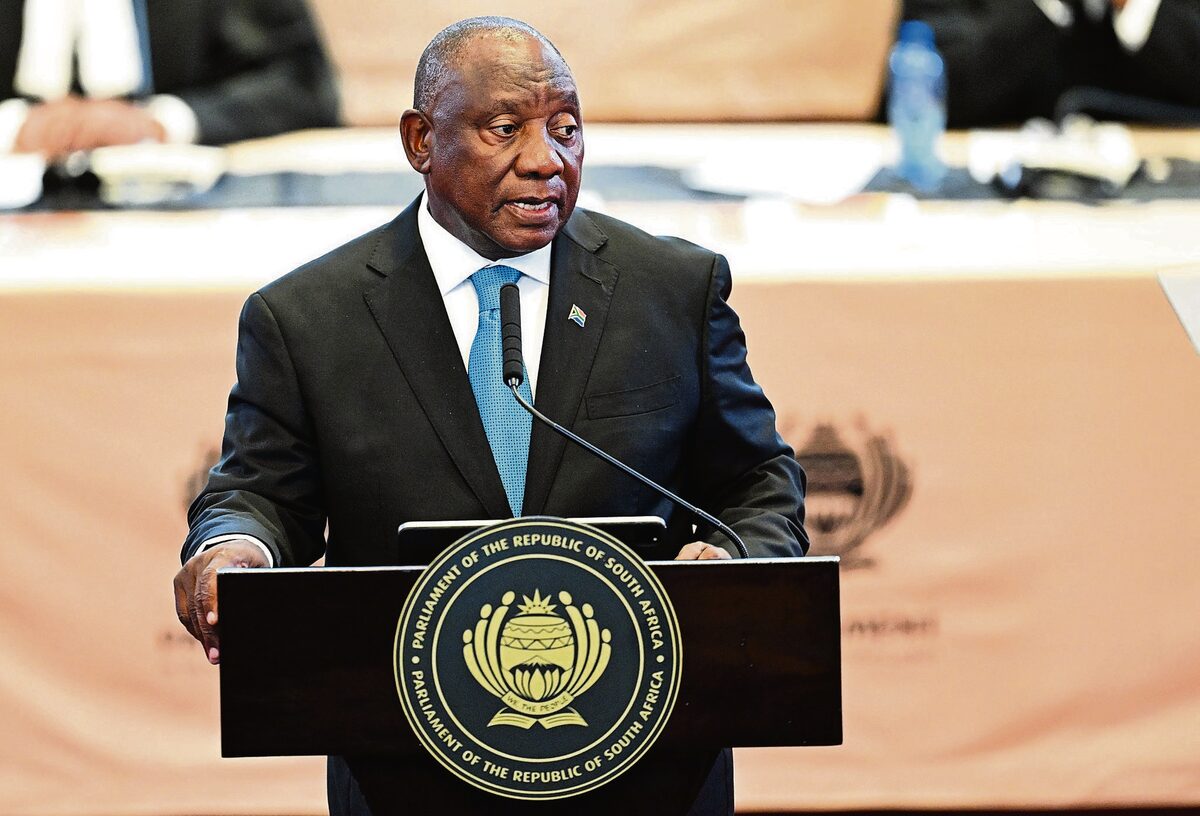
President Cyril Ramaphosa delivered his much-anticipated State of the Nation Address (SONA) on 12 February, setting out government’s priorities as South Africa prepares for local government elections later this year.
From deploying the South African National Defence Force (SANDF) to the Cape Flats to combat gang violence, to tackling child stunting and addressing the country’s deepening water crisis, the President touched on several pressing national issues.
Paarl Post spoke to experts – including some based in Drakenstein – to unpack what these announcements could mean in practice, and whether the proposed interventions are likely to deliver lasting change.
SANDF on the Cape Flats
In his SONA Address this year, Ramaphosa announced that the SANDF would be sent to help combat gang violence on the Cape Flats and tackle illegal mining activities in Gauteng.
“I have directed the Minister of Police and the SANDF to develop a tactical plan on where our security forces should be deployed within the next few days in the Western Cape and Gauteng to deal with gang violence and illegal mining. As is required by the Constitution I will inform the National Assembly and the National Council of Provinces regarding the timing and place of deployment of our soldiers and what it will cost. We have to act to rid our country of gang violence,” Ramaphosa said.
In response, Professor Lindy Heinecken from Stellenbosch University’s Sociology and Social Antropology’s department, who also recently addressed the portfolio committee on defence, said that this tactic can work on the short term only, but that it will de-stabilise gang violence on the Cape Flats in the long run.
“If the army is repeatedly sent in to stabilise troubled areas, the pressure on the South African Police Service (Saps) to deal with corruption, strengthen intelligence and rebuild trust with communities fades away. It also fails to confront the deeper social and structural causes of violence,” according to Heinecken.
She explained that in recent years, the SANDF has often been deployed domestically, including to tackle gang violence. During the 2019 operation on the Cape Flats, crime dropped at first. However, this calm did not last. Once the troops left, murder rates rose again, in some places exceeding previous levels.A key problem, according to Heinecken, is that military training does not match policing work.
READ: Deployment of the army welcomed in gang-infected areas
Soldiers are trained for combat and lethal force, not the restraint and negotiation required in civilian law enforcement. This mismatch can in turn lead to overly aggressive behaviour.The SANDF also lacks suitable equipment for urban policing. It does not have the non-lethal tools commonly used by police, such as tear gas.
Instead, soldiers carry assault rifles which can kill innocent bystanders.If South Africa continues to deploy the military internally, it cannot rely on a standard combat approach. Some argue for a specialised force, similar to the United States National Guard, trained specifically for internal security and the use of non-lethal force. This would, however, require a shift in military doctrine and mandate, Heinecken said.
Ian Cameron, chair of the Portfolio Committee on Police in Parliament and a Paarl resident said that the SANDF cannot take over the investigative and intelligence duties of the South African Police Service or the Directorate for Priority Crime Investigation.
While soldiers may help to secure areas, they are not equipped to break up drug syndicates, build complex racketeering cases, trace illegal firearms across crime scenes, or ensure lasting convictions against organised crime leaders, Cameron explained.
Another reform that has not been embraced is granting greater policing powers to capable local and provincial authorities. Where there is proven operational ability, it should be supported. For instance, strengthening forensic and ballistic capacity within the City of Cape Town’s Metro Police in gang-related shootings could significantly boost crime-fighting efforts. Faster ballistic testing, linked to national databases, would connect cases more quickly, identify repeat-use firearms and help secure stronger prosecutions, he explained.