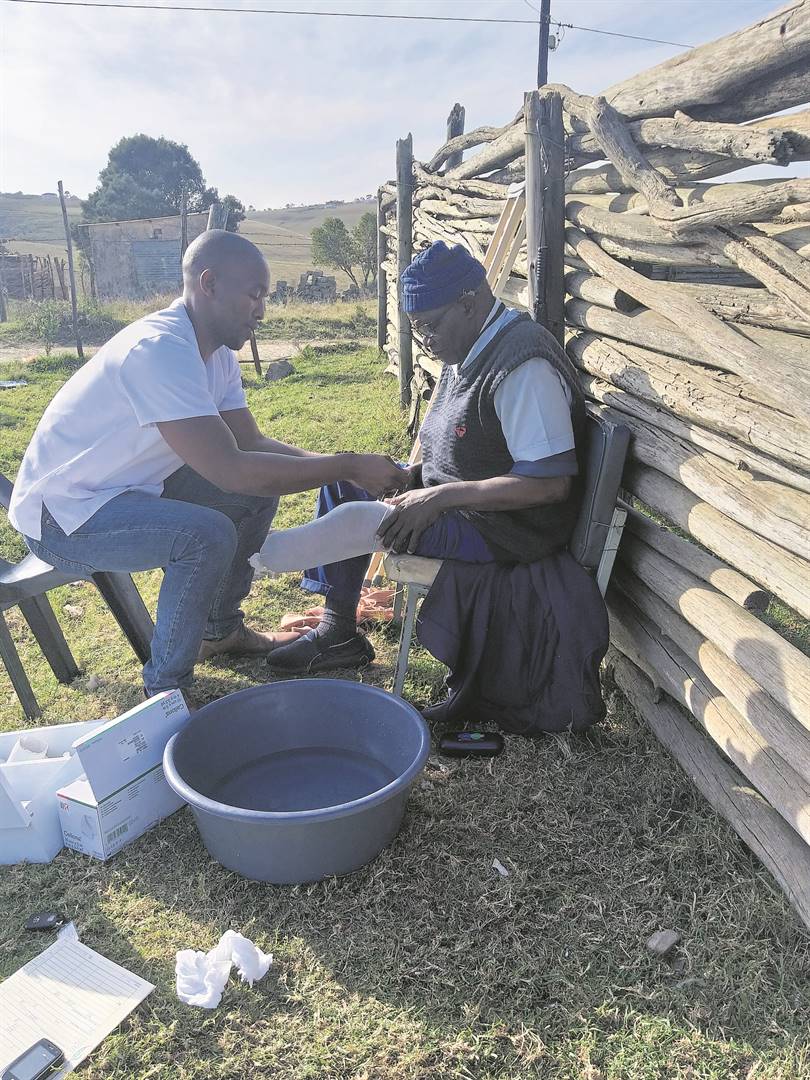
Despite running a lucrative private practice as a qualified prosthetist and orthotist, Ncedo Ludada, of Ntlaza in Libode, remains a staunch proponent of making the devices within the profession affordable to ordinary rural folk.
Ludada’s journey into the prosthetics and orthotics profession started when he got a scholarship from the Department of Health which allowed him to study in Tanzania. There he completed his BSc in Prosthetics and Orthotics at the country’s Tumaini University in 2009. He now runs the successful Ludada and Associates, which offers comprehensive patient care and prosthetic and orthotic manufacturing and repair services using safe and environmentally-friendly materials, as its chief executive.
“Currently, prosthetic and orthotics devices are out of reach for the ordinary man on the street, because of the exorbitant cost one must pay to get them. It is my wish that current regulations in the profession could be changed so that these devices could be passed on to another patient in need, and not be single use devices as current regulations stipulate,” said Ludada.
He is further advocating for regulations allowing for the devices to be rented out to patients, saying this would be an affordable option for those who currently cannot afford them.
“Some of these devices are under-utilised and because the current regulations say they are single use devices, they end up in refuse bins which also has a negative impact on the environment,” said Ludada.
His innovative business model of renting orthotic and prosthetic devices is making these much-needed devices more affordable for low-income earners, but also contributing to environmental sustainability by reducing waste.
Ludada says that his proposals can make a change in the former Transkei, which is one of the most densely populated regions in the Eastern Cape and yet is one of the least-serviced in terms of mobility assistive technology.
“We would like to be known as environmentally conscious game-changers and liberators, that are helping South Africans have access to appropriate technology without harming the environment,” concluded Ludada.