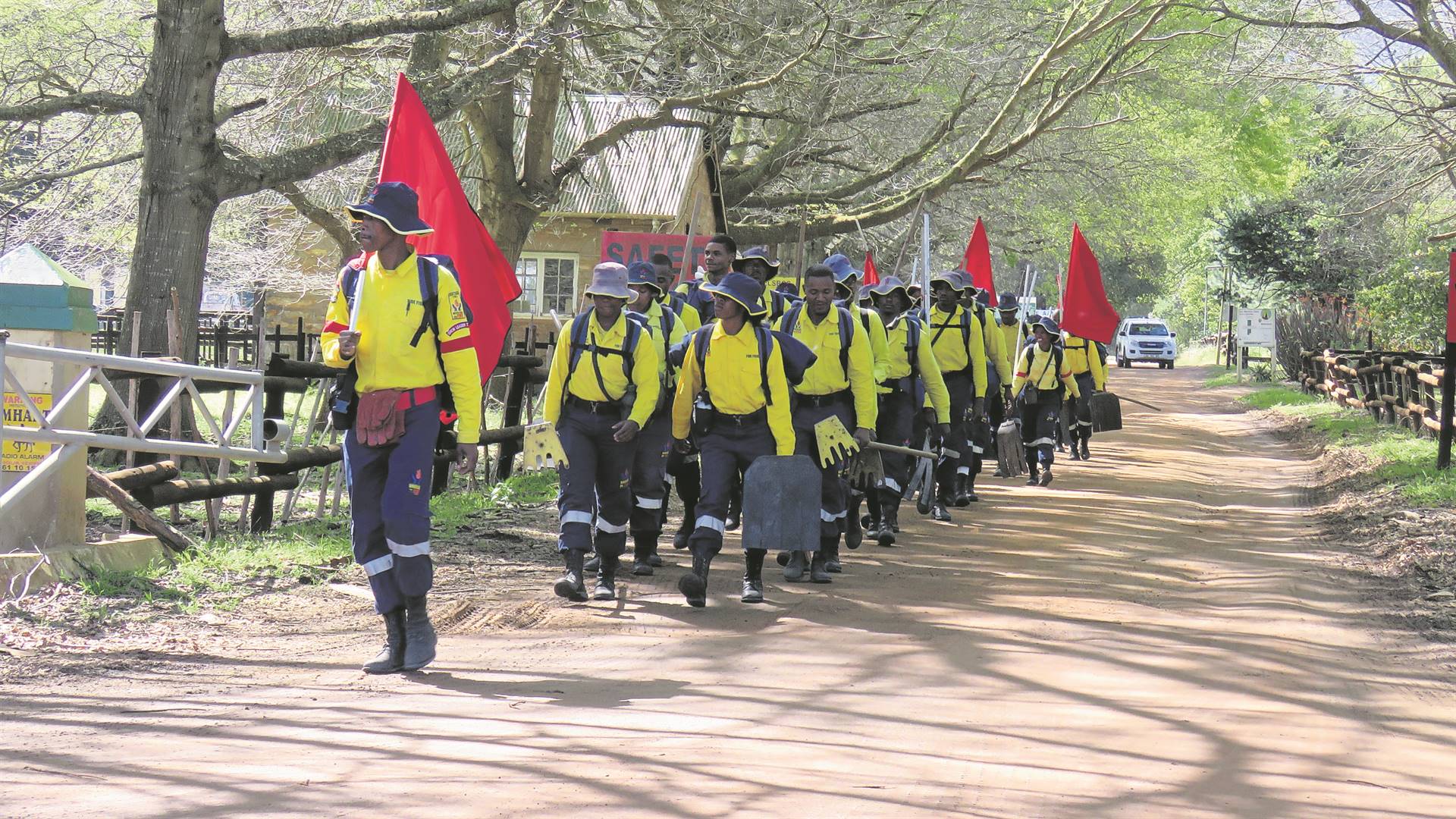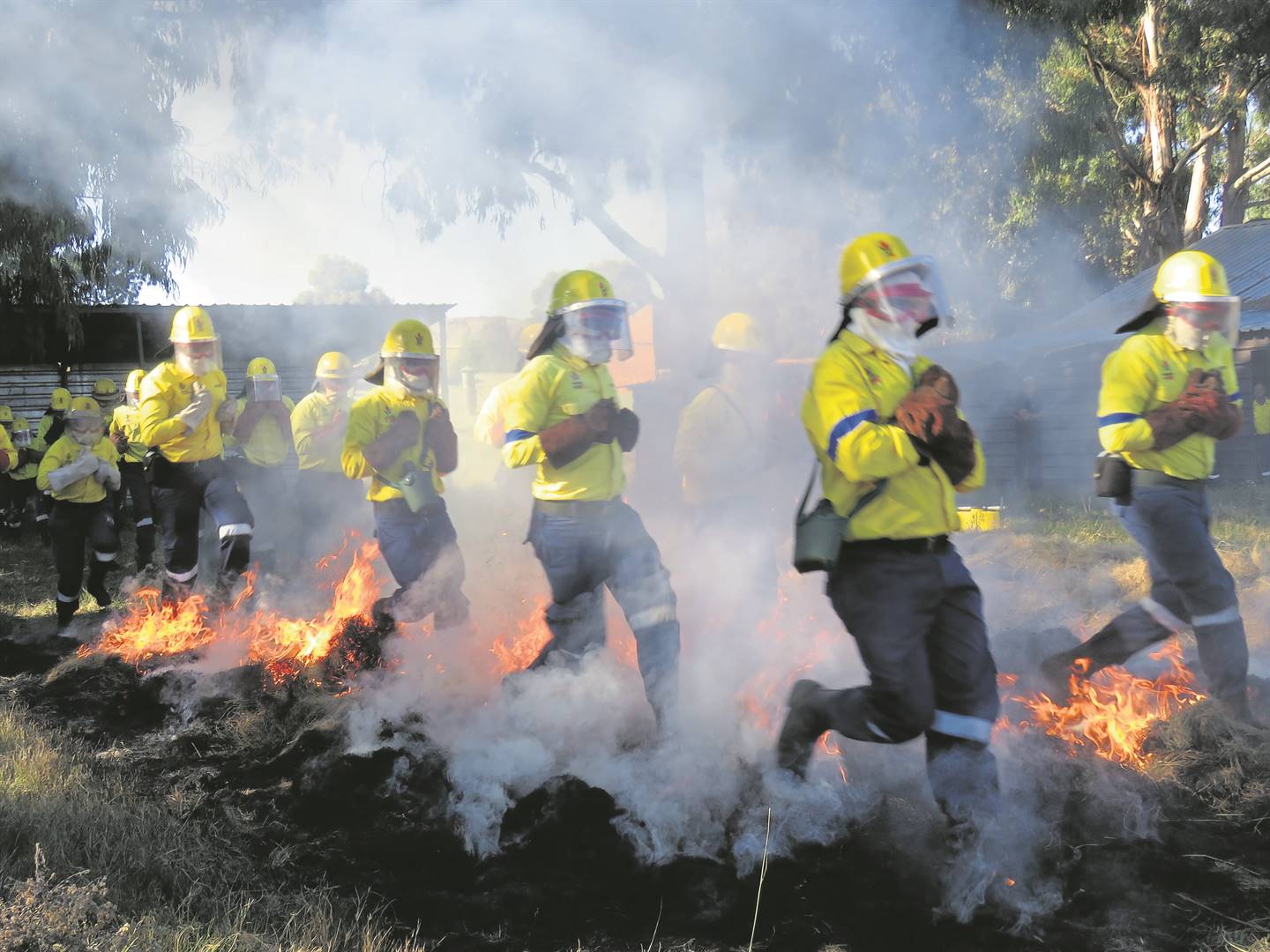
Working on Fire is hard at work preparing its firefighters for the 2023 Winter Fire Season with its Yellow Card Training Camp, which officially started on May 3 and continued until today, May 18.
This camp is for the teams in the eastern part of the Eastern Cape, and plays a crucial role in ensuring that firefighters are well-prepared to tackle the challenges they may face during the winter fire season.
More than 200 firefighters stationed at 18 bases are attending the training in order to refresh their firefighting skills, and test their physical and mental fitness in preparation. These firefighters will be deployed across the province to reduce the personal and economic harm caused by unwanted veld and forest fires.
Msindisi Poponi, the Ground Operations manager, expressed confidence in the teams, stating that they are expecting an excellent pass rate from all of them.
“The collaborative efforts of WoF, stakeholders, and partners aim at significantly decreasing the risk of fires throughout the province and ensuring the safety of the communities.”
During the previous summer fire season, WOF firefighters supported partners in suppressing 39 fires, limiting the affected areas to approximately 3 685 588 hectares. Firefighting aircraft also contributed with 160.05 flying hours. These statistics highlight the importance of the firefighting efforts and the significant role played by WOF.
The Eastern Cape has two fire seasons: the winter fire season, which occurs from June to October in the eastern part of the province, and the summer fire season, which takes place from December to April in the western part.
WOF is responsible for assisting with fire suppression and prevention services to various landowners throughout the province, including organisations like SanParks, Eastern Cape Umbrella Fire Protection Association, South African National Parks, ECPTA, Elliot FPA, and the Greater Stutterheim Fire Protection Association.
To minimise the occurrence of unwanted fires in the upcoming fire season, it is crucial for everyone to follow certain precautions. These include not throwing lit cigarettes out of moving vehicles, avoiding starting fires on windy days, exercising caution when using flammable liquids, and ensuring the proper extinguishing of fire pits and campfires. Additionally, it is advisable to have a defensible space around homes or firebreaks around properties to prevent fires from spreading. By adhering to these guidelines and promoting fire safety measures, individuals can contribute to reducing the risk of wildfires and protecting both lives and properties during the winter fire season in the Eastern Cape.
– ISSUED BY NTHABISENG MOKONE FOR WORKING ON FIRE EC