

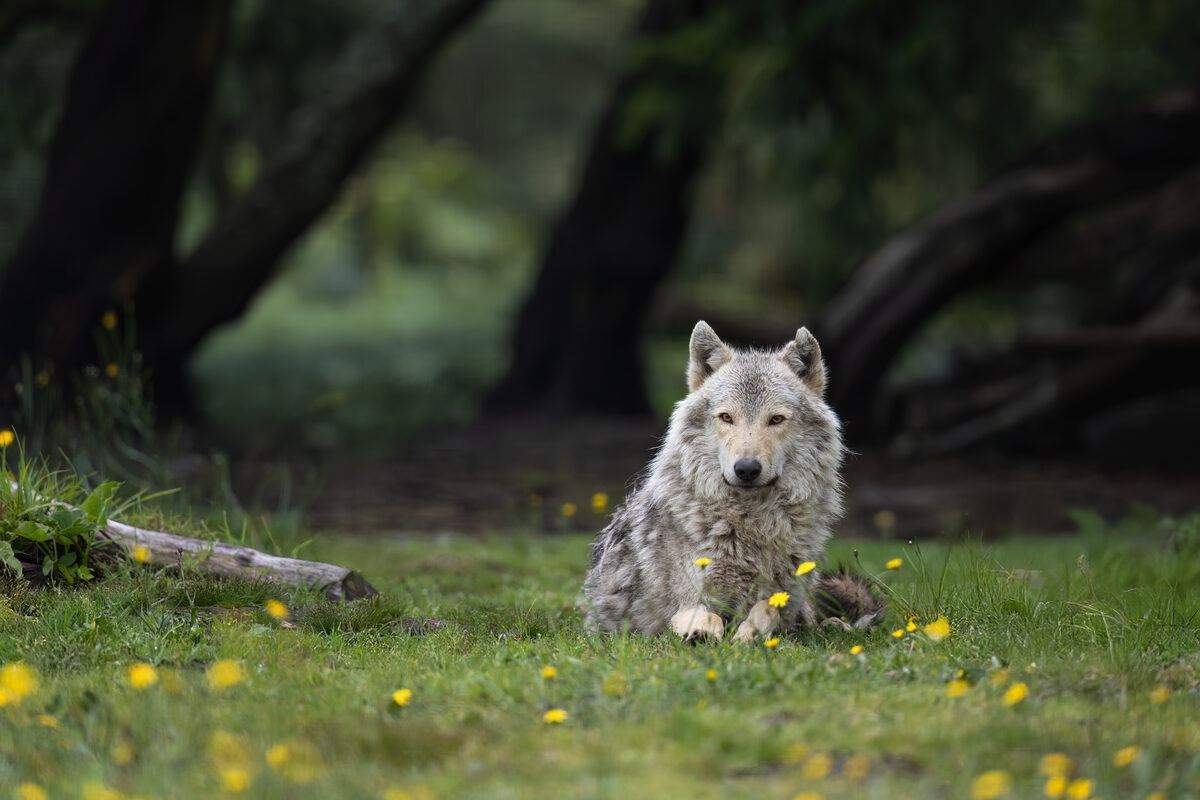
TSITSIKAMMA – The Tsitsikamma Wolf Sanctuary, South Africa’s oldest wolf sanctuary, is continuing its recovery efforts after severe flooding and storm damage in May caused extensive destruction to infrastructure and access routes at the facility.
Established in 2001 as a non-profit organisation, the sanctuary provides a permanent home for wolves and high-content wolfdogs that have been surrendered by private owners, rescued from unsuitable situations, or transferred from facilities that could no longer care for them.
According to zoologist and conservationist, Francette Jerling, the sanctuary experienced one of the most severe weather events in recent years.
“The rain seemed relentless. We are accustomed to winter storms in the Tsitsikamma region, but this event was unlike anything we have experienced in recent years,” said Jerling.
“As the rainfall continued hour after hour, water began accumulating in areas that would normally drain without issue.”
Jerling said that the scale of the damage became apparent when the sanctuary’s main access road began washing away.
“Our main access road started washing away, trees continued falling, and floodwater started impacting infrastructure across the sanctuary. At that point, we knew we were dealing with a major weather event rather than a typical winter storm,” said Jerling.
She further said that approximately 400 mm of rain was recorded during the event.
As a result of the access road washing away, Jerling said that they were forced to close the sanctuary to the public for two weeks.
She said that electricity and cellphone reception were also lost across the area, preventing visitors from contacting the sanctuary for information about alternative access routes.
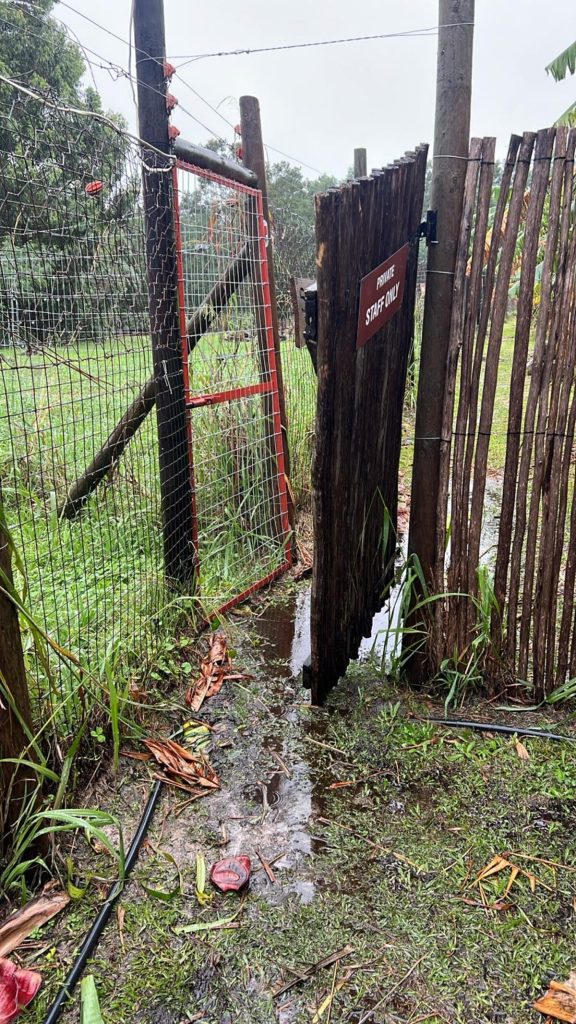
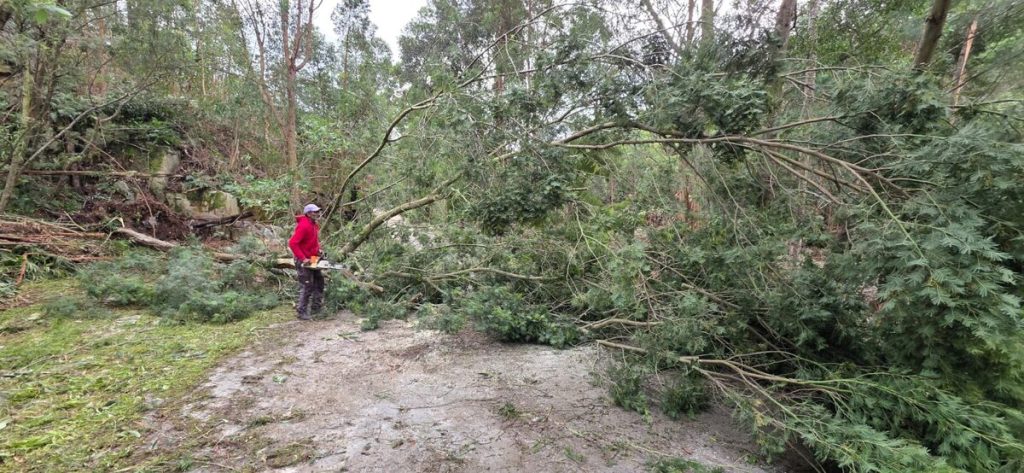
“Several large trees fell across roads, pathways and fences, while visitor areas, walkways and service infrastructure were damaged by erosion and floodwater. Certain sections of fencing required urgent repairs to ensure the continued safety of the animals,” said Jerling.
Despite the destruction, she said that none of the sanctuary’s wolves was injured.
“The wolves’ safety was our highest priority throughout the event,” said Jerling.
“Our team continuously monitored the enclosures, checked fence lines, cleared drainage where possible, and remained on-site despite difficult conditions.”
Jerling said that the sanctuary currently cares for 22 wolves and wolfdogs, primarily Grey Timber Wolves (Canis lupus) and high-content wolfdogs.
She said that the wolves are an exotic species in South Africa, and many of the animals currently in the country are a result of the exotic pet trade.
While feeding schedules and daily care routines were maintained throughout the flood, Jerling said that the sanctuary faced significant logistical challenges.
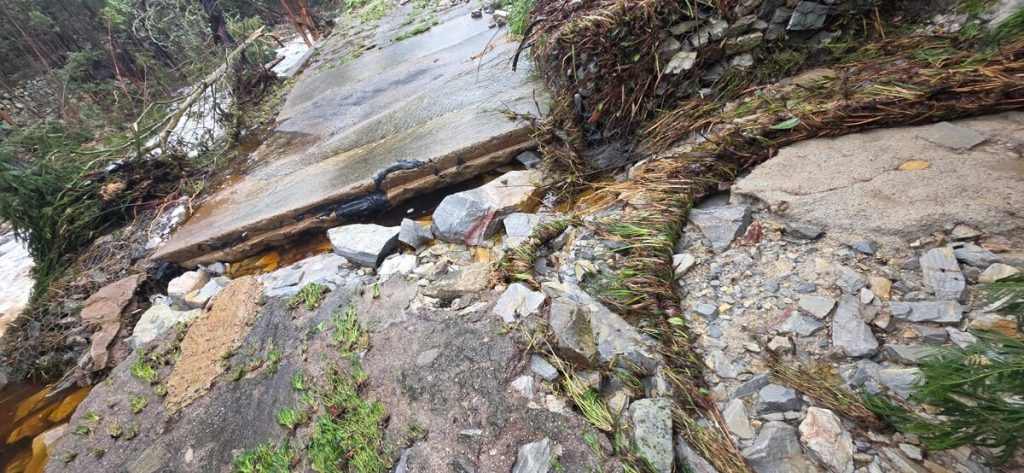
She explained that damaged roads prevented staff from collecting carcasses donated by neighbouring dairy farms, while flooding left the feed preparation area inaccessible for approximately two weeks.
Jerling said that, as a completely off-grid facility powered by solar energy, the sanctuary also had to rely heavily on generators to keep freezers operational and preserve food supplies.
The financial impact of the disaster has also been significant.
“The road alone cost R75,000 to repair. Additional repairs and clean-up are estimated at a further R20,000 to R30,000,” said Jerling.
She said that the most urgent priorities include repairing access roads, stabilising erosion damage, restoring drainage systems, clearing fallen trees and repairing damaged fencing and infrastructure.
Jerling said that as a small, privately run NPO, the sanctuary relies on visitor tours, sponsorships, donations and accommodation bookings to fund its operations.
“Emergencies like this place enormous strain on our resources because funds that would normally be used for animal care, maintenance, and operational expenses must suddenly be diverted toward unexpected repairs and disaster recovery,” said Jerling.
Although the sanctuary has reopened for day tours and rustic glamping accommodation, some areas remain inaccessible while clean-up and repairs continue.
Jerling said the public response to the sanctuary’s appeal for assistance has been encouraging.
“The response has been incredibly heartwarming. We have received messages of support from around South Africa and overseas, as well as some donations,” said Jerling.
“What has touched us most is that many people who have visited the sanctuary over the years feel a personal connection to the wolves and genuinely want to help us recover.”
Jerling said that businesses can assist with building materials, fuel, machinery, fencing materials, transport and professional services, while members of the public can support the sanctuary through donations, sponsorships, tours and accommodation bookings.
Jerling said that the recent storm has reminded them how resilient both people and animals can be.
While the damage has been significant, she said that they remain committed to providing the highest standard of care for every wolf that calls the sanctuary home.
“We would like to thank our supporters, neighbours, volunteers, sponsors, and the wider community for their kindness and encouragement during this difficult time. The wolves are safe, and with continued support, we will rebuild stronger than before,” said Jerling.
“The wolves are the reason we are here. No matter the challenge, their welfare comes first,” she added.
For more information or to donate towards the sanctuary, contact 066 238 8094 or 082 956 4175, email tsitsikammawolfsanctuary@gmail.com, or visit wolfsa.org.za.
ALSO READ: Severe weather causes widespread disruption across the Garden Route


You must be logged in to post a comment.