
Baviaans 4×4 Tours
STEPPING away from the bustling office, an immediate sense of peace is felt as one ventures into the untouched beauty of the Baviaanskloof Wilderness. The fresh, crisp air fills the lungs as one joins a day trip with Baviaans 4×4 Tours. The trip is led by Pieter Kok, a local who grew up in Patensie and knows this incredible area intimately.
From the moment Patensie is left behind, it is clear that an adventure awaits, one that traverses rugged landscapes, breathtaking vistas, and rich stories of the valley’s history. The destination? Bergplaas – a place where nature’s raw beauty and fascinating local history collide in the serene wilderness of the Baviaanskloof.
A journey through time and nature
The trip begins with a 4-hour drive from Patensie to Bergplaas. As the drive continues, Kok shares fascinating stories about the Gamtoos Valley region and the farming history of the area. One learns about the irrigation canal system established in the 1970s, still used today, and marvels at the majestic Enon Conglomerate rock formations. The highlight is spotting the Queen Victoria profile, just 16 km from Patensie – a remarkable natural sculpture, shaped by centuries of wind and water erosion. It is humbling to witness nature’s power etched into the cliffs. The key to spotting her lies in timing and direction – look west, stop, and glance back, and her regal bust emerges from the cliffs as if she were watching over the valley.
As the rugged terrain is navigated, Kok points out where the Grootrivier and Kouga River meet to form the Gamtoos River. The view is breathtaking.
Into the wilderness
Once the tar road is left behind and the gravel road is hit, it feels like entering another world. The scenery shifts, revealing the rich biodiversity of the Cape Floristic Region, a UNESCO World Heritage Site. Every turn offers new discoveries, from streams crossed (17 times!) to narrow roads that make the journey all the more thrilling. If one is lucky, they will spot an endangered Eastern Cape Red Fin Fish in the crystal-clear waters.
Along the way, Kok’s knowledge of the local flora brings the wilderness to life. Towering Outeniqua Yellowwood trees are pointed out, the curious shedding bark is explained, and the Waboom tree, whose wood was once used to make brake blocks for ox wagons, is introduced. The sticky sap of the tar wood tree and the bright blooms of the fynbos are just a few of the many fascinating things learned about the region’s plant life. Every plant has a purpose, and each story adds a layer of appreciation for the landscape.
A coffee break with history
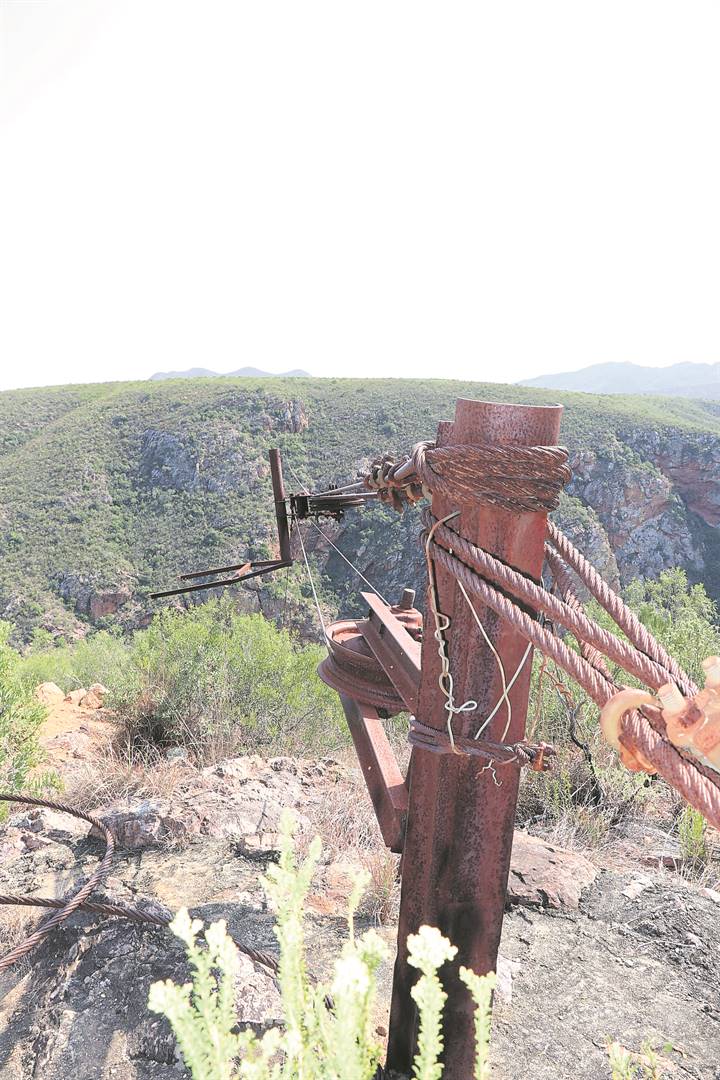
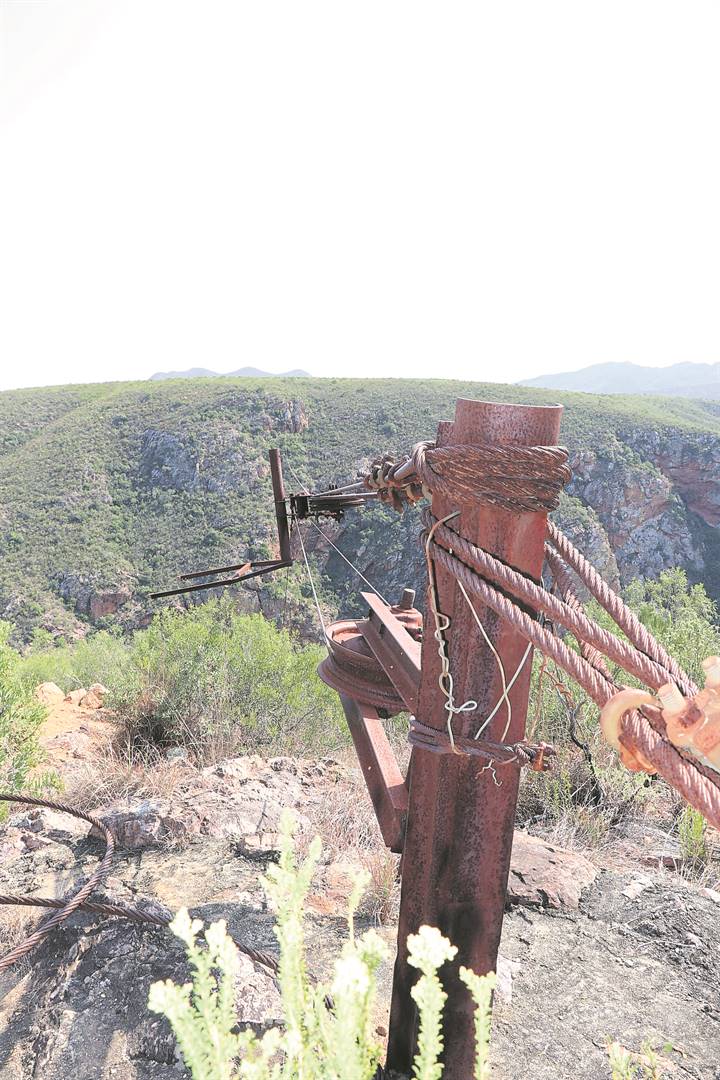
At Bergplaas, a pause for a coffee break, complete with homemade cookies, is taken, and the iconic cableway built by Winston le Roux in 1967 is admired. It is hard to imagine a 33-year-old farmer taking on such an ambitious project – building a 410-metre cableway across a gorge that plunges 387 metres deep, with a capacity to carry 5 tons of goods to Gqeberha (formerly known as Port Elizabeth). The project required nearly 1,200 metres of cable just to pull the two strands across the gorge’s rugged terrain. For a good comparison on the scale of this cableway, one should take into account that the Bloukrans Bridge, South Africa’s highest bridge, stands 216 metres above the riverbed with a span of 272 metres. Standing there, looking at the cable that saved Le Roux a gruelling 48-kilometre journey over steep passes, one cannot help but admire his ingenuity and determination. His initials, “W le R,” etched into the concrete anchor pole, are a lasting reminder of his achievement.
CONTINUES ON PAGE 10