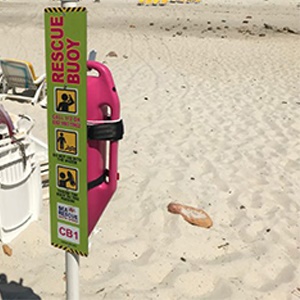

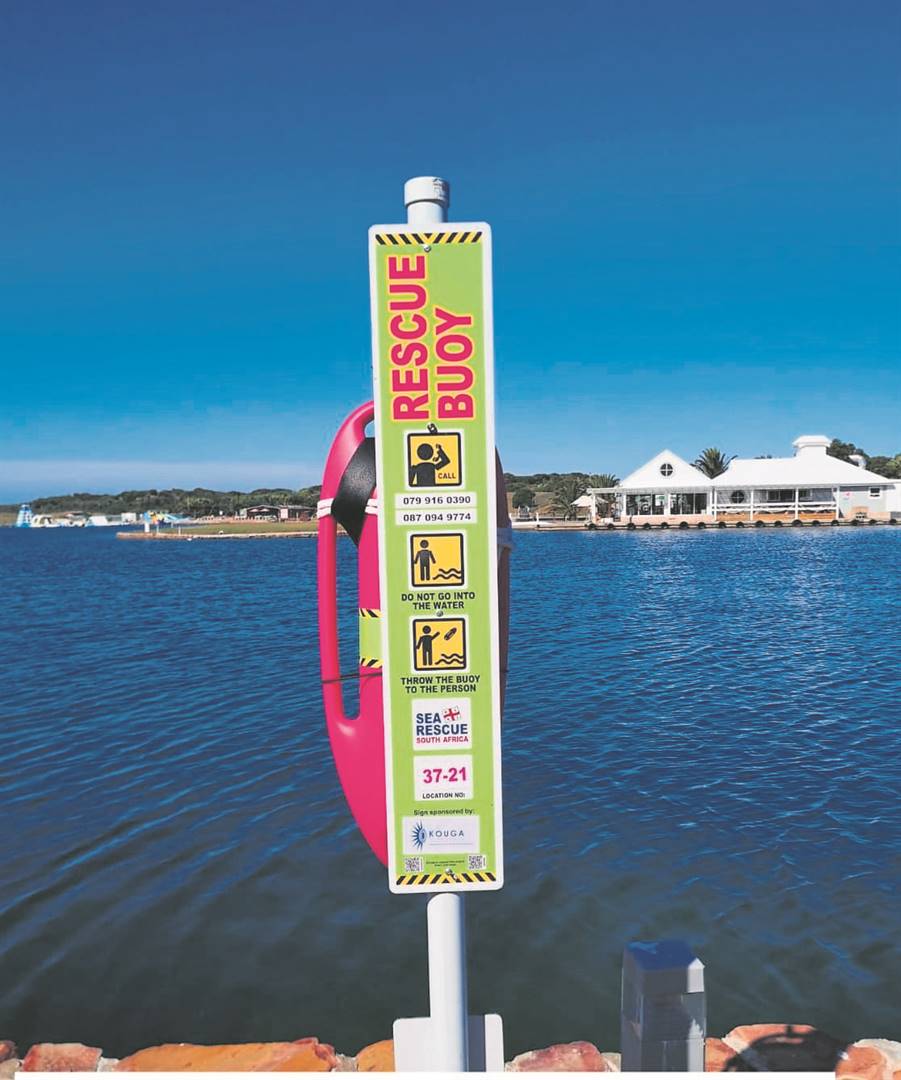
The National Sea Rescue Institute (NSRI) has noticed an increase in the theft of Pink Rescue Buoys at the beaches in the Kouga region, and is appealing to the public to report any incident of theft of the rescue tool, used in the prevention of drowning.
According to Jeffreys Bay businessman, André Volschenk, who is a volunteer at J Bay Pink Buoys and assists the local NSRI with the distribution of pink buoys in the Kouga region, the easy and quick rescue tool is thrown at a person in the water who is in distress. He said since the pink buoy is lightweight it allows children to use it with ease.
“A tragic situation can be prevented when a person who is drowning holds onto a pink buoy,” said Volschenk. “Pink Buoys have become synonymous with rescues and are very visible.”
Volschenk oversees pink buoys at Paradise, Aston Bay, Jeffreys Bay Main Beach, Kabeljous Nature Reserve, and beaches in the rest of the Kouga area. He said he has built up a contact base with the communities through his participation in the local security structure, Safer J Bay, and have received requests from participants for pink buoys.
Volschenk said Marina Martinique recently requested a pink buoy which he installed at the private beach, their restaurant and at some of their coves which are frequently used.
“Emergencies can happen anywhere and at any time. When people see a pink buoy, they realise that there is a rescue tool available to assist a person in distress,” said Volschenk. “If there were no pink buoys distributed, then we would have had more drownings. It is always better to have gear in place to assist people during emergencies.”
Volschenk said that he has had to replace the pink buoy at the Seekoei River mouth at least three times in the last month which is concerning.
He said the poles on which the pink buoy is attached has an emergency contact number which the public can contact if the rescue tool is stolen. Additional contact numbers are 079 916 0390 and 087 094 9774.
“When people pass a pink buoy station and notice a missing buoy or a broken one, they can contact the J Bay Pink Buoys by calling the emergency number on the pole, or the additional numbers given, and the buoys will be replaced,” said Volschenk.
He said the J Bay Pink Buoys are hoping more volunteers will join them with one volunteer looking after at least the pink buoys in the Kouga region, adding that to join the volunteer group, those interested can contact him on 082 494 3129.
“There are many people who take daily walks on the beach and can join our group to inform us about any pink buoys which have been stolen or damaged,” said Volschenk.
Andrew Ingram, NSRI drowning prevention manager, said the theft of pink buoys is not only a problem in the Kouga region, but also throughout the South African coastline, with at least 20 percent of them having been stolen in 2017.
To combat this problem, he said that they had launched multiple campaigns on various social media platforms to inform the public about the importance of the rescue tool and how they can report it stolen. Ingram said that the only people who should have pink buoys in their possession are a lifeguard and a volunteer who has a tag on.
“People tend to think that the pink buoy is their property, but it is important for the public to know that it is lifesaving equipment,” said Ingram.
With increased public awareness and support for the campaign, the percentage of stolen pink buoys has dropped to under 5 percent.
“At least 144 people have successfully been rescued using the pink buoys. The rescue tool has touched hundreds of lives throughout the country,” said Ingram.
Paul van Jaarsveld, NSRI Jeffreys Bay station commander, said that the pink buoys help greatly with the prevention of drowning in the Kouga region.
“The pink buoys are used in the rescue and prevention of drowning and if someone can use it before we get there it will help us a lot,” said van Jaarsveld.