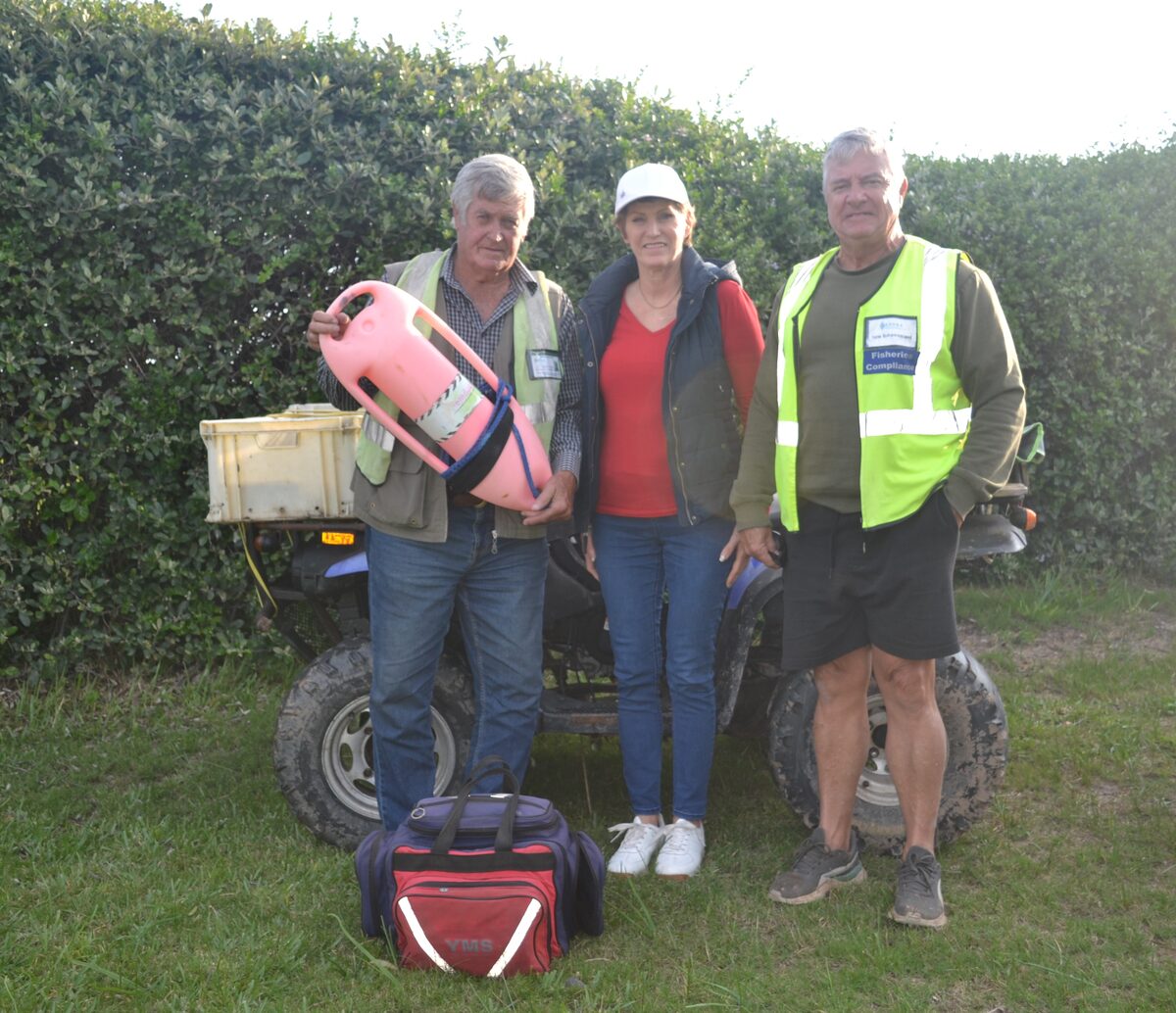

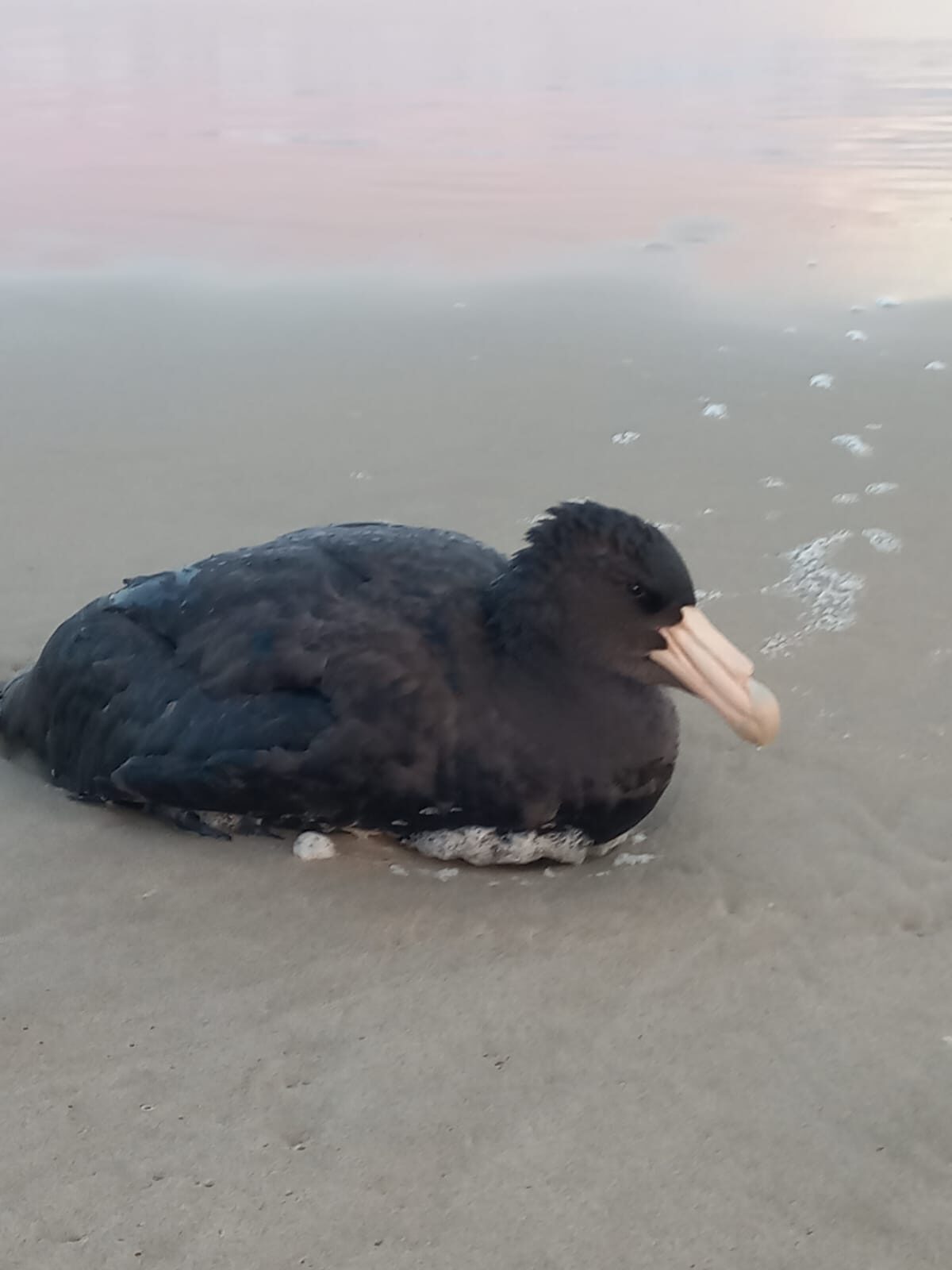
GAMTOOS VALLEY – A rare seabird sighting at Gamtoos Beach prompted a coordinated response from local wildlife authorities after members of the Gamtoos Beach Patrol Team discovered what was believed to be a Southern Juvenile Giant Petrel resting on the shoreline.
The bird was first reported by a resident of the Gamtoos Mouth Estate on 18 June.
Following the report, Jaco Boshoff and his wife, Amanda, travelled to the location to assess the situation.
According to Amanda, the bird appeared tired but showed no obvious signs of injury.
“We located the bird lying on the beach. It appeared to be fatigued, but it remained alert and was observing its surroundings, including our presence at a distance. During our visual assessment, we did not observe any signs of injury, blood, or physical trauma,” said Amanda.
She explained that the patrol team’s priority was to avoid causing unnecessary stress to the bird.
“Our initial response was to conduct a visual assessment from a safe distance. After determining that there were no obvious signs of injury but noting that the bird appeared fatigued, we reported the sighting to the relevant wildlife authorities for further guidance and assessment,” said Amanda.
She said that the sighting was reported to Bayworld and SANCCOB in Gqeberha, and officials attended to the matter.
Amanda described the response from wildlife organisations as professional and well-coordinated.
“Our communication with Bayworld has been professional, cooperative and constructive. They have consistently provided expert guidance and assistance when wildlife-related matters have been reported. The response from SANCCOB was equally prompt and well-coordinated, demonstrating a strong commitment to wildlife conservation and ensuring that the bird received appropriate attention and care,” said Amanda.
She added that Bayworld responded quickly after being notified and that, upon SANCCOB’s arrival, a team member conducted a professional assessment of the bird’s condition before determining the appropriate course of action according to standard wildlife protocols.
Based on their observations, Amanda believes the bird to be a Southern Juvenile Giant Petrel, although she stressed that official identification was left to wildlife specialists and conservation experts.
She said it was the first time she and the team had personally encountered a Southern Juvenile Giant Petrel at Gamtoos Beach and in the wider Gamtoos area.
The Gamtoos Beach Patrol Team, led by Colin McDonald, has been active in the area for the past nine years.
Amanda said wildlife sightings are common along the coast, although intervention is only occasionally required.
“When encountering wildlife, our priority is the safety and well-being of both the animal and the public. We assess the situation from a safe distance, avoid direct interaction unless necessary, and notify the appropriate wildlife rescue organisations, Bayworld and SANCCOB, when professional intervention may be required,” said Amanda.
She said the incident underscored the importance of public awareness and responsible reporting of wildlife sightings.
“The prompt communication from residents allowed the matter to be assessed and referred to the appropriate experts. We appreciate the support of the community and the assistance provided by the relevant wildlife authorities,” said Amanda.
Kaitlin Kleynhans, a seabird rehabilitator at SANCCOB, is involved in the rescue, rehabilitation and care of seabirds and other coastal bird species requiring rehabilitation.
She confirmed that the bird found on Gamtoos Beach was a Southern Juvenile Giant Petrel.
While Kleynhans said that it is not possible to determine the exact origin of an individual bird without tracking data, a band or a ring, she said that Giant Petrels found along the South African coastline are generally considered to originate from sub-Antarctic breeding colonies.
“In this case, it is reasonable to assume the bird may have originated from Marion Island, although it could also have come from other sub-Antarctic islands within the species’ range,” said Kleynhans.
She further said that Southern Giant Petrels are marine seabirds that occur in South African waters, particularly offshore.
Kleynhans said that while they can occasionally be observed from the coast, they are not commonly encountered on beaches, and strandings such as this are relatively unusual.
She said that the bird found on Gamtoos Beach was admitted in a severely weakened condition.
“Upon arrival, it received supportive care, including receiving oxygen, glucose and vitamin injections,” said Kleynhans.
She said that unfortunately, despite these efforts, the bird died the following day, with the exact cause of death currently unknown.
Kleynhans said that a post-mortem examination still needs to be done to gather additional information about its condition and possible cause of death.
She said that Southern Giant Petrels are impressive ocean-going seabirds that spend most of their lives at sea and can travel vast distances across the ocean.
Kleynhans said that one of the significant threats facing many seabird species is marine pollution, particularly plastic ingestion.
“Giant Petrels are known to ingest plastic debris, which can contribute to poor health and mortality. While we cannot confirm that this was a factor in this particular case, it remains a recognised threat to seabirds globally,” said Kleynhans.
ALSO READ: Critically endangered, globally recognised: Dyer Island penguin film named ITFFA finalist