

EASTERN CAPE – Farming communities in the Langkloof and Gamtoos Valley are continuing to count the cost of widespread flood damage and ongoing road infrastructure challenges following recent severe weather conditions in the Eastern Cape.
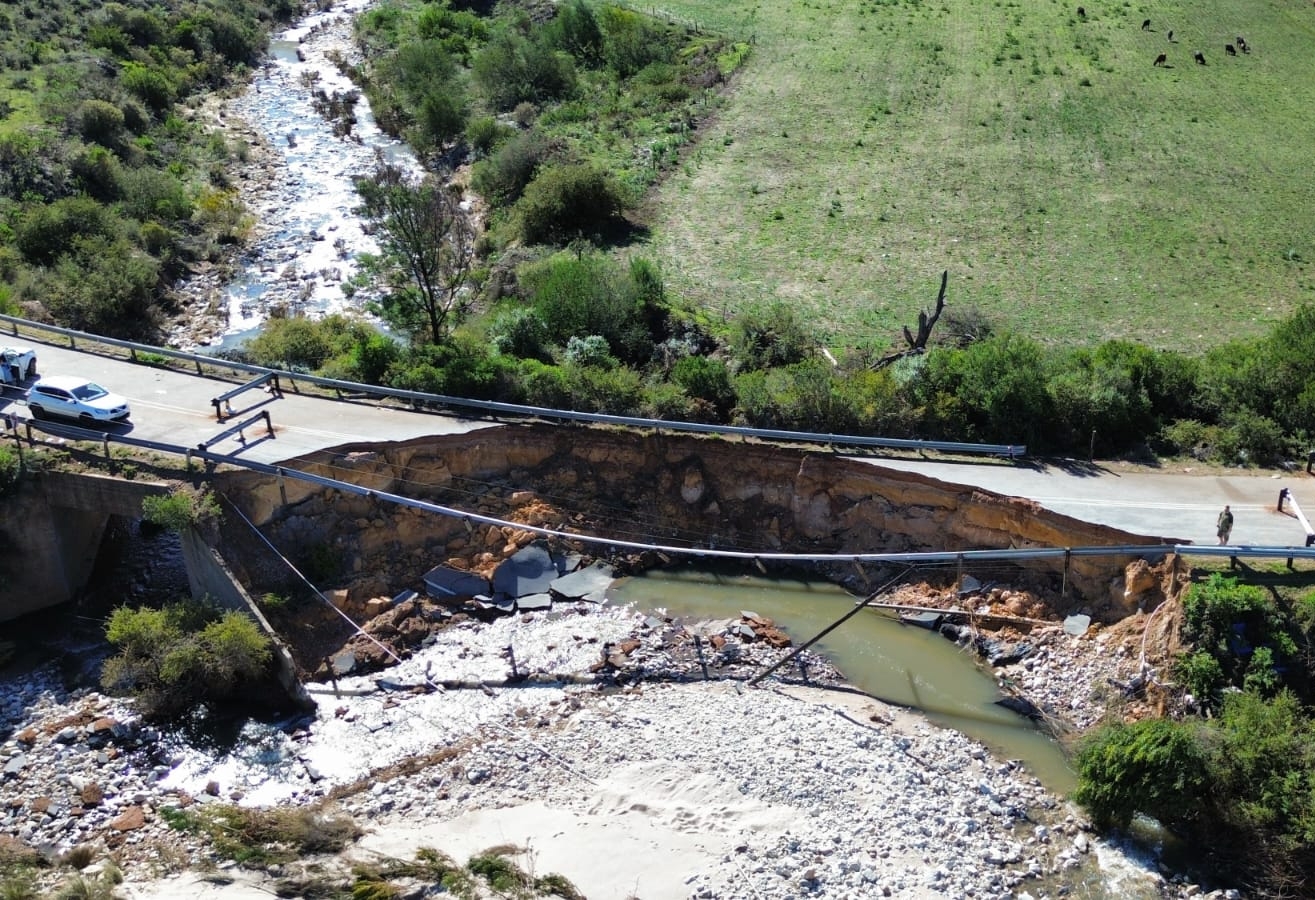
The collapse of a section of the R62 between Kareedouw and Joubertina has created major logistical and financial difficulties for farmers transporting produce to export markets.
According to Rey Rademeyer, chairman of the Langkloof Farmers Association based in Louterwater, many farmers have experienced major damage to their farming properties.
Rademeyer said the biggest challenge at present is the impact that damage to a section of the R62, referred to in the farming community as “container draai”, has had on travel time.
“Farmers from Joubertina and surrounding areas who need to transport produce to the Port of Gqeberha for export are now required to travel an additional 600km through George before heading to the port,” said Rademeyer.
He said that this has come with great financial implications with the increase in diesel prices.
“It has cost farmers a combined total of approximately R350,000 a day to transport produce to the Port of Gqeberha, with between 25 and 35 containers travelling the route daily,” said Rademeyer.
Apart from transportation difficulties, he said that farmers have also experienced varying levels of damage to their farms, with some reporting minor damage and others severe damage.
Rademeyer further said that restoration of the farms could cost millions of rands.
While Rademeyer is a deciduous fruit farmer, he said the affected road is also used to transport many other types of produce.
He further said that the road closure has affected access for ambulances and other emergency services, while shops in the area have battled to stock essential items.
According to Rademeyer, the farmers’ association is currently in discussions with South African National Roads Agency SOC Limited (SANRAL) regarding repairs to the road, which is expected to reopen on 10 June.
SANRAL first confirmed on 7 May that the affected section of the R62 had been closed following the collapse of the road between Kareedouw and Joubertina.
At the time, SANRAL advised motorists to use the alternative route via the N2 to the Western Cape.
On 14 May, the SANRAL spokesperson, Lwando Mahlasela, said an initial meeting had been held with engineers and that a surveyor would first need to determine the extent of the wash-away before a full assessment could be completed.
“The whole road had been washed away, and the wash-away was about 8m to 10m deep and needed to be reinstated,” said Mahlasela.
He further said the road would remain closed until the initial assessment had been completed and that time frames would be determined during the assessment process.
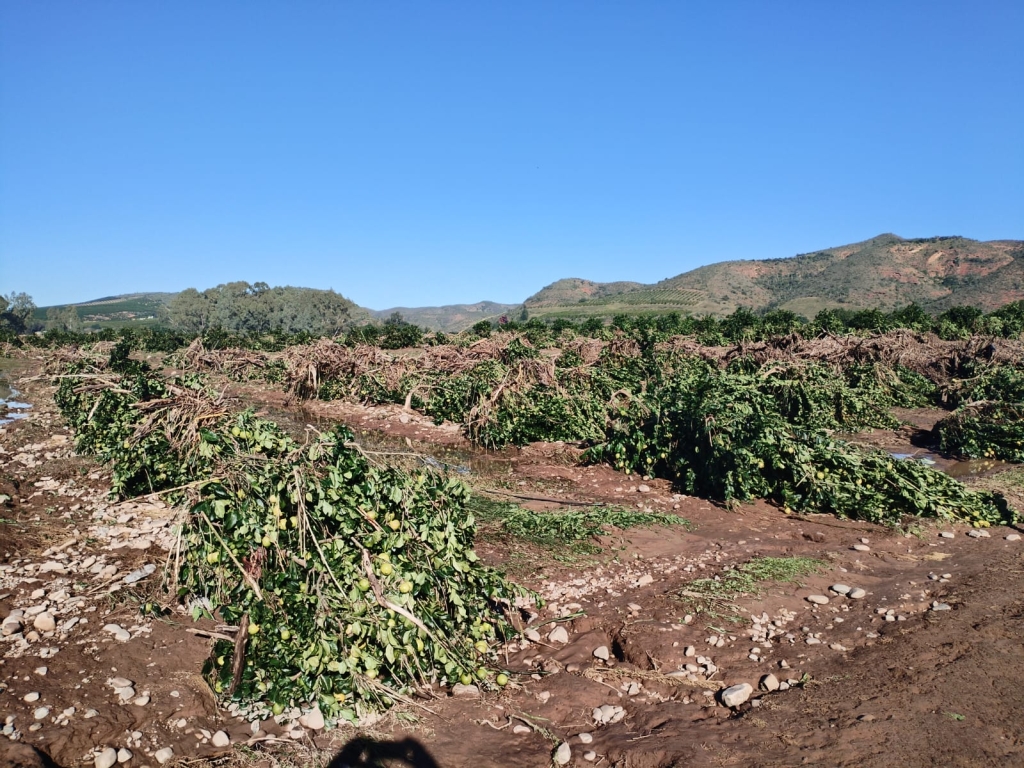
The impact of the flooding has also been severe in the Gamtoos Valley.
Grewar Oosthuizen, deputy chairman of AgriGamtoos Agricultural Association, said when the Kouga Dam began flooding in less than 18 hours, the Groot River flowing out of the Karoo was already flooded.
“Soon the Gamtoos River was also flooded, and it became apparent that people had to evacuate,” said Oosthuizen.
He said about five farm owners and approximately 200 farm workers had to evacuate.
Oosthuizen said that thankfully, the farm workers were well taken care of by the local churches and the farmers, and have since returned home and started cleaning up the flood damage.
He said another major challenge was that the valley had no electricity and that roads had been closed, with some of the main gravel roads washing away.
Oosthuizen said the farming community began repairing roads to make them temporarily operational so that residents could regain access to towns and farmers could reach their packhouses. “Thankfully, this process is about 80% complete,” said Oosthuizen.
He said emergency repairs to roads were carried out by farmers themselves, who often had to rent large machinery to clean up affected areas.
Oosthuizen said farmers are now compiling a report for the relevant state department in the hope of being refunded for repair work carried out on state roads.
He added that while several areas had been cut off from electricity for some time, Eskom was still working towards restoring power to the Andrieskraal and Cambria areas.
According to Oosthuizen, an initial high-level damage estimate indicates that at least 20% of the 18.6 million citrus cartons intended for export were affected by the floods, amounting to approximately 3.7 million cartons.
He said each carton is valued at about R190.
In addition to the citrus losses, Oosthuizen said there had also been damage to infrastructure and vegetable crop farms, with some farms losing up to 80% of their crops.
“On average, we estimate a total of R1.5 billion in damage,” said Oosthuizen.
He said it remains difficult to fully assess the extent of the damage because farmers still do not know how orchards that were completely submerged will recover.
Oosthuizen said the valley stretches from the Gamtoos River to the Baviaanskloof, covering approximately 50km of farming land.
He said that while some farmers escaped damage, others suffered severe losses.
“There is currently a lot of focus on getting the roads working again and continuing to mop up the damage caused to farms to identify the full extent of the damage,” said Oosthuizen.
“Thankfully, the farmers are quite resilient.”
Earlier this month, the Eastern Cape Department of Transport described the collapse of the R62 as the most significant road infrastructure damage recorded due to ongoing adverse weather conditions in the province.
MEC for Transport Xolile Nqatha previously said the collapse of the R62 was likely to have far-reaching economic implications for farming communities in Joubertina and Kareedouw, whose produce supports both domestic and export markets.
ALSO READ: Overberg electricity remains in shambles after the recent storms

You must be logged in to post a comment.