
With the recent spate of drowning incidents around the country, some being caused by rip currents, the National Sea Rescue Institute (NSRI) is urging extreme public caution around the coast.
There have been very strong rip currents around the coast, and those that are more at risk are bathers and shoreline anglers.
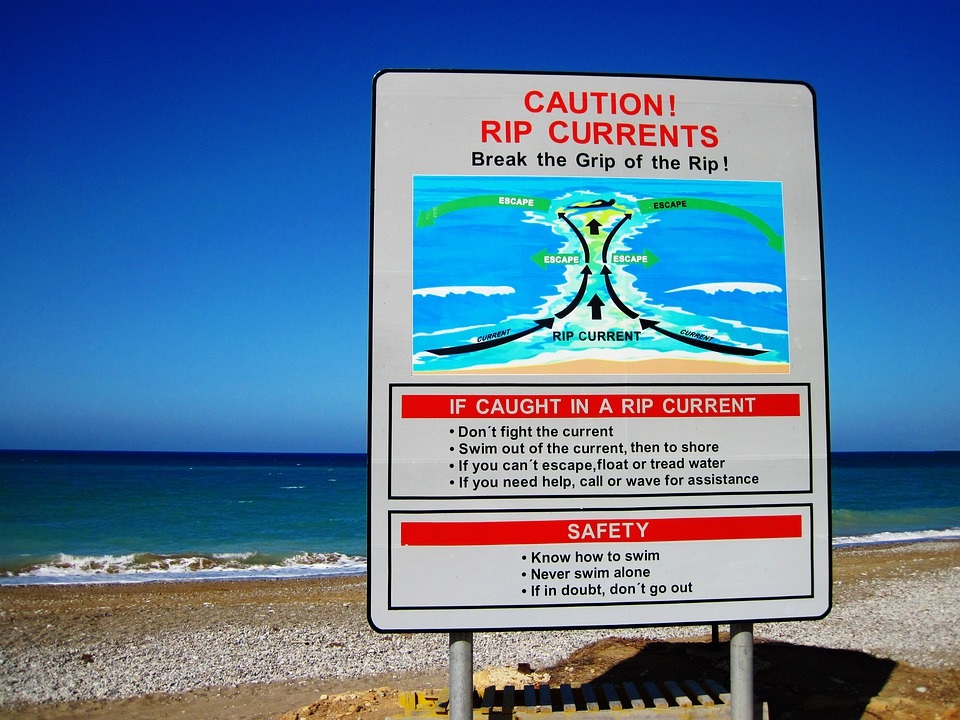
Rip currents can develop where there are breaking waves. Bigger waves produce stronger currents, and these ‘rivers’ of current are produced by water moving from the beach back out to sea. They happen often at many beaches and are the biggest danger that visitors face in the water.
Often rip currents move slowly enough to barely be detected, but given the right circumstances of waves and beach profile, they can develop into currents moving at speeds of up to two metres per second – faster than any of us can swim.
- A change in the incoming pattern of waves (often the waves do not break in a rip channel);
- Water through a surf zone that is a different colour to the surrounding water
- Turbulent or choppy water in the surf zone in a channel or river-like shape flowing away from the beach;
- Seaweed, sand ‘clouds’ or debris moving out to the backline where waves are forming through the surf zone.
Bathers are at risk of being swept out to sea by rip currents while swimming or wading in water along the beach front. Even bathers wading in shallow water, who find themselves trapped in a rip current that can form suddenly, are also at risk of being swept out to sea.
Bathers caught in a rip current should not panic.
To learn more about rip currents visit the NSRI’s YouTube page on https://www.youtube.com/watch?v=R5QDOlccXPo.