
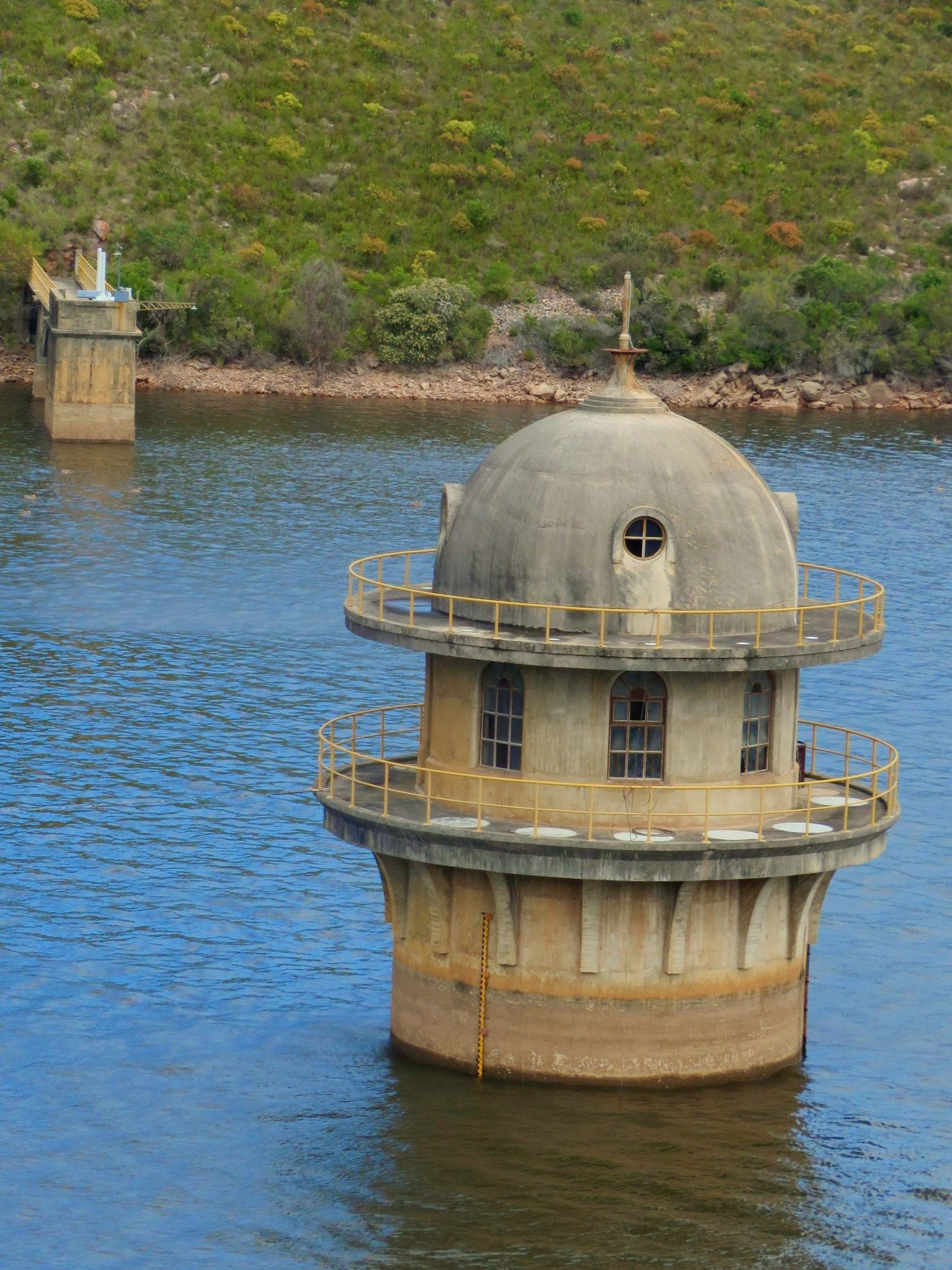
KOUGA – Kouga Municipality has formally requested increased water allocation and the transfer of Churchill and Impofu dam management from Nelson Mandela Bay Municipality, citing serious concerns over significant water losses and allegedly inefficient dam management during the current severe drought crisis.
On a Facebook post, Kouga Executive Mayor Hattingh Bornman indicated that on 11 March, he wrote to the Minister of Water and Sanitation, Pemmy Majodina, regarding the management of Churchill Dam and Impofu Dam on the Kromme River System.
According to him, these dams supply water to both the Kouga Local Municipality and Nelson Mandela Bay Municipality.
However, since 2000, there has been no formal service level agreement on Kouga’s water allocation, and they currently receive only 11 megalitres per day, which is no longer sufficient for a growing municipality.
“In my letter, I requested that Kouga’s allocation be reviewed to between 15 and 20 megalitres per day and proposed that the management of the dams be transferred to Gamtoos Water Users’ Association, which already successfully manages the Kouga Dam,” said Bornman.
He further said that securing a reliable water supply is critical for residents, the economy and future growth.
Rienette Colesky, CEO of the Gamtoos Water Users’ Association, said that the association currently focuses on managing the Kouga Dam and supplying its domestic users which include Hankey, Patensie and the NMBM.
They also supply water to the agricultural users in the Gamtoos Valley.
“We manage the water every single day. This way, we can see what is running into Loerie Dam, we see what the demand is alongside the scheme, and we see what we release out of Kouga Dam. We have managed to do this very well in the past few years, especially when the dam was very low during the drought,” said Colesky.
Concerns over water management practices
She said that the Metro has more than one water resource available, such as access to Nooitgedacht Dam and Gariep Water to serve its needs.
Colesky said that since the Gariep Water has never been under any restrictions so far, they have a certain assurance of supply from the eastern side.
She said that the Metro is the operator of Churchill and Impofu dams, and it has an obligation to manage water as efficiently as possible.
“Impofu and Churchill have been over abstracted by the Metro for many, many years, and in a sense, it is difficult to understand whether those resources will ever recover to full capacity if you look at the history,” said Colesky.
She believes that the two dams have not been managed well for many years.
Colesky said that no water manager is above the responsibility to take care of their water resources as best as possible.
“These resources are not just for us but for our future. It is therefore important to show discipline to ensure that resources are protected,” said Colesky.
She claimed that the Metro is not applying proper water demand management.
She also said that it is losing more than 60% to non-revenue water, which is water that cannot be accounted for, such as water lost through broken water pipes.
Colesky then assumed that because of the loss of water, only 40% of the Metro’s water is billed.
She therefore questions whether sufficient funding is available for proper water demand management, believing that the current approach has been a failure.
Colesky believes that another failure is that the Metro has not stayed within its water allocation quota for Churchill and Impofu for many years. This is not the right way to manage a water resource.
“There is an urgent need that whoever operates the two dams does it in a disciplined and accountable manner,” said Colesky.
“Better water demand management should be driven in the Metro.”
Colesky said that they are always available to assist in better managing the water resources of the Algoa System.
“We are keen to see that water is managed optimally and that we lose as little water as possible. Because we are a water-scarce country, water sources should be handled with care, accountability and responsibility,” said Colesky.
NMBM responds to criticism
Sithembiso Soyaya, NMBM spokesperson, said that NMB is currently operating under one of the most prolonged drought cycles recorded in the region.
In response to the severity of the situation, he said that the municipality declared a drought disaster in February 2026 and activated its approved Drought Mitigation Plan, which provides the operational framework guiding all current interventions to protect water supply, reduce losses, and stabilise the system.
Soyaya said that water resource management in South Africa is governed by the Department of Water and Sanitation through national licensing conditions and dam operating rules.
He said that abstraction from the Churchill and Impofu dams forms part of a regulated regional supply system and is therefore subject to national oversight and compliance monitoring.
“Municipalities do not independently determine abstraction volumes outside the framework authorised by the Department of Water and Sanitation,” said Soyaya.
He said that claims that NMB is losing 60% of its water must be understood within the broader context of non-revenue water experienced across municipal water systems nationally.
“These losses arise from a combination of factors including ageing infrastructure, historical network design, metre inaccuracies, illegal connections, and operational pressures associated with prolonged drought conditions,” said Soyaya.
He further said that the current drought has required the municipality to implement aggressive pressure management, valve operations, and network reconfiguration to preserve dam storage levels and maintain supply across the metro.
Soyaya said that these necessary interventions place additional stress on older asbestos cement and steel pipelines, often exposing latent weaknesses that would not normally surface under standard operating conditions.
“This does not represent institutional inaction. On the contrary, NMB has intensified operational interventions across the system to address leaks and stabilise supply.
“Between July 2025 and February 2026, the municipality received 25,427 water leak reports across the metro. Of these, 18,657 leaks have already been repaired, representing a clearance rate of approximately 73%,” said Soyaya.
To accelerate repairs further, he said that the municipality is finalising the appointment of additional plumbing contractors to supplement existing municipal teams, particularly in high-loss areas where rapid intervention is required.
At the same time, Soyaya said that recruitment processes are underway to fill vacant plumber and artisan posts within the Water and Sanitation Directorate in order to strengthen internal technical capacity.
He further said that leak repairs are prioritised through a risk-based operational model that focuses first on major water losses, infrastructure failures that threaten supply stability, and leaks affecting reservoirs or pressure zones.
“These measures form part of a coordinated programme to reduce non-revenue water while maintaining service delivery under severe drought conditions,” said Soyaya.
He further said that NMB has also implemented several water augmentation initiatives as part of its drought mitigation programme.
These include expansion of the Nooitgedacht Water Supply Scheme, development of groundwater wellfields, upgrades to water treatment works, and the introduction of advanced pressure management and system monitoring technologies.
Soyaya said that these interventions are designed to diversify supply sources, increase system resilience, and reduce reliance on a single surface water source during periods of prolonged drought.
Regarding suggestions that the management of the Kromme bulk water system should be transferred away from the municipality, he said that it is important to note that bulk water systems operate within national regulatory frameworks overseen by the Department of Water and Sanitation.
“Any structural changes to dam management arrangements must be guided by national policy, technical feasibility assessments, and the broader regional water security considerations affecting the Eastern Cape, not only one single municipality,” said Soyaya.
“The Municipality remains open to constructive engagement with the Department of Water and Sanitation, regional municipalities, and water boards to ensure that the most appropriate long-term governance model is adopted for shared water resources.”
Soyaya said that characterisations of NMB as “incompetent” in water management do not reflect the complexity of the drought conditions currently affecting the region nor the scale of interventions already underway to stabilise the system.
He said that the municipality continues to implement infrastructure upgrades, demand management measures, and operational improvements under extremely constrained hydrological conditions.
“The drought affecting the Eastern Cape has significantly reduced dam inflows and placed sustained pressure on available storage capacity across multiple years,” said Soyaya.
“Protecting water supply under these conditions requires a combination of infrastructure maintenance, system optimisation, regulatory compliance and regional cooperation.”
Soyaya said that NMB remains fully committed to transparent governance, accountable management of water resources, and cooperative engagement with national and regional stakeholders to safeguard long-term water security for all communities in the region.
ALSO READ: Urgent payment demanded so as to resume stalled Phomolong infrastructure project