

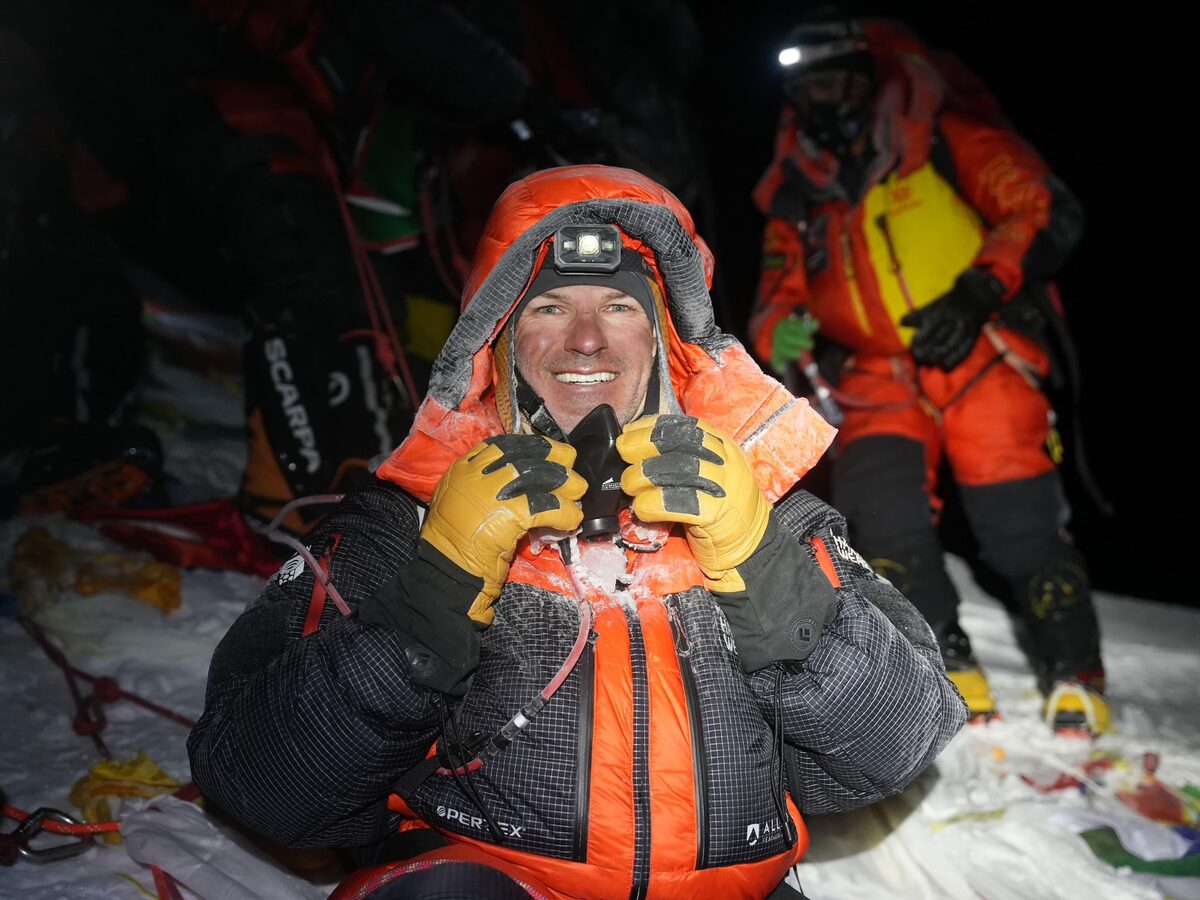
JEFFREYS BAY – In the pre-dawn darkness of 18 18, as fierce winds howled across the world’s highest peak, Zach Smith stood atop Mount Everest at 03:00 — a moment that marked not just personal triumph, but the near-completion of an 18-year mountaineering journey that began in his childhood while reading adventure books.
The American, who has called Jeffreys Bay home since 2010, summited Everest in just six hours, roughly half the time it takes most climbers, before beginning his careful descent back to base camp. Now, with only one peak remaining in his Seven Summits challenge, Smith is preparing for what may be his most logistically challenging climb yet, Mount Vinson in Antarctica.
“I’m very ready to be done with the Seven Summits,” said Smith. “It’s been a great challenge. I love mountaineering. Whether I ever climb the Seven Summits or not, I love mountaineering. It was a fun goal to get me out to see mountains across the world.”
Smith’s journey to the world’s highest peaks began in an unlikely place — the flat coastal town of Jeffreys Bay, where he serves as chairman of the board for the Ithemba Family Support Centre alongside his wife, Danielle, and two young daughters, Scout (5) and Jinx (4).
He said that training for Everest from sea level required creativity and determination, which resulted in his utilising local mountains like Lady’s Slipper and the Edge Fitness Club’s incline treadmills.
“When I go to Lady’s Slipper, I do about five laps, which is a typical training day,” said Smith.
“You can get really fit in a flat, non-mountainous area.”
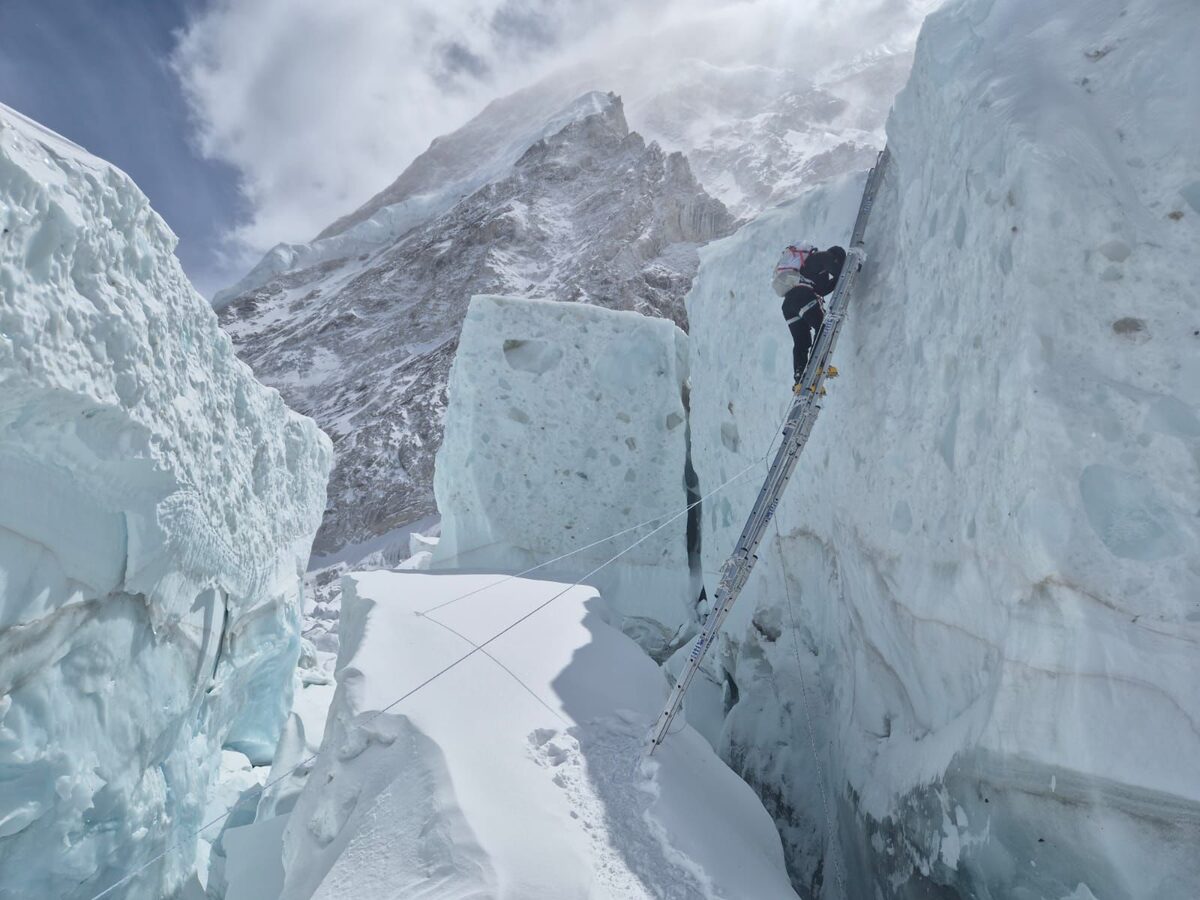
The path to Everest wasn’t without its challenges. Smith said that this year proved particularly difficult, with unusually high winds limiting summit days. He said that his team made the strategic decision to summit during the night to avoid dangerous afternoon wind conditions.
“We knew that there was going to be a lot of high winds on 18 May, so we made the decision to summit in the middle of the night. We felt like it was going to be safer,” said Smith.
He said that the summit experience itself was far from the emotional celebration many might expect. Instead, his focus remained laser-sharp on safety and the descent ahead.
“I did not have a ton of big emotions, and I did not feel like I finally got to the top of Everest. I was more focused on what was going on in my mind. I wanted to eat and drink something and take a picture. I knew that getting to the top was the halfway point and that I still had a long way to go,” said Smith.
His journey began in 2009 with Mount Elbrus in Russia, followed by Kilimanjaro and Aconcagua, then Denali in 2012.
After a career-focused hiatus, he recently completed Carstensz Pyramid in Indonesia before tackling Everest.
Highlighting the sobering reality that most Everest accidents occur during descent, Smith said, “The summit wasn’t the goal, the goal was to get to base camp safely and back home to my family.”
At 40 years old, he said he has adapted his training approach to account for his body’s changing needs, as it does not recover as quickly as it used to.
“I don’t bounce back like I did when I started this 18 years ago. I must be smart about my recovery, making sure I get eight to 10 hours of sleep depending on the training day and making sure that I’ve got my nutrition,” said Smith.
For aspiring mountaineers, particularly those in non-mountainous regions, he advises that they familiarise themselves with the level that they can manage.
“There’s nothing wrong with climbing at your level. You don’t go from not climbing anything to going to Mount Everest. You need to start where you are,” said Smith.
The upcoming Antarctica expedition represents both an ending and a beginning for him.
Smith said that Mount Vinson, planned for November this year, will complete his Seven Summits challenge — a goal inspired by reading Dick Bass’s book about being the first person to climb the highest peak on each continent.
“The big thing with the Seven Summits is that it is expensive. You’re travelling to places like Antarctica. To get there, you’re chartering a plane. It’s a very expensive thing to climb some of these mountains, but there are plenty of mountains that don’t cost much at all,” said Smith.
Beyond the financial considerations, he sees his mountaineering pursuits as part of a larger philosophy about pursuing meaningful challenges.
“I hope that other people don’t necessarily want to do the same thing that I do, but I hope other people look at what I’m doing and feel the freedom to live the life that they want to live,” said Smith.
Reflecting on how mountaineering has shaped him, he said that when he does hard challenges, it gives him a humble confidence that he can do hard tasks, survive, thrive and rise to the occasion.
Even after completing the Seven Summits, Smith’s mountaineering career will continue.
“When I’m 70, am I going to still be climbing really high mountains? Maybe not, but I’ll still want to be outdoors. I do it because I enjoy it, not because of the goal,” said Smith.
As he prepares for his final summit, Smith carries with him the same mantras he teaches his young daughters: “You can do hard things because you are tough. You can do scary things because you are brave.”





You must be logged in to post a comment.