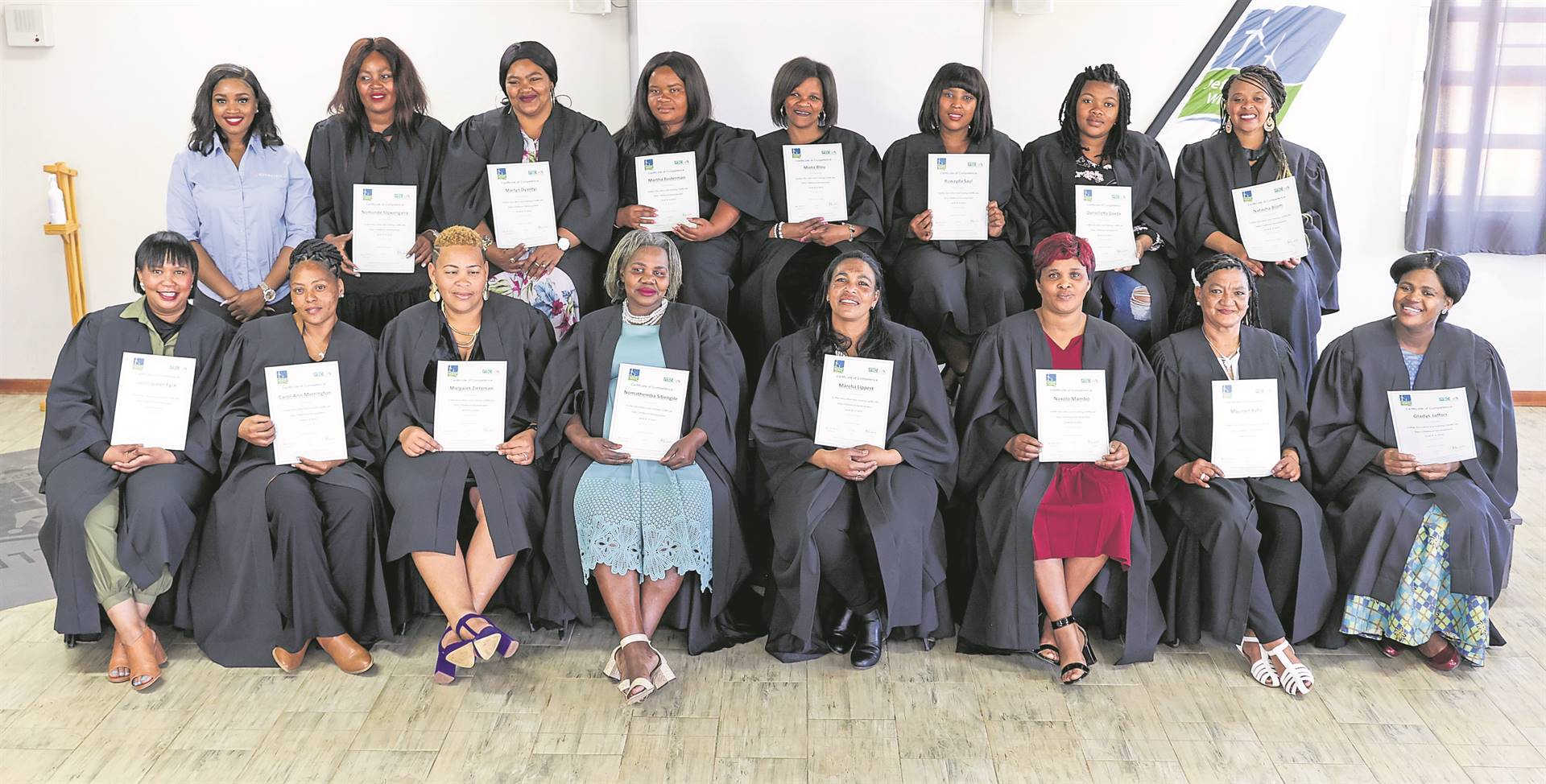


A new cohort of 14 Early Childhood Development (ECD) practitioners from communities in the Kouga Local Municipal area, have commenced their NQF level 5 training.
The aim of the training is to raise the practitioner’s competence and knowledge to deliver a better quality of education for young children, based on their awareness of child development and the ability to provide a bridge between non-formal and formal education.
Funded by Jeffreys Bay Wind Farm and implemented by ITEC, this two-year training programme will see these practitioners receive their National Diploma: Early Childhood Development, NQF Level 5 (South African Qualifications Framework Authority).
The selection process, which took place from October 2022, culminated with a Pre-Assessment Test held in November, and 14 practitioners were selected to register for this training programme, which kicks off in April.
The training programme will consist of one week of training each month, with two weeks set aside for exam preparation and exams at the end of each year.
Since its inception in 2014, the Jeffreys Bay Wind Farm ECD Training Programme has provided funding for over 50 practitioners, all of whom teach at ECD centres within the communities of Humansdorp, Jeffreys Bay, Westin, Thornhill, Sea Vista, Patensie and Hankey.
“Research studies show the positive impact of ECD on children, families and society, which can never be over-estimated, as this first stepping stone builds young children’s intellect whilst supporting their emotional, social and physical development, forming the very foundations of their futures,” said Hlengiwe Radebe, Economic Development director for Jeffreys Bay Wind Farm.
The long term expected outcomes of this training are extensive, as categorised into four key areas. These include improvement in teaching capabilities, and qualifications of individual practitioners, which will ultimately result in better care and education for young children in ECD centres.
“This level of qualification means improved emotional resilience development and educational outcomes through children’s schooling careers, which in turn means that as young adults they will enter our economy at a higher level,” said Radebe.
Considering the impact on teaching, ITEC’s managing director, Caroll Warmberg, explains that the overall impact on practitioners is far reaching.
“NQF level 5 results in better planning of activities by practitioners, a holistic approach to teaching, an improved engagement with learners and parents alike, and being able to find innovative solutions to improved classroom practice, in addition to a range of other essential high-level skills,” said Warmberg.
Having already graduated with her NQF Level 4 qualification last year, Gladys Jaffon, who is an ECD practitioner at Mummy’s Day Care in Jeffreys Bay, and is part of this year’s Level 5 cohort, described how beneficial the training is.
“Completing my Level 4 training was amazing, as it taught me so much about understanding children. I learned that teaching children should be fun because children learn through playing. I know that I have become a better practitioner now and I look forward to learning more, and becoming a qualified Early Childhood Development Educator one day,” said Jaffon.
Jeffreys Bay Wind Farm funds the implementation of a development programme that includes this ECD Practitioner training programme, mentoring and support programmes, ECD compliance and governance training, and ECD centre infrastructure upgrades, as well as the provision of equipment and classroom resources.
Stakeholders and ECD centres are identified through consultation with the Eastern Cape Education and Social Development Departments.
– ISSUED BY AISLING PHILLIPS ON BEHALF OF JEFFREYS BAY WIND FARM