
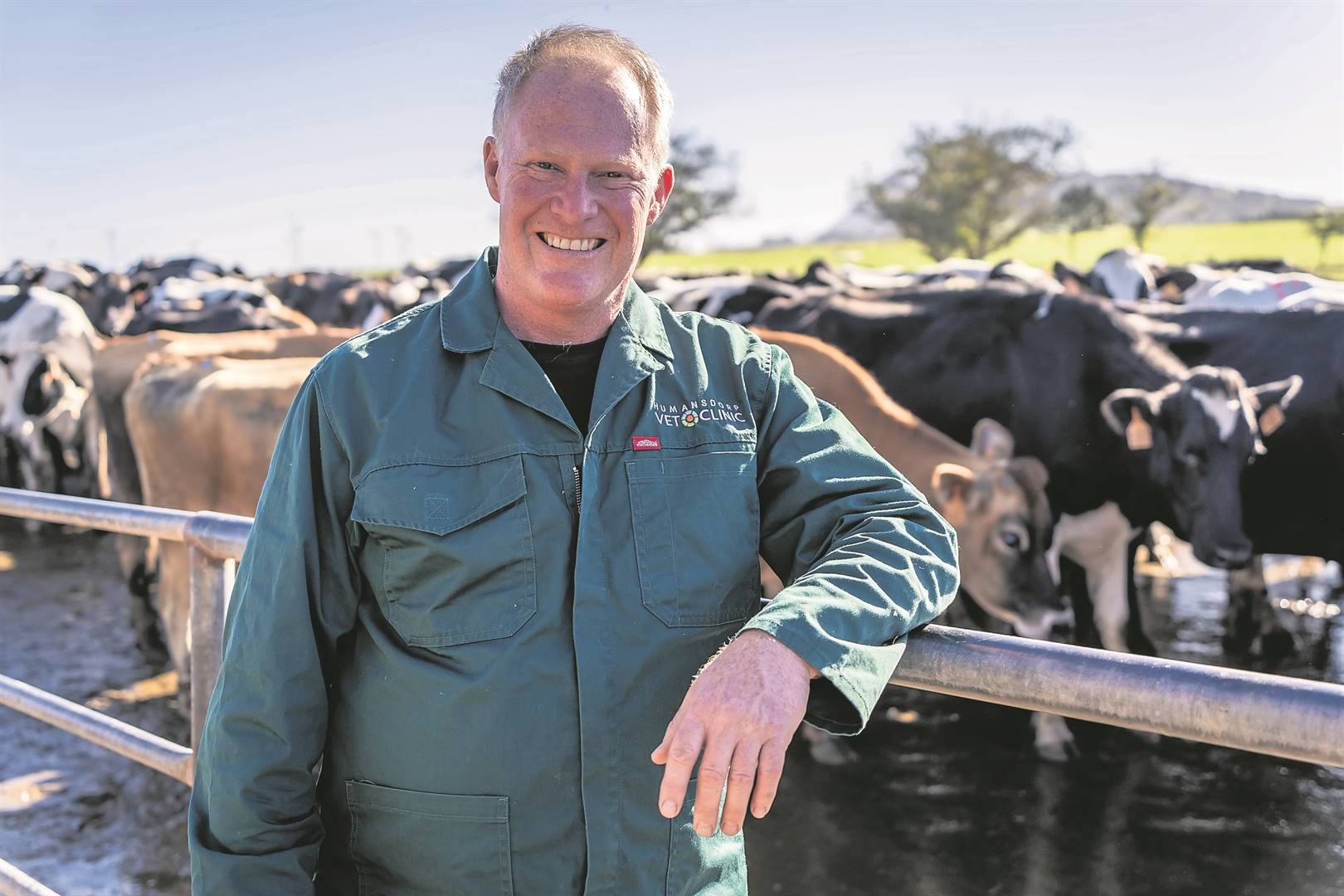
After noticing the health implications on cattle, and the significant financial loss dairy farmers experience due to a toxin found on fungus growing in pastures and consumed by cattle, Humansdorp-based veterinarian, Dr Anthony Davis, alongside his research team, has been researching various methods to find a solution to the ongoing problem, with a special focus on Sporidesmin toxicity.
From Mpumalanga, Davis moved to Humansdorp seven years ago and joined the Humansdorp Vet Clinic.
Despite experience with both small and large animals since qualifying as a veterinarian in 1997, his interest has always been mainly in large animals.
This interest increased in 2021 when farmers in Oyster Bay experienced an outbreak of Sporidesmin toxicity.
“The toxin is found in a fungus grown in the pastures and consumed by sheep and cattle, since pasture is the bulk of their diet,” said Davis.
Thankfully, despite losses, the toxicity could be managed in Oyster Bay.
The health implications for affected cattle and the financial impact on farmers prompted Davis to begin working toward a solution for the problem.
In 2022 he enrolled to do his Doctor of Philosophy (PhD) on the Impact of Sporidesmin toxicity on pasture-based dairy cattle in the Eastern Cape, at the University of Pretoria with his project registered at the Faculty of Veterinary Science in Onderstepoort, Tshwane.
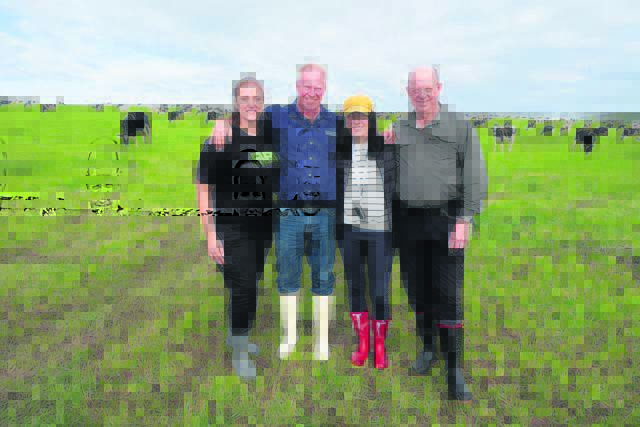
For the last two years Davis has continued to work alongside his project supervisors, Professor Jan Myburgh, Dr Johan Steyl, and Professor Edward Webb.
He has also joined forces with project leader, Dr Neriman Yilmaz, and PhD candidate, Jenna Price from the Forestry and Agricultural Biotechnology Institute (FABI), based at the University of Pretoria, who specifically studies the fungus, its population dynamics, and genetic diversity.
“As part of our research, we found that the fungus grows in pastures throughout the year; however, from December to March, we noticed a rapid increase in the sporulation rate of the fungus due to high temperatures and high humidity,” said Davis.
With temperatures expected to continue to rise due to climate change, he said the problem will only intensify.
“If the cows eat pastures that contain the fungal spores, they can experience liver damage. The effect it has on the cows initially presents as eczema on the skin; however, farmers do not realise the effect this fungus has on the cattle’s liver. By the time the farmer discovers the symptoms on the cattle’s skin, the liver damage has already occurred,” said Davis.
“The secondary sunburn in severe cases is also painful for the affected animals.”
Davis further said that since the cattle’s liver does not function optimally, many underlying health problems arise.
In addition, with the liver being affected, he said there is a decrease in milk production which in turn results in significant economic loss for farmers.
“The liver works as a filter to remove all toxins from the body; with the liver being impacted by the effect of the toxicity, it is expected to work even harder,” said Davis.
He said that the first case of its kind was discovered in 1872 in New Zealand where sheep were affected.
Davis said that since then farmers have placed zinc oxide in feed to curb the problem during warmer months, but no alternative methods have been discovered.
He further said that similar practices have been adopted in various other countries, including South Africa.
Even though the problem occurs nationwide, Davis said his research will focus solely on farms in the Kouga and Kou-Kamma regions.
With sponsorship from Milk SA’s Research and Development Department, he said that Price collects pasture samples to count the spores present at five different farms between Storms River and the Gamtoos Valley.
Davis said the study sites will be increased to 10 later this year, which will allow for a more accurate regional spore count service.
He further said that dairy farms are an important industry and offer employment opportunities for many people in the community.
“The effect on cows does not impact the consumer, but it has a huge impact on the farmer’s profit since there is a large drop in milk production,” said Davis.
“Dairy farming is a tough industry, and the impact of the toxicity places additional pressure on farmers.”
With approximately 80 000 cattle between Humansdorp and Storms River, the importance of his research is further emphasised.
“The aim is to manage the fungus and prevent it from occurring,” said Davis.
“Our main focus is to prevent production loss and prevent cows from feeling discomfort.”