

QUALITY journalism is what keeps people informed of the real facts, especially in these times when fake news on social media spreads faster than wildfire.
Journalists, whether in print, broadcast or digital media, give communities of this world an objective view of what is going on around the globe and in their own communities.
Being a journalist requires one to have a real passion for news, as well as a very good general knowledge, a sense of curiosity and fairness, integrity and good communication skills, among others.
These are some of the key take-outs of the career webinar on journalism, media and communication that was broadcast last week by EP Media.
This was the fifth in a series of six live career webinars sponsored by Isuzu SA for high school learners. These free webinars are aimed at equipping high school learners with information on career guidance and some of the different career fields, especially those that require scarce skills.
The recording of the first four career webinars, which focused on career guidance, and all the higher education options available to learners, as well as the Isuzu SA Chair of Mechatronics at NMU and careers in the 4IR and Artificial Intelligence, as well as the field of education, are available on the Express Facebook page.
Studying and working in Logistics will be the theme of the last webinar in this series, and it will be broadcast at 17:00 on October 21.
Experts from around the country have been selected as panellists for the journalism webinar which was facilitated by Port Elizabeth Express reporter, Candice Bezuidenhout.
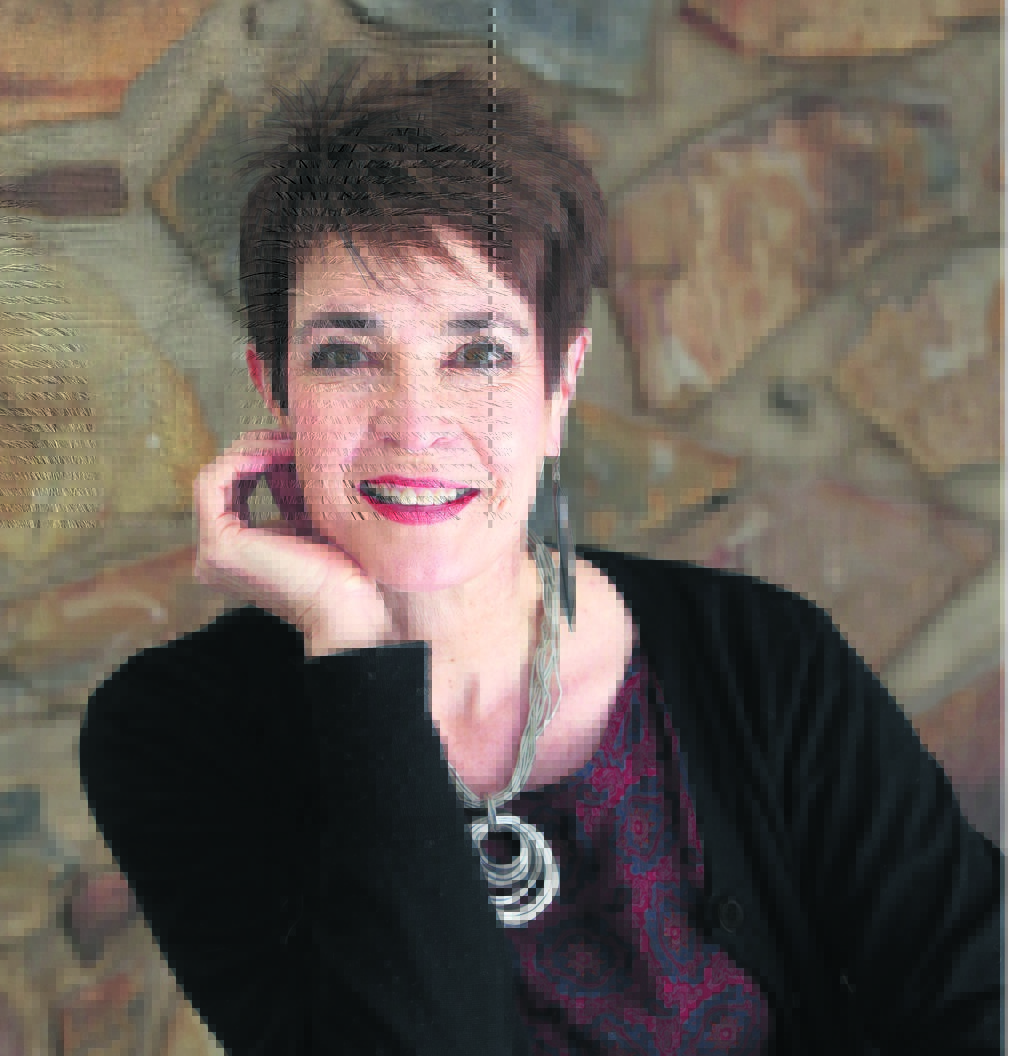
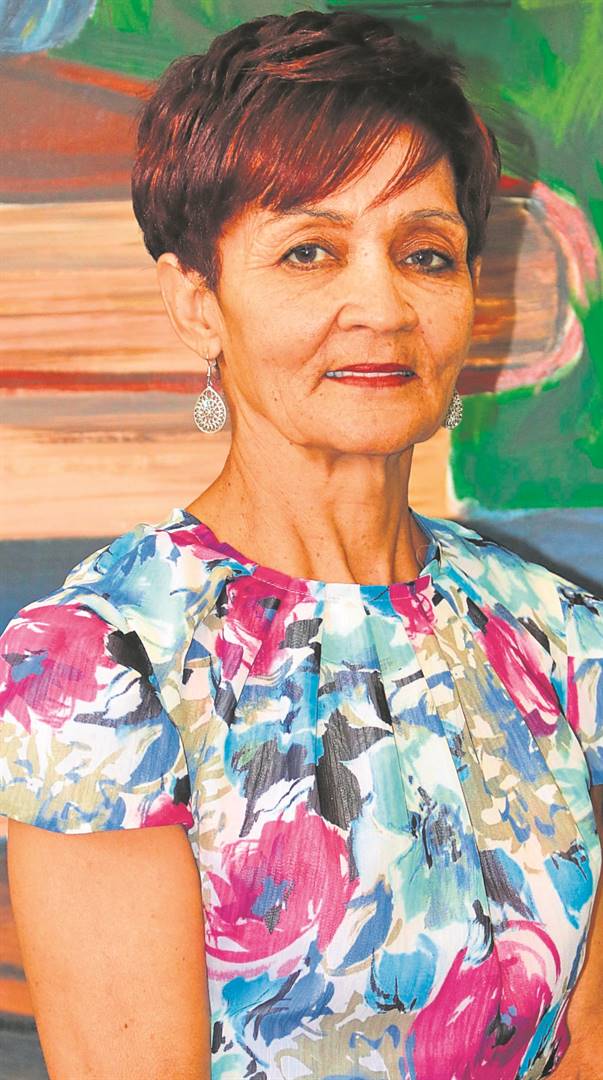
On the panel for the Journalism webinar was journalist and academic, Linda Fekisi, who is part of The Independent Institute of Education’s (IIE) central academic team, where she works as a Head of Programme for Journalism in the Faculty of Humanities and Social Sciences.
Also among the panellists was former Die Burger news editor, Cindy Preller. She is a lecturer at the Faculty of Humanities in the Media and Communications Department at Nelson Mandela University.
Also on the panel was Denise Roodt, who is an experienced education and training manager, educator, accredited training provider, content producer, journalist and entrepreneur. She started her career at the SABC for which she worked both locally and internationally.
She is the owner and manager of The Media Workshop, a multi-award-winning MICT-Seta accredited training company. The Media Workshop is fully-accredited to deliver six one-year vocational qualifications in media-related skills, including Journalism, Film and Television Production, 3D Animation and Visual Effects and Photography.
Linda: Take us back to high school. How did you pick Journalism as a career choice?
In Grade 10 we had to make our subject choices. For me, the thought of university was less about a career or what I’ll be after I graduate; it was more about leaving home and gaining experience and independence. It was only in Grade 11 when I became serious about the application process. I had options. Because of my mathematics, physical science and biology background, I could go into the BSc programmes and pursue something in science. Another option would be journalism. This was based on a personal SWOT analysis I did. I’m very curious and inquisitive, and I really like storytelling and having conversations with people. Because of that I leaned toward journalism. And here I am – a qualified journalist.
Cindy: What characteristics do you need to become a journalist?
A lot of the things you can and will learn on the job, but you do need a love of languages. In South Africa we have journalism in a variety of languages. Curiosity is a good characteristic to have. You should be really interested in what’s going on in the world around you, and read widely about different topics like politics or economics. And perhaps the most important characteristic to have is tenacity, because journalism is a tough profession. The other things, like confidence and being able to speak to people of all walks of life and creativity, are things you learn along the way.
Denise: Please give us your thoughts on what the characteristics of a good journalist are?
As information becomes more freely available, one of the most important characteristics of a journalist is to be credible. Above all, you must be trusted to be a credible source of information and for that you need to be ethical. Know yourself and your own prejudices and try to see beyond those prejudices. Be open-minded. Be a critical thinker. Curiosity should drive you to question everything. And you cannot allow yourself to be bought.
Linda: Describe your varsity experience. What did your Journalism training teach you?
It was eye-opening, informative and interesting. It was eye-opening to learn how much tenacity you need. It is an extremely challenging field. My varsity experience taught me that so much goes into a story. It was also informative and interesting because it’s such a diverse field. You get to realise that you can be anything, from a sports journalist to a field journalist, or focused solely on court reporting. I also learned that technology evolves, but credibility and ethics do not. As much as we are living in a world of social media, the characteristics you have as a journalist cannot change. You have be trustworthy, someone who can’t be bought, someone who understands why you are in the space of communication. My lecturers used to say that sometimes you are a voice for the people who are voiceless. Ethics are the cornerstone of journalism. I learned that there are two ways of training to become a journalist: training that is academic and theoretical, and training that is purely practical. Find a balance. You cannot rely on a textbook to tell you how to be a journalist.
Denise: What factors should learners consider when choosing an educational institution?
There has to be a balance between theory and practice. The theory is vitally important and journalism is a very high level skill. It should definitely not be a go-to just because you don’t get into another course. Choose an institution that has strong links with industry. This will help you get practical experience and also give you a kick start in your career.
Linda: Share your post varsity experience. How did your Journalism training prepare you for the work place?
It prepared me in three aspects. Not the good, the bad and the ugly, but rather the challenging, the neutral and the positive. What was challenging is the fact that you don’t get to live in a bubble. You graduate into the field of work in your own country; you get affected by high rates of unemployment, the state of the industry, and the fierce competition for jobs. The neutral was learning how important skills are that you learn at university. I’ve learned that in an interview, potential employers care less about how much textbook knowledge you have, and more about how you can implement that knowledge. The positive of it all was learning that it’s so diverse. This is where the tenacity comes in. I learned early on that field reporting is not something I want to do, after covering #FeesMustFall. My academic background and training sparked interest in wondering how many of the academics who write the textbooks for journalists are actually journalists. How many of them understand the context that South African journalists work in? I went into academia and I got to lecture. Now I’m on the other side of the spectrum, but I still consider myself a journalist and someone who understands the field.
Denise: What career paths are open to a journalist – especially in television?
There are so many. People tend to think that journalism is just the newscasts. The newscast is just a small part. The news report itself is not where journalism ends. Any factual content is journalism at its core. Magazine platforms, chat shows, documentaries – these are all forms of journalism. You can write fiction and create film scripts. Journalism is also moving online, even to YouTube (as we are now). Screen content is becoming the medium of communication. I dare say the core skills you learn in journalism can be applied in every walk of life.
Cindy: With graduate unemployment quite high in South Africa, what can students do once they graduate with a qualification from your institution if they do not find work straight away?
We don’t want to discourage people, but there is a high youth unemployment rate. There are even graduates who are unemployed and that’s for all qualifications. It’s a reality. At Nelson Mandela University there is a bigger focus on entrepreneurship and preparing students for the world that we live in. In the BA Media, Communication and Culture programme and also the journalism diploma, we prepare students to become freelancers, to not wait for that dream job, but to start their own thing. At first year level, I encourage the students to go work somewhere, even volunteer at NPOs, to get real life experience. The theory is definitely important, but to complement it with practical work experience would help students be more well-rounded when they qualify.
Denise: Is journalism a career where you can be creative?
It’s often seen as something that’s not creative, but I would say yes and no. No, you can’t be creative with the facts. But working with facts forces you to be creative in the way you communicate those facts to make them as clearly understood as possible. How to structure sentences and stories; what photos to use; how to place them on a page in print media – it’s an extremely creative process that complements the story. For television, there are a million ways to tell the same story. It remains the same factual story, but there are ways to get people’s emotions involved and allow people to see something differently.
Cindy: How have digitalisation and COVID-19 impacted news production? What values remain the same in journalism?
There is a lot of difficulty getting to your sources the way journalists used to. With COVID-19, interviews are done wearing masks and there are a lot of protocols to be followed. The core values still remain the same, though. What Linda and Denise referred to is the ethics. Digitalisation is also changing the way we look at journalism as a career. There are jobs now that did not exist ten years ago. Content creator, influencer – these are new jobs created that someone with a journalism background can easily do. Journalism would be a very good career option, irrespective of all the changes happening in the world.
Linda: Knowing what you know now about Journalism, what advice would you give your younger self about the field of Journalism?
First, believe in the power of your own words. Not having that is where you lose integrity. Second, keep an open mind. Journalism is very diverse. Ten years ago I never would have thought of myself standing in front of 150 students, lecturing. You don’t have to be confined to a news room, or one type of reporting. Don’t limit yourself. In high school, I would encourage you not to be shy to do your homework and research. Find out which institution and qualification would work for you. I had a very theoretical training, and someone who doesn’t like to read would not like that. Find what works for you.