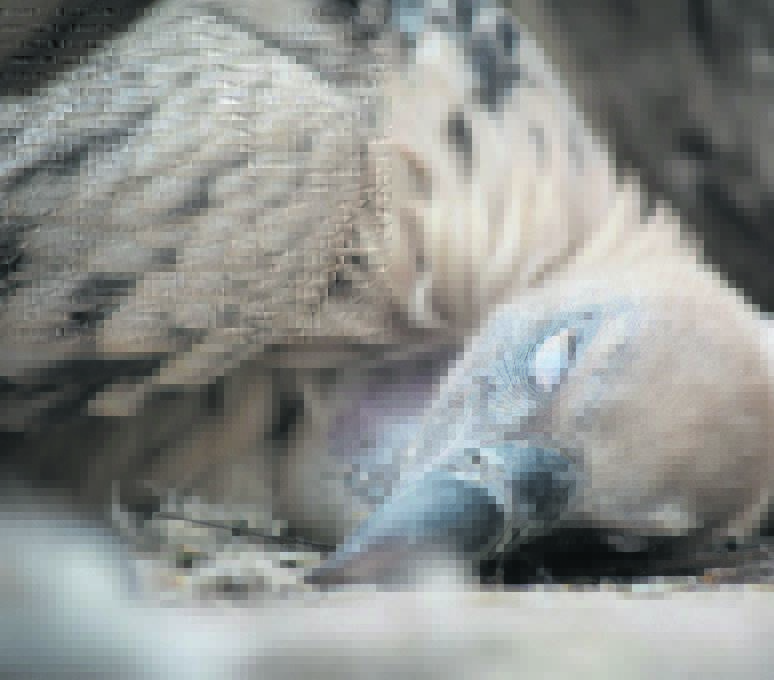


A LONG-TERM project to ultimately see the establishment of a massive vulture safe zone in the Central Karoo, will take off on Saturday, which happens to be International Vulture Awareness Day.
The project, initiated by Dr Gareth Tate of the Endangered Wildlife Trust (EWT), aims at providing a vulture safe zone across a large swathe of the south central Karoo between three protected areas – the Mountain Zebra, Camdeboo and Karoo national parks.
The vulture population has declined rapidly in the last 10 years and the Cape vulture has all but disappeared in the Karoo.
“Our objective is to protect breeding pairs, as they are the currency of the population,” said Tate, at a special presentation on vulture safe zones, which was held in Graaff-Reinet.
“Luckily, 62% of them can be found in protected areas such as national parks,” he added.
Vulture safe zones were identified as one of the most effective ways of tackling this dynamic landscape and allowing environmentalists to focus on an area, identifying the threats and implementing spatially explicit conservation interventions to alleviate issues on the landscape and protect areas that are vital for vulture populations.
According to Tate, vultures have a critical role to play in disposing of carcasses and other organic refuse and reducing the spread of diseases such as anthrax and rabies.
“Many farmers mistakenly believe that vultures kill lambs and children, but in fact they only feed on carrion,” said Tate.
Cape vultures are classified on the International Union for Conservation of Nature’s Red Data List of Threatened Species as critically endangered or endangered.
Tate said there was a great need to talk about this underappreciated group of animals, who perform one of the most important ecosystem services, and prompted all role-players to actively participate in this conservation initiative.
Vultures are often killed by poisoning, often after feeding on the carcasses of predators such as jackal that have been poisoned.
Traces of lead have also been found in dead vultures which have feasted on the remains of hunted animals. Although hunters do not leave whole carcasses behind, the entrails are usually discarded at the scene.
The project, thus, hopes to work with hunters and game breeders to ensure that only lead-free ammunition is used. Poisoning in various forms has been responsible for 91% of vulture mortalities in recent years.
Another danger to vultures, and other birds, is electrocution, and the placing of plastic bird flappers on overhead power lines can help here.
Many vultures also drown in small dams, and landowners are encouraged to build makeshift wooden ladders to enable birds and animals to climb out of the water.
In 2016, a small group of landowners in the Camdeboo conservancy decided on their own initiative in aid of conser-ving vulture popula-tions.
“Initially, we came upon resistance from conservationists, who questioned eye witness accounts, as we had no photos of the vulture nests,” explained Willem Wagener, one of those driving the project.
The landowners did not give up.
Bronwyn Botha and Maryke Stern, of the Mountain Zebra Camdeboo Protected Environment, came on board, and after a meeting in 2018 with representatives from Birdlife SA, EWT, and SANparks, the landowners now deal with conservation attitudes that are equally enthusiastic.