
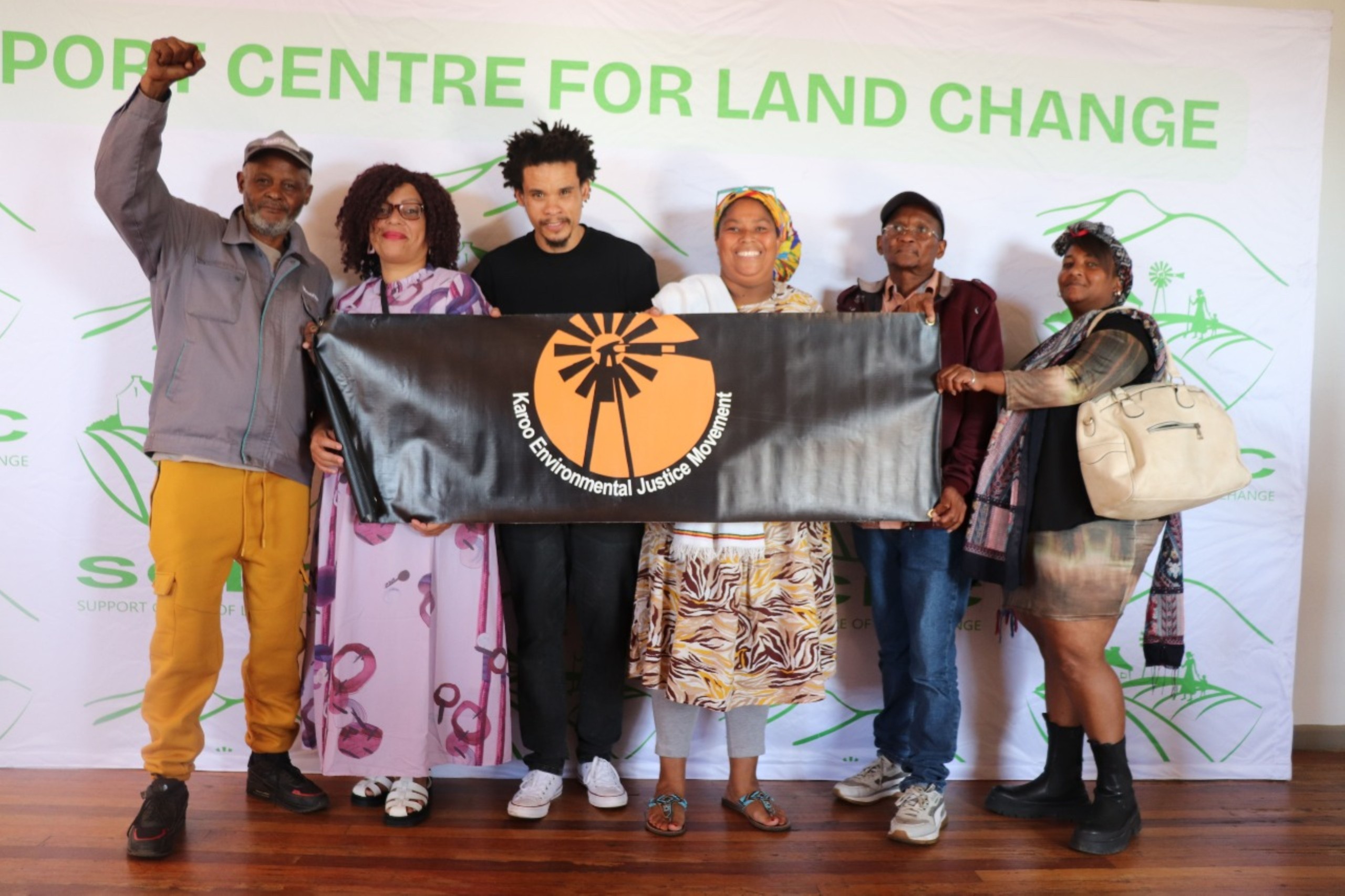
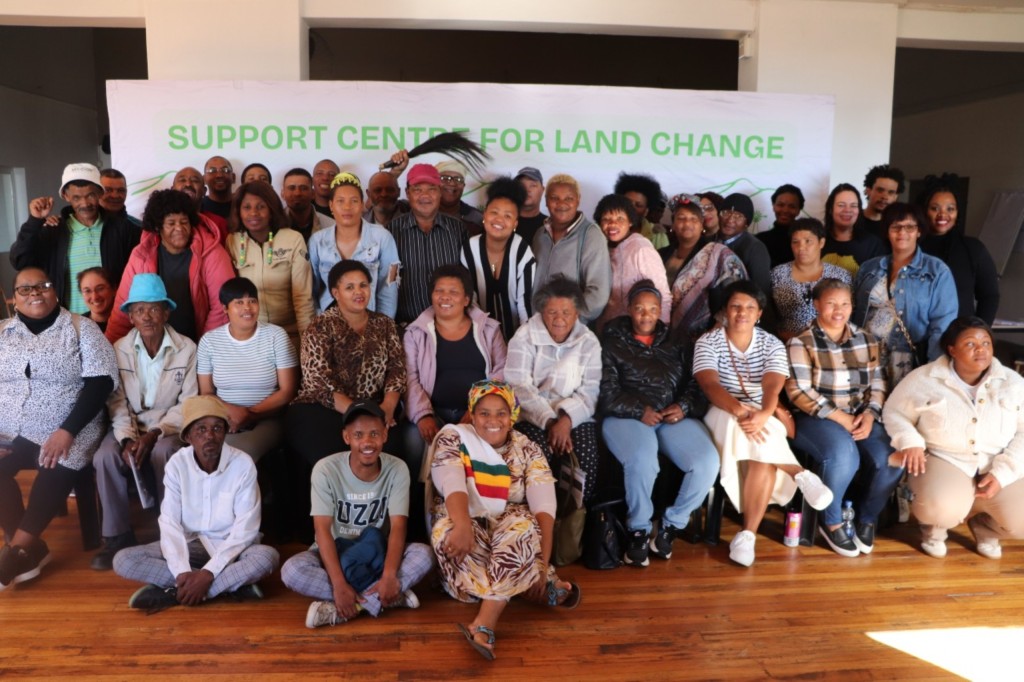
The Graaff-Reinet-based Support Centre for Land Change (SCLC) recently convened its annual Climate Justice Platform, bringing together 60 climate justice activists and strategic partners from across the country to strengthen their existing campaign against fracking in the Karoo.
The anti-fracking campaign was initiated in 2012 when SCLC convened the first international meeting in Steytlerville to reflect on the possible impact of fracking after it was made public that Shell applied for a licence to explore for shale gas in the water-stressed Karoo region.
At this particular meeting, the Karoo Anti-Fracking Task Team was established to inform local communities about the fracking process and its potential implications.
The aim of the Karoo Anti-Fracking Task Team was not only to raise awareness through grassroots engagements, but also to challenge the narrative that was promoted by the extractive industry.
They exposed the risks hidden behind promises of economic gain, highlighting the potential for irreversible environmental damage, water contamination, and disruption of traditional livelihoods.
By confronting these realities head-on, the initiative empowered residents to make informed decisions and assert their right to say no to extractive industries operating without accountability.
The Karoo Anti-Fracking Task Team was subsequently replaced by the Karoo Environmental Justice Movement (KEJM) when it came to light that, in addition to the pending application for shale gas exploration, the Karoo was also faced with the looming threat of uranium mining in the region.
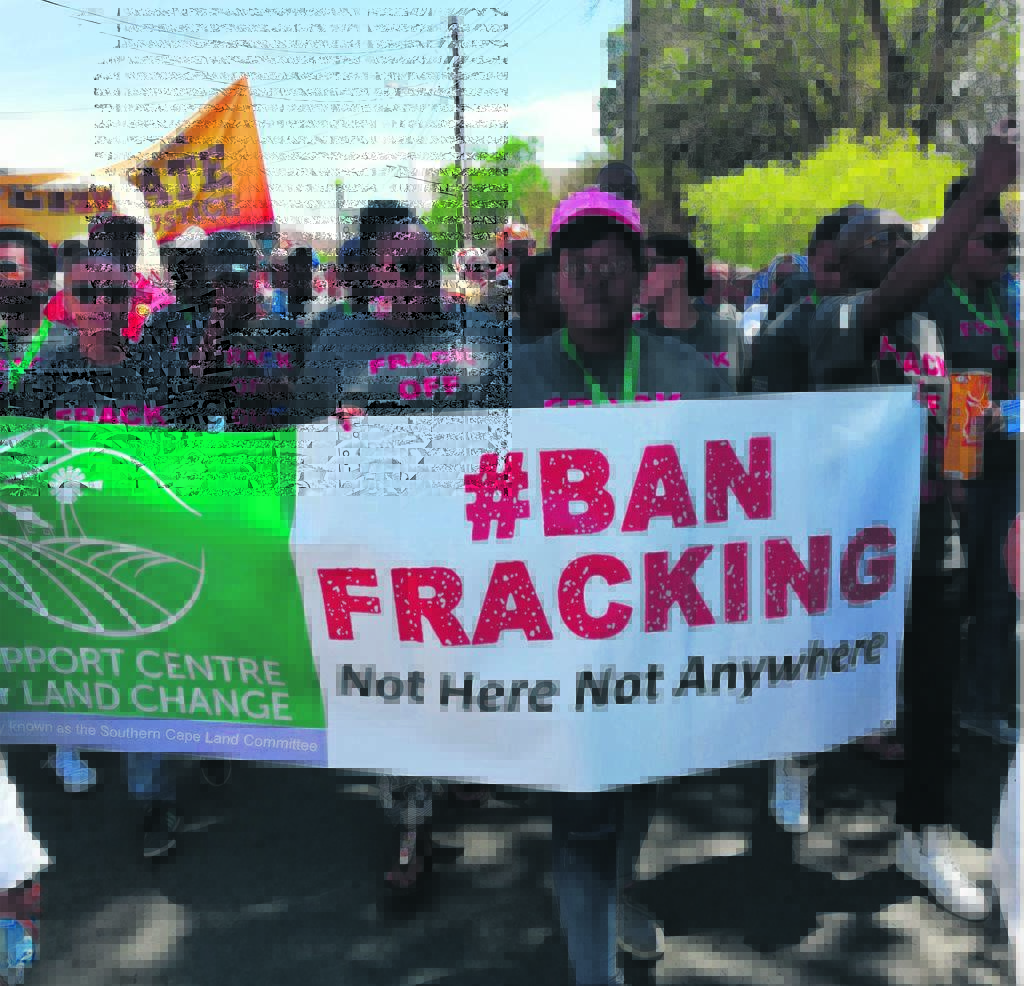
SCLC and KEJM continued to raise awareness and mobilise support for the resistance against uranium mining and fracking in the Karoo, and in 2018 they officially launched the #BanFracking campaign, marking a significant milestone for the anti-fracking movement.
The #BanFracking campaign called for a total ban on fracking in South Africa, and this campaign has now gained intensified urgency due to the renewed interest in shale gas exploration and production in the Karoo region.
Activists and partners who participated in the SCLC platform expressed particular concern over several recent developments, one of which was the announcement in 2023 that the South African government is preparing to auction at least ten new onshore blocks for shale gas exploration in the Karoo.
The proposed auction was confirmed by Bongani Sayidini, the Chief Operating Officer of the Petroleum Agency of South Africa, who mentioned at the time that the first competitive bid round was expected in 2024 or 2025, pending the necessary legislation.
Another key development was the Department of Mineral Resources and Energy’s publication of a notice on 22 November 2024 under Section 50 of the Mineral and Petroleum Resources Development Act, proposing a geophysical investigation in the Karoo Basin.
The public comment period for this notice closed on 9 January 2025, and the first public hearings are scheduled to take place in the Central Karoo – Beaufort West, Merweville and Murraysburg – next week from 24 to 26 June 2025.
In addition to the above, the Department of Water and Sanitation called for public comment on proposed water use regulations related to fracking, with the deadline passing on 15 January 2025.
Further intensifying the focus on shale gas extraction, recent discussions between the United States and South African officials included potential cooperation on fracking technologies, with particular interest in unlocking the Karoo’s shale gas resources.
However, to date, no formal agreement in this regard has been announced.
On the first day of the SCLC platform, Linda Arkert, a social research expert from The Green Connection, highlighted the environmental and social impacts of fracking in the Karoo, raising serious concerns about its consequences for local communities.
Paul Lado, an attorney at the Centre for Environmental Rights, updated participants on existing shale gas exploration licences as well as new applications, and Nina Braude, a legal expert with extensive experience in environmental justice, interrogated the implications of current regulatory processes. Braude also provided an analysis of the South African legal framework, identifying possible legal avenues to resist shale gas development.
On the second day, Siphesihle Mvundla, Climate and Energy Justice Campaigner at the KwaZulu-Natal-based environmental justice organisation groundWork (Friends of the Earth South Africa), and Tshediso Lekhina, a member of the Botshabelo Unemployment Movement who has been implementing the #BanFracking campaign strategy in the Free State, shared experiences and strategies used by communities in their provinces to strengthen awareness and participation.
They offered practical guidance to participants from the Western and Eastern Cape in developing their own community-based responses. The SCLC platform was concluded with a clear message from Karoo activists: No fracking. Not here, not anywhere.



You must be logged in to post a comment.