

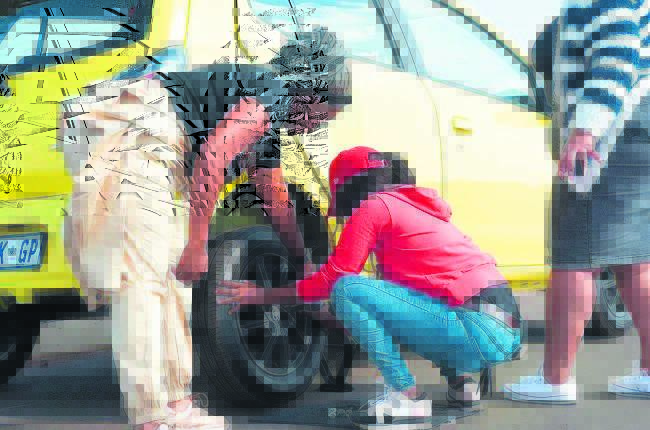
EARLIER in March, teachers travelling in Ermelo, Mpumalanga, were robbed, at gunpoint, while changing a tyre. Last year, a similar incident occurred in Umgababa, in KwaZulu-Natal, and in Finsbury, Randfontein. In 2020, two women were killed while changing the tyre on the N2 in the vicinity of Tongaat in KwaZulu-Natal and a young woman was robbed and stabbed after her car broke down on the Bluff in KwaZulu-Natal.
These incidents prove that trouble can happen anywhere – suddenly and unexpectedly. But is there a way to prevent a flat tyre or spot gremlins hiding under the bonnet before disaster strikes? There is, and it can be prevented.
When it comes to tyres,vibrations on the steering wheel, the vehicle pulling to one side, strange noises coming from the tyres as they rotate, cracking or cuts on the sidewalls of the tyres, bulges or blisters, uneven spots and excessive wear, as well as a tyre that keeps losing pressure are all warning signs that you need to look out for and address immediately.
Leading causes of mechanical breakdowns
Besides tyres, the Automobile Association of South Africa highlights seven other leading causes of mechanical breakdowns on South Africa’s roads: A flat or faulty battery, alternator faults, starter motor faults, clutch faults, spark plug problems, electrical faults, and transmission problems.
These are the components and the warning signs that they are about to fail or have already:
The battery, which powers the vehicle’s core systems:
Powdery deposits on the battery and cables; loose cables; low water levels (in batteries that aren’t labelled maintenance-free); dim dashboard lights before the car has started And the engine turning slowly when the ignition is turned.
The alternator, which generates electricity:
Battery warning light; dim lights when the vehicle’s engine is running; a relatively new battery that loses charge even when the vehicle is driven often and unusual noises emanating from around the alternator and the belt connected to it.
The starter motor, which helps to start the engine:
Vehicle’s engine doesn’t turn even with a full battery; intermittent starting problems; clicking noise coming from the starter and the starter keeps running after the engine has started.
The clutch, which connects and disconnects the rotational power of the engine to the wheels:
Difficult or noisy gear changes; vehicle moving forward with clutch still pressed in fully, or almost fully; a soft, unresponsive clutch and a burning smell (which could be caused by bad driving habits like bad clutch control).
Spark plugs, which help to ignite fuel
:
Trouble starting; rough idling; engine misfire; lack of power; high fuel consumption and a strong fuel smell.
The electrical system, which links all electric features:
Failure of any one, or combination of, the following critical systems are reasons for concern – lights, the instrument panel, wipers, airbag / ABS / EBD / ESC systems.
The transmission, which regulates the power from the engine to the drive wheels through gears:
Struggling to engage certain gears or keep the vehicle in a certain gear; vehicle not moving when in gear and the clutch is released; vehicle hesitating when the clutch is released, but then “jumps” forward or backwards; vehicle shuddering when in gear; Fluid leaking from the gearbox and excessive heat and/or noise emanating from around the gearbox, even when in neutral.
If you experience any of these symptoms, it’s best to get the vehicle to a professional right away. The cause could be something minor and easy to repair, or something that could lead to the engine seizing and very costly repairs. Not to mention the fact that it could put you in a very dangerous roadside situation.
- Seugnette van Wyngaard is the Head of First for Women Insurance.