
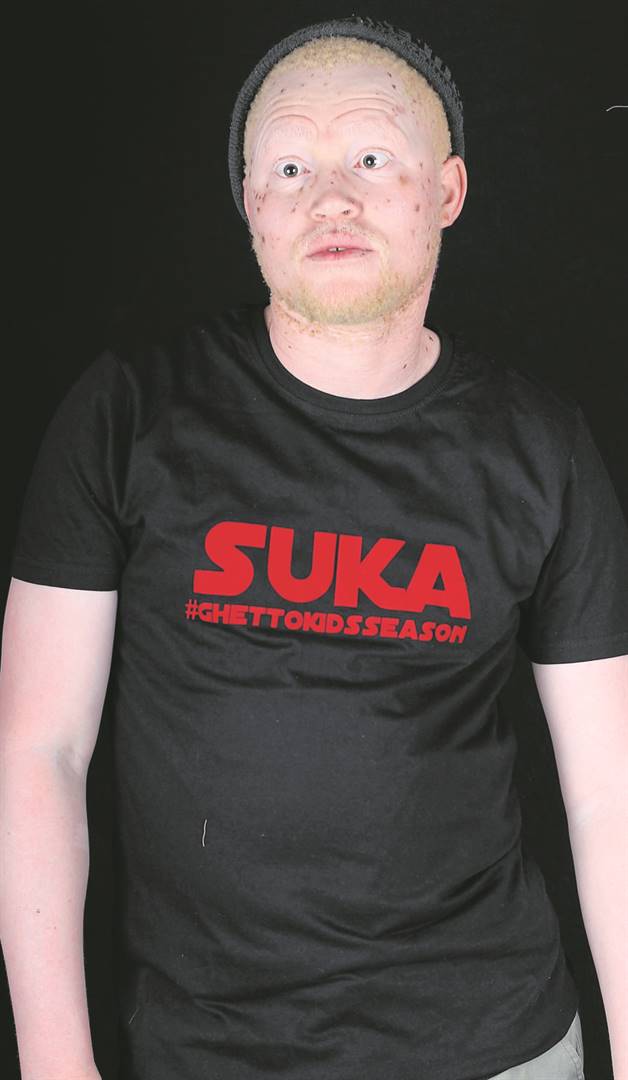
- Father to a three-year-old son, named Musawenkosi (God’s grace), Nomnganga boasts a degree in human resource management and recently released a single titled Suka, followed by a music video. SANELE JAMES asked him a few questions.
Q.
What is albinism to you?
A: It is being different in appearance but, inside, being like everyone else. We face the same challenges as everyone else, but also face the stigma of being teased, having skin problems and compromised eyesight.
I remember asking my granny, “Why am I pale compared to my friends?” She told me it would change as time went by, so I grew up thinking my skin colour would eventually become darker.
Q:
Tell us when and how your music career started?
A: I’m a rapper. Gxarha is my stage name. I started at the age of 13, writing songs about township life. In 2011, I was announced the winner of the Southern African Disabled Musicians Association (SADMA) auditions.
A year later I recorded an album and my song, Ngubani Kanene? did very well.
Having albinism is working to my advantage. I get attention that not everyone gets, so it is a blessing in disguise.
Q:
Is South Africa doing enough to support people living with albinism?
A: Yes, the government has been very supportive, supplying us with sunscreen, sunglasses, spectacles and providing grants to those who have serious eyesight problems. But parents need to educate their kids.
Writers, artists and moviemakers should use their platforms to create awareness. We are not animals or sterile and our body parts can’t cure diseases. We are human beings like everyone else.
September is Albinism Awareness Month, which helps to put some important issues into perspective.
Q:
Are there names or terms related to albinism that you find distasteful and derogatory?
A: Yes, the term ‘Inkawu’ (monkey) kills our self esteem as it means they see you as a wild animal and less than human. Some don’t even like the term ‘albino’. We are people living with albinism. Now when people insult me, I call them closer and give them a short lecture on albinism.
Q:
Are workplaces accommodative to people living with albinism?
A: Some are, some are not. The organisation I work for now is, but in 2013 I lost an apprenticeship because of my eyesight and I had to change my career path.
Q:
Has living with albinism affected the way women react to you?
A: A lot of girls love men with albinism, but are afraid to date us. I’m in a relationship with someone with more melanin. We’ve been together for almost six years and have a kid. Albinism doesn’t hold anyone back. It’s a matter of believing in yourself. I always say: “Andiyobhari ye albino mna,” “I am not an average albino”.
Q:
What message do you want to give those living with albinism and those with strong melanin?
A: To those who live with albinism: Don’t feel ashamed. You are created differently and you are beautiful.
To those who have strong melanin: I’m glad you’ve read this article. Now please go and teach people about albinism.