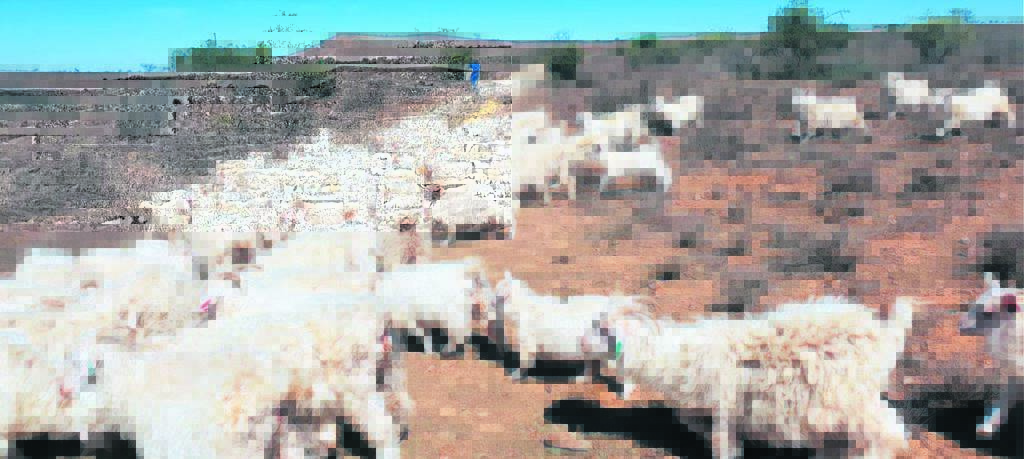

LARGE parts of the Eastern Cape are finally starting to sprout green since wide-spread rains graced the province from the beginning of January.
The hungry eyes of the green drought, however, are still focused on its prey, as man, animal and town economies continue to resist being consumed by the worst drought disaster in human memory.
“We are thankful for the more than 100mm of rain we’ve had since the 7th of January,” says Joe Kroon, who farms in the Kendrew area outside Graaff-Reinet. “We only had 69mm in the whole of last year, and we’ve lost between 30-40% of our sheep, goats and cattle, while the department of agriculture has been of little help.”
Kroon has received eight bags of mealies and four round bales in drought relief from the department.
“It’s hardly enough to feed our stock for two days. It’s like giving someone a thin T-shirt in winter and telling him to keep warm!”
According to Kroon, the department has also not taken into consideration farmers who are the backbone of the game farming and eco-tourism industry in the province.
“We have lost half of our gemsbok, including a R200 000 bull, and all our buffalo.”
Kroon says his farm has been hit hard by the economic effects of the drought. “We’ve had to let go of ¾ of our workforce.”
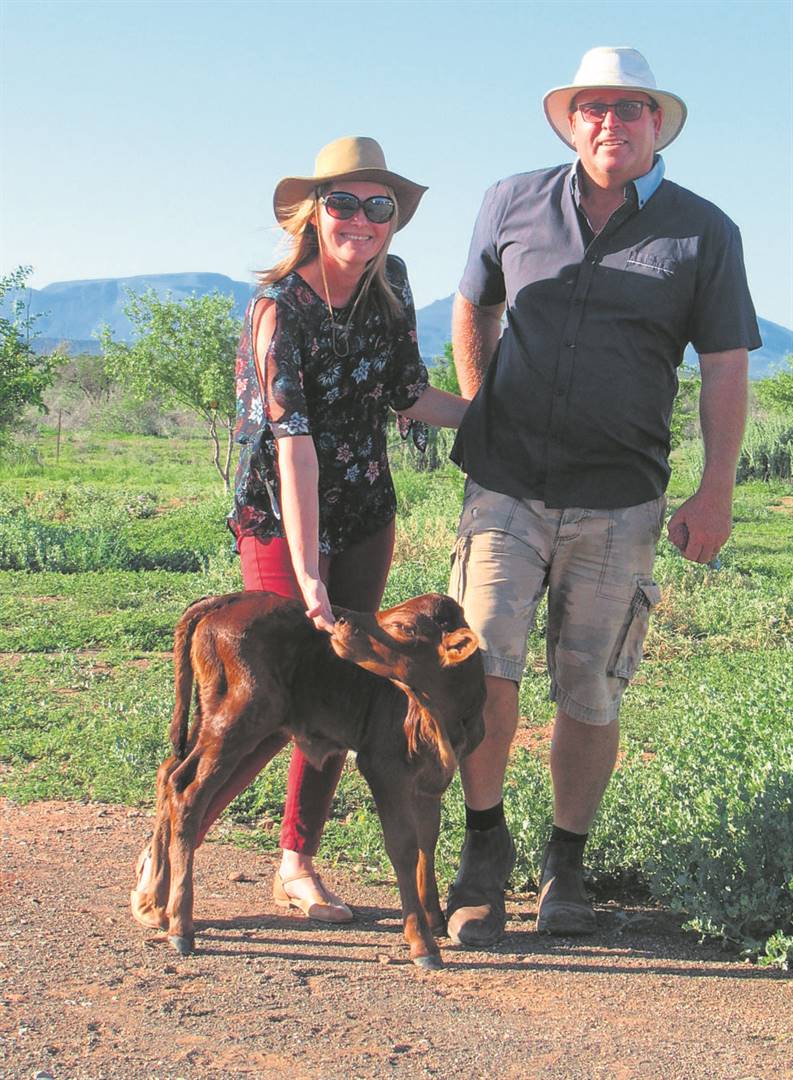
His wife Marna is busy preparing yet another bottle of milk for a three-week- old calf whose mother has simply been too weak to get up after giving birth.
“We try to remain positive, but it’s tough,” says Marna. “You try farming ‘outside the box’. You continue to try and help others while you yourself just barely manage.”
“Africa’s food basket is shrinking in stead of expanding,” says a concerned Zola Hanebe, chairperson of the Graaff-Reinet emerging farmers’ association. “We have seen very little of the promised R74 million drought relief.”
According to Hanebe, who has been leasing a farm from the Beyers Naudé local municipality since 2012, local go-vernment is also not empowering farmers as it ought to.
“They have not equipped a single borehole, nor assisted us with proper camp and boundary fencing. Yet,” Hanebe continues, “we try to instill a culture of payment among the members of our association, and we pay the municipality their monthly dues.”
While the loss of 11 head of cattle due to the drought has hit Hanebe hard, he remains positive.
“The heart of a farmer remains strong inside us. We must teach our children agriculture and a love of nature. I also believe that a global spirit of Ubuntu can change the world,” Hanebe says, while he shares tales of commercial and emerging farmers in the area working side by side to share fodder and wisdom on how to survive the drought.
“One must understand: my neighbour is not my ‘problem’; he is my rescuer!”
- Don’t miss next week’s edition for the second installment of our feature: “Focus on drought”, written by Elsabé Pienaar.