

Nelson Mandela Bay’s Metro Police is reportedly operating with a crippled vehicle fleet, with only four operational vehicles currently available to patrol the metro’s 60 wards while the majority of its 22-vehicle fleet remains out of service awaiting repairs, parts and tyres.
The state of the fleet, alongside broader concerns over crime, infrastructure vandalism and lawlessness in Kariega and Despatch, took centre stage during a Democratic Alliance (DA) media briefing this week, where the party unveiled plans to dramatically expand the City’s Metro Police force should it take control of Nelson Mandela Bay after the 2026 Local Government Elections.
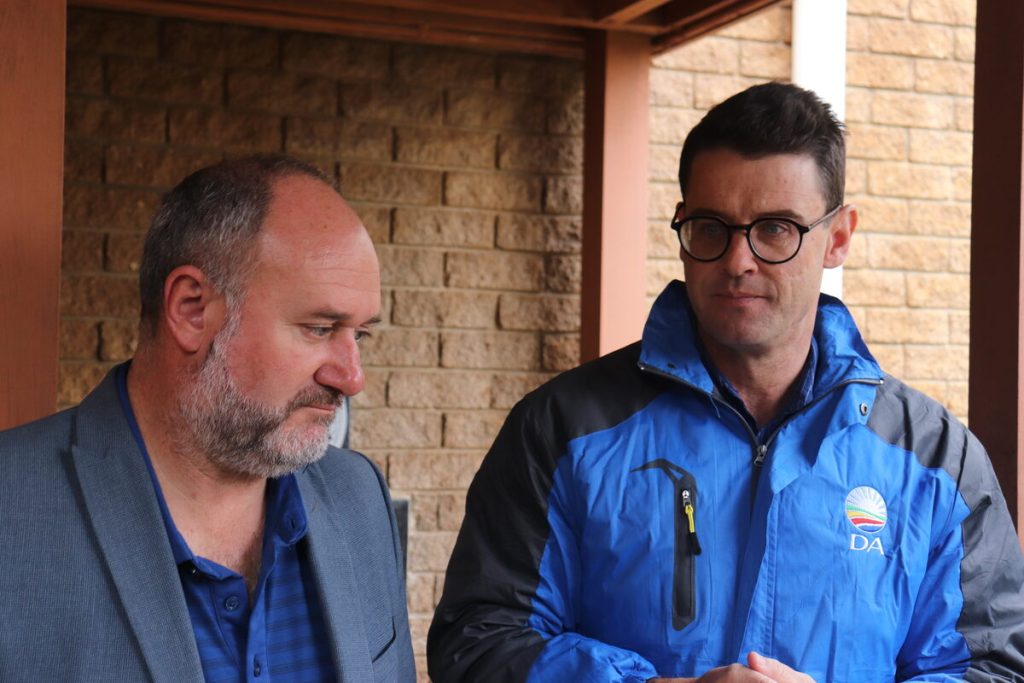
DA Nelson Mandela Bay mayoral candidate, Retief Odendaal, said the metro police department had become “a law enforcement agency in name only”, with only 126 operational officers currently serving the metro. According to Odendaal, just 18 officers are deployed per 12-hour shift, equating to fewer than one officer for every three wards.
Odendaal said the DA’s plan would see the metro police force expanded to more than 500 officers and over 60 vehicles within five years, with the aim of ensuring 24-hour policing coverage across all wards.
He said the first phase of the plan would involve doubling the number of officers within 12 months by upskilling existing municipal security personnel.
“We have at least 50 metro police candidates who have already gone through formal training but were never absorbed,” Odendaal said. He added that many of the City’s existing security staff could also be trained as metro police officers, arguing that the municipality already had the financial resources available but was failing to utilise its safety and security budget effectively.
During the briefing, DA councillor Jason Grobbelaar confirmed that the City’s specialised mobile surveillance vehicle, equipped with a gimbal-mounted camera system, remained out of operation owing to contractual and supplier-related issues. He said the unit had been sent to another supplier for repairs, although no estimated return date had been provided.
Questions around the disappearance and deterioration of previously procured metro police vehicles were also raised during the briefing.
Odendaal alleged that Nelson Mandela Bay’s fleet management system was dysfunctional, with some vehicles reportedly waiting months for basic repairs.
It’s so broken that sometimes a car has to wait three months for a battery.
The DA linked the decline in law enforcement capacity to growing levels of criminality and infrastructure vandalism across the metro, particularly in Kariega and Despatch, where residents currently face prolonged electricity outages and water disruptions.
DA provincial leader Andrew Whitfield said cable theft and vandalism were contributing directly to service delivery failures and economic decline in the region.
“When cables are stolen and power goes out and infrastructure is damaged and bylaws aren’t enforced, companies shut down,” Whitfield said.
He warned that residents were increasingly losing confidence in both the municipality and the South African Police Service (SAPS), creating conditions where communities could resort to taking the law into their own hands.
Odendaal further accused the current ANC/EFF-led coalition government of neglecting Kariega and Despatch, claiming the areas were under-resourced and overlooked administratively.
“There are communities here [Kariega] that have had water interruptions for 150 days,” he said.
He argued that the Kariega region, despite being a significant contributor to the metro’s rates base through its industrial sector, had not received adequate staffing, budget allocations or infrastructure maintenance support.
The DA’s broader safety plan includes reinstating Nelson Mandela Bay’s CCTV camera network and joint operations centre, introducing ShotSpotter gun-detection technology, increasing bylaw enforcement capacity and strengthening partnerships with neighbourhood watches.
Odendaal said visible policing and functioning bylaw enforcement were essential to restoring order in the city. “Because there are no consequences in Nelson Mandela Bay, there is a definite state of lawlessness,” he said.
In response, the Nelson Mandela Bay Municipality spokesperson Sithembiso Soyaya clarified, “The Metro Police Department currently has a fleet of 50 vehicles, which includes trucks, light delivery vehicles, motorcycles, sedans and minibuses. At present, 11 vehicles are operational, while the remaining vehicles are undergoing repairs and maintenance at the municipal automotive garage. The Municipality confirms that efforts are underway to return the fleet to full service as urgently as possible,” he said.
With regard to the recently received fleet allocation, Soyaya said only two vehicles were designated for the Metro Police Department.
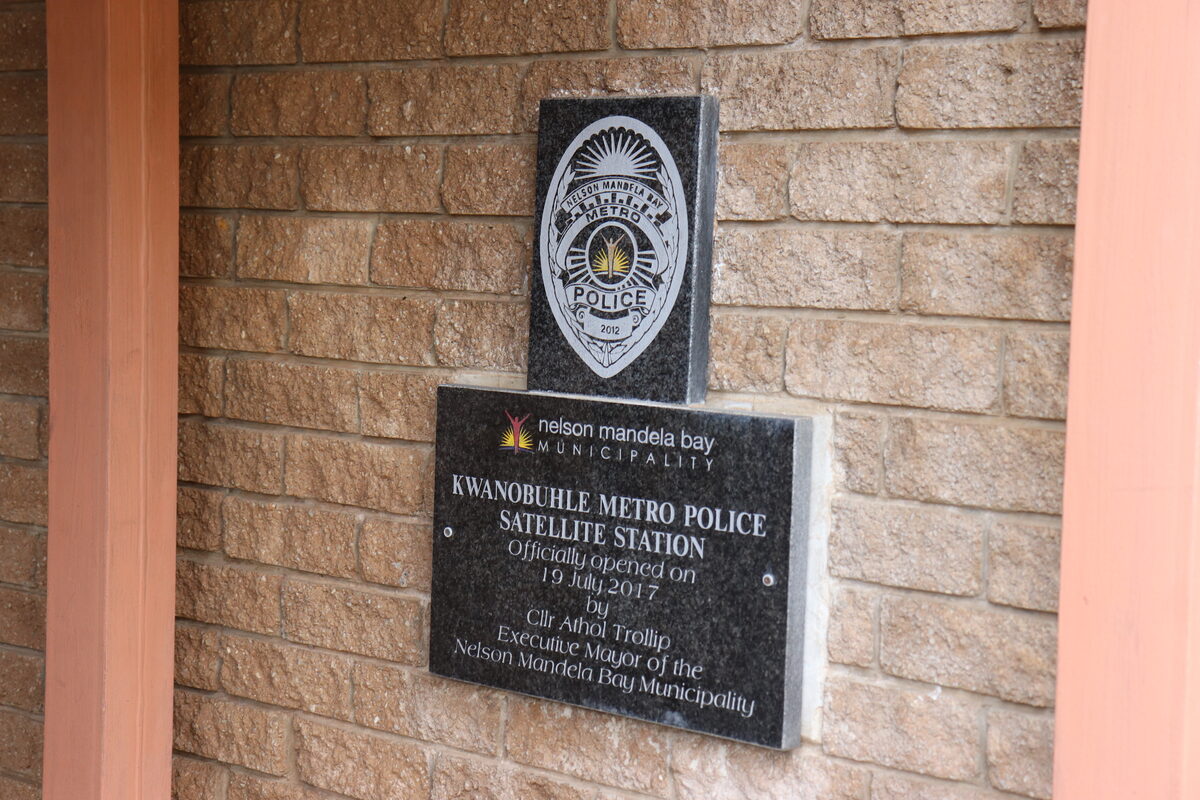
The Municipality further clarified that the KwaNobuhle Metro Police Precinct has never been closed. “The Department is currently transitioning into upgraded premises located on the same site,” he said. “The renovations are intended to provide a more secure working environment and to accommodate a larger staff complement in line with operational requirements.”
Additionally, Soyaya noted, “It is also important to note that the KwaNobuhle facility functions primarily as a Metro Police deployment centre and not as a public walk-in service centre. At the time of the visit [21 May 2026], operational teams would have been deployed in the field attending to law enforcement duties across various areas.”
Soyaya added, “Traffic Services operate on a different shift system and deployment cycle from Metro Police operations,” which may result in varying staff visibility at different times.
ALSO READ: NMBM senior traffic officer placed on suspension with full pay

You must be logged in to post a comment.