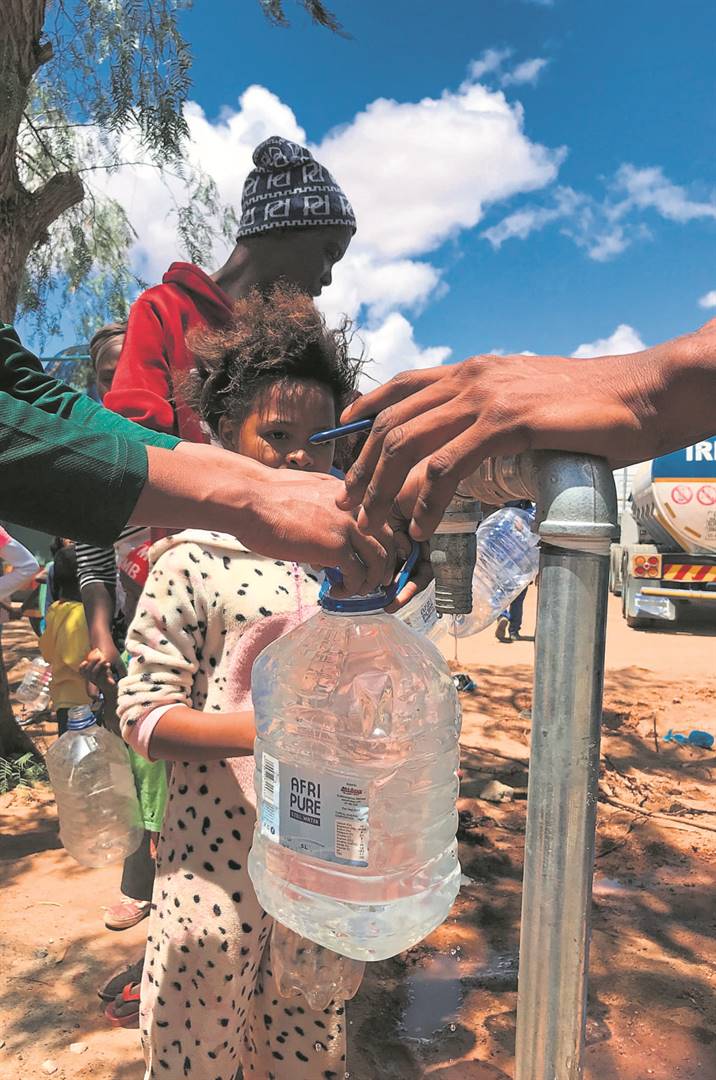

DRIVING through uMasizakhe and Kroonvale on any given day of the week, one is struck by the number of children of school-going age pushing trolleys, makeshift carts and wheelbarrows full of bottles and buckets of water.
Due to drought, vandalism and lack of maintenance to infrastructure in most Eastern Cape towns, a young generation regresses into being water carriers instead of water engineers. School takes a back seat, because water has to be carted into homes for everyday living.
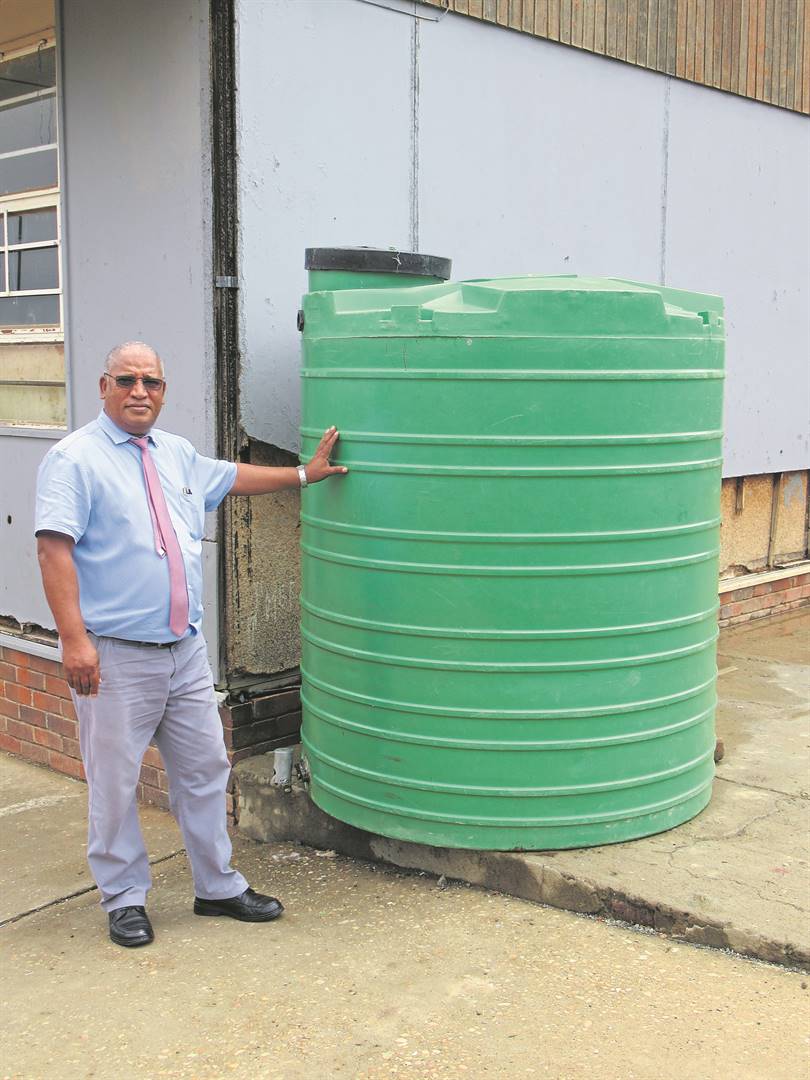
“Yes, lack of water causes a lot of absenteeism,” said Basil Jacobs, acting principal at Lingcom Primary School in Kroonvale.
His is not an enviable job, but Jacobs energetically and enthusiastically navigates his “ship” past the many challenges brought on by the drought.
“We focus on what we CAN change, and on what has already been achieved,” he said.
“We do whatever we can – that is what we call the ‘hidden curriculum’,” Jacobs said.
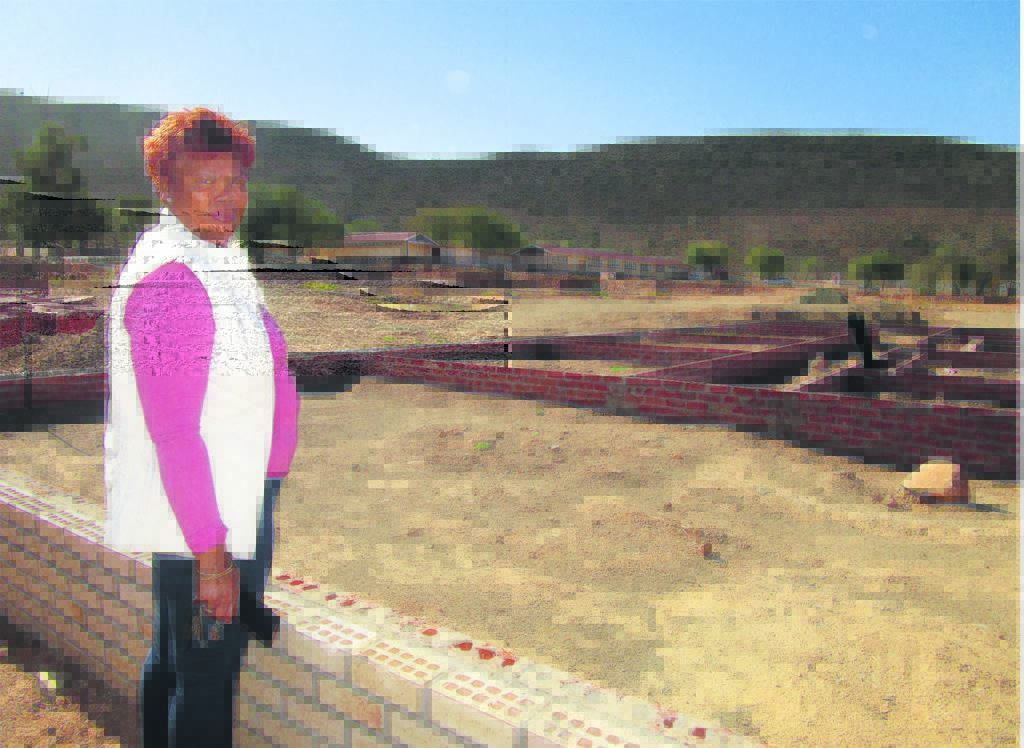
Driving into Adelaide with Gift of the Givers’ (GOTG) geohydrologist, Dr Gideon Groenewald, one doesn’t have to wonder where to find Martyn Landmann’s drilling team. A cloud of white dust billows high into the air above a local school.
“What’s the verdict, Pheello?” Groenewald consults the team leader as they inspect the heaps of rock lined up next to the rig. Pheello shakes his head.
The drill must be moved, but they’re limited to remain within the school grounds. At least there’s that, thanks to a visionary agreement between GOTG and the Department of Education.
Jacobs also sang the praises of the department.
“They are very supportive of our staff and learners. Among other things, they assist with a feeding scheme through which we are able to feed all 760 learners on a daily basis.” The drought has taken a toll on the Eastern Cape economy. Thousands of farm workers have been laid off, and a lack of job opportunities in Karoo towns reflect the strangled economy. For many children, this will be the only meal they get today.
The school is situated high against a mountainside, and running water is a long-forgotten luxury.
“Flushing toilets and washing hands are something our 760 learners no longer take for granted,” Jacob admitted. But ever the strategist, Jacobs, learners, teachers and terrain staff keep the aged toilets squeaky clean by means of bucket and bottles of water.
“Because we teach our children that cleanliness is next to godliness,” Jacobs maintained.
“We receive amazing support from GOTG, who regularly fills our JoJo tanks with drinking water,” he said.
“But I have taken the liberty of writing them a letter, requesting an intervention by means of drilling us our own borehole, so we can operate independently of the municipal supply.”
At Ntsika Secondary School in Makhanda (Grahamstown), GOTG struck “white gold” last year when a borehole yielding a million litres a day was sunk.
The “Superbowl”, as it was aptly dubbed, not only supplies Ntsika’s learners, but has been the saving grace of many towns in the EC, thousands of litres in bottled water and tankers being distributed from here to towns where rivers and dams ran dry.
While a borehole at Lingcom is highly unlikely to be another Superbowl, it will make a huge difference in time-saving for this school. Dr Groenewald has already sited a drilling spot, but the organisation’s funds to intervene in Graaff-Reinet have been depleted.
Nonetheless, “We keep them in our prayers,” Groenewald said, not oblivious to the fact that miracles seem to follow wherever the organisation hits the ground.
“There is no shame in asking for help,” Jacobs smiled. “The department goes out of their way to do what they can, as do GOTG. We do the same. It’s like I told you: there’s the official curriculum, and then there’s the hidden curriculum. We do what we can with what we have.”
It rings true, one realises, for everybody in this drought. Farmers, business owners and residents all adapt, doing what they can with what they have, until one day, enough rain falls again to fill dams and let the rivers run.