
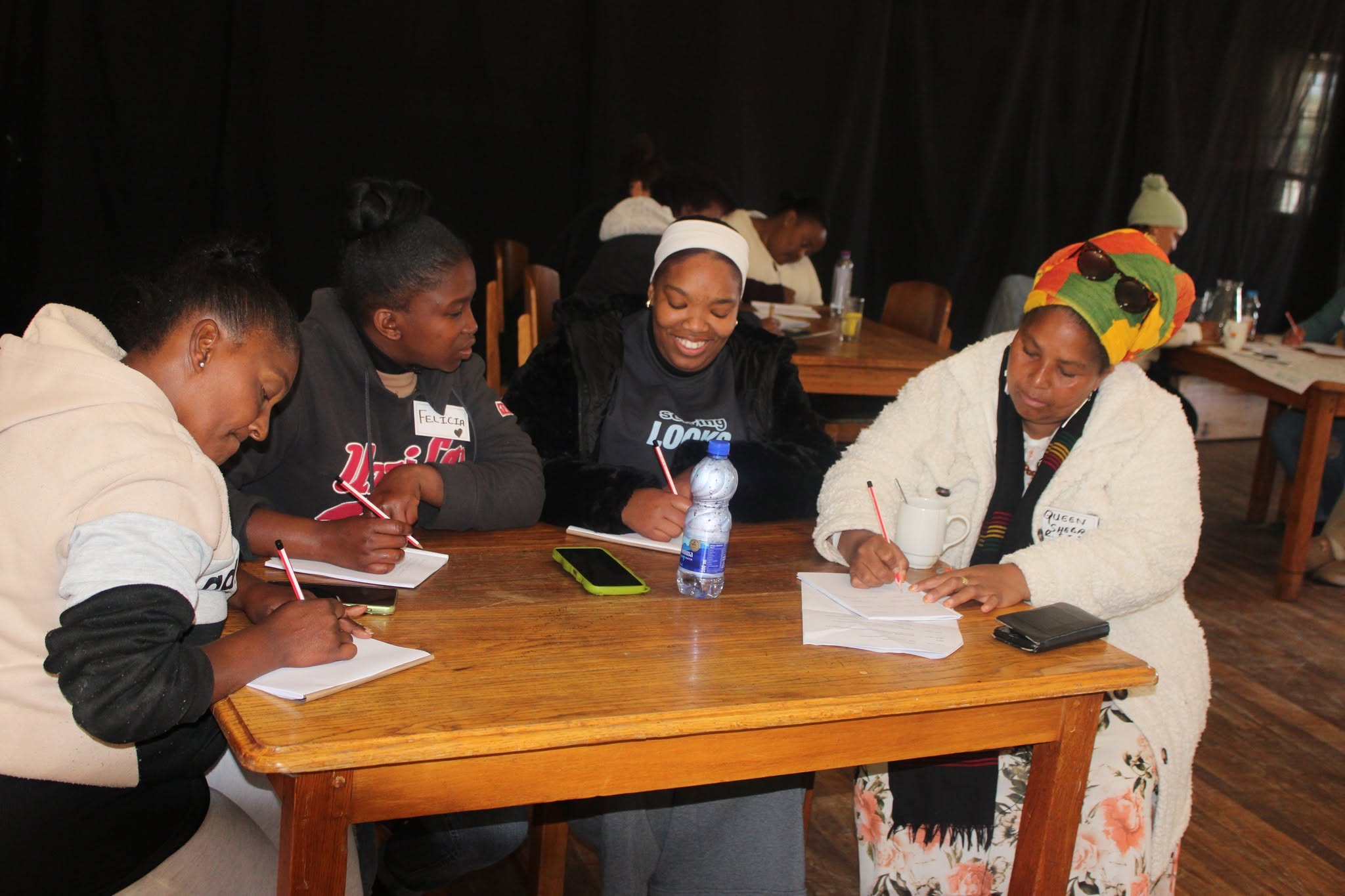
ROBERT SOBUKWE TOWN – Women from Robert Sobukwe Town (formerly Graaff-Reinet), Rietbron and Willowmore in the Dr Beyers Naudé Local Municipality, together with women from across the Central Karoo and Garden Route, gathered in Willowmore on 5 and 6 August for the Support Centre for Land Change’s second Women’s Writing Workshop.
Facilitated by writer and creative practitioner Kim Andreoli, the workshop focused on reflecting on the environmental and social changes affecting the women and their communities, with discussion and writing providing space to explore these experiences and shape them into personal stories.
Rather than simply discussing climate change as a broad environmental concern, participants were encouraged to start with what they had seen and experienced themselves.
Conversations considered when environmental changes were first noticed, how they had developed over time, and the ways in which they had affected people personally.
Water emerged as one of the strongest concerns, with participants speaking about both its availability and quality.
Other environmental issues included refuse removal, poorly managed landfill sites, and the challenges faced by communities where waste is dumped illegally or not collected regularly.
Food and community gardens, including gardens established in difficult circumstances, also formed part of the discussion.
Climate-related changes were another major focus, with drought, flooding and increasingly extreme temperatures among the experiences shared by the women.
These environmental pressures were considered alongside challenges such as unemployment, housing, infrastructure, relationships with government officials, and the availability of support from relevant government departments and institutions.
Despite the different towns represented, the discussions revealed striking similarities in the challenges facing communities across the region, with water, the climate crisis, infrastructure and stakeholder support emerging as common priorities.
The workshop also brought a change in approach to the writing itself.
While the initial idea was for participants to produce stories collectively around the issues they had identified, the women ultimately chose to develop individual stories, using a framework discussed during the workshop to guide their writing.
The response was enthusiastic, with some participants already producing substantial sections of their stories.
Exercises exploring descriptive language assisted the women in moving beyond simply recording events and beginning to experiment with the creative possibilities of their own voices.
The writing process is intended to give greater visibility to experiences that are often absent from formal discussions about climate change and rural development.
The stories are rooted in the realities of the women and their communities, offering an opportunity to document how environmental change is experienced at a local and personal level.
The second workshop has therefore moved the project beyond identifying issues towards giving those experiences a written form.
The stories emerging from the process have the potential to become a collective record of rural women’s experiences during a time of climate crisis, told not through statistics alone, but through the voices of the women living through these changes themselves.
ALSO READ: Rocco Torro wins five national and international awards