
“Yes! We can end TB!” is the theme for World TB Day 2026. It is a bold call for action and a message of hope. The South African theme was slightly adapted to: “Yes! You and I can end TB!”
World Tuberculosis (TB) Day is observed annually on 24 March and marks Dr Robert Koch’s groundbreaking announcement of the discovery of the bacterium responsible for TB in 1882. This was a pivotal moment in the medical field, a milestone that revolutionised the understanding and treatment of TB and laid the foundation for global TB control efforts. Yet more than a century later TB remains a global health concern.
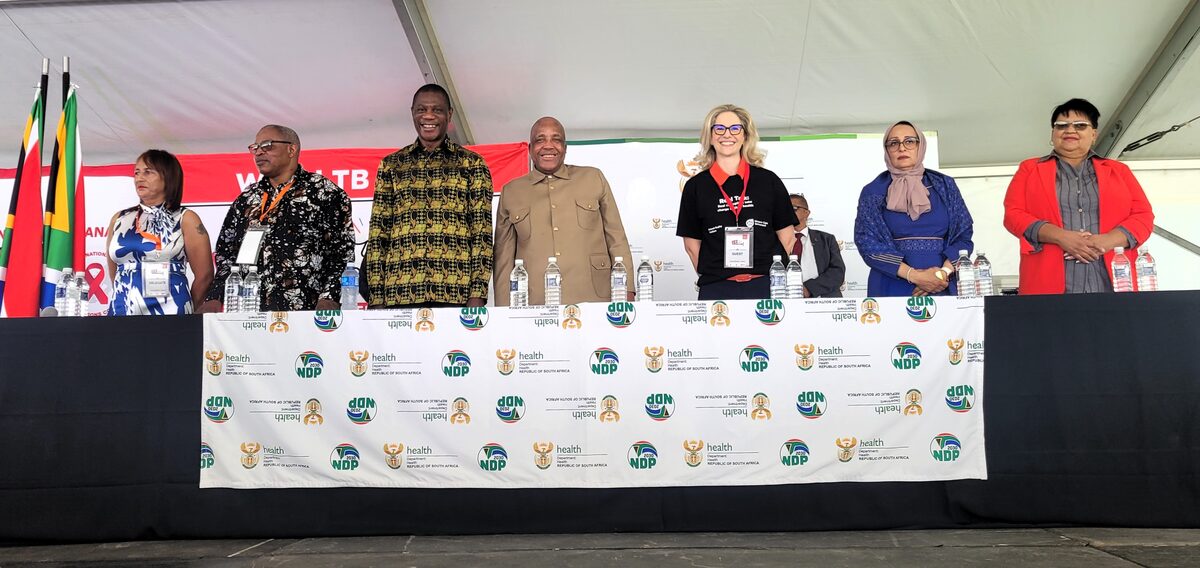
On Tuesday 24 March World TB Day Commemoration took place in Caledon at the Caledon Sports Grounds with South Africa’s Deputy President, Paul Mashatile, Health Minister Dr Aaron Motsoaledi and various other dignitaries in attendance.
After a briefing about the day’s programme Mashatile and his entourage paid a short visit to the Caledon Clinic to assess the facility and its programmes before proceeding to the Caledon Sports Grounds.
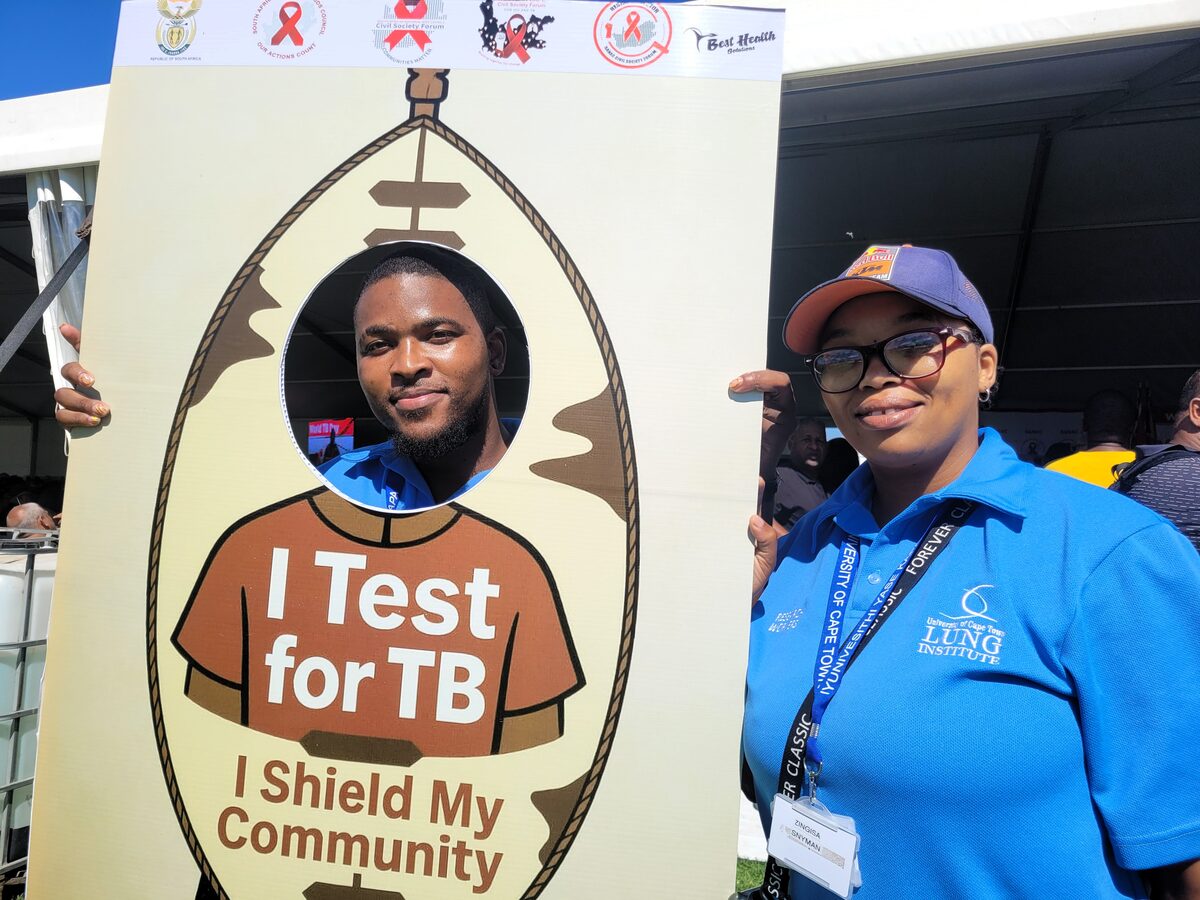
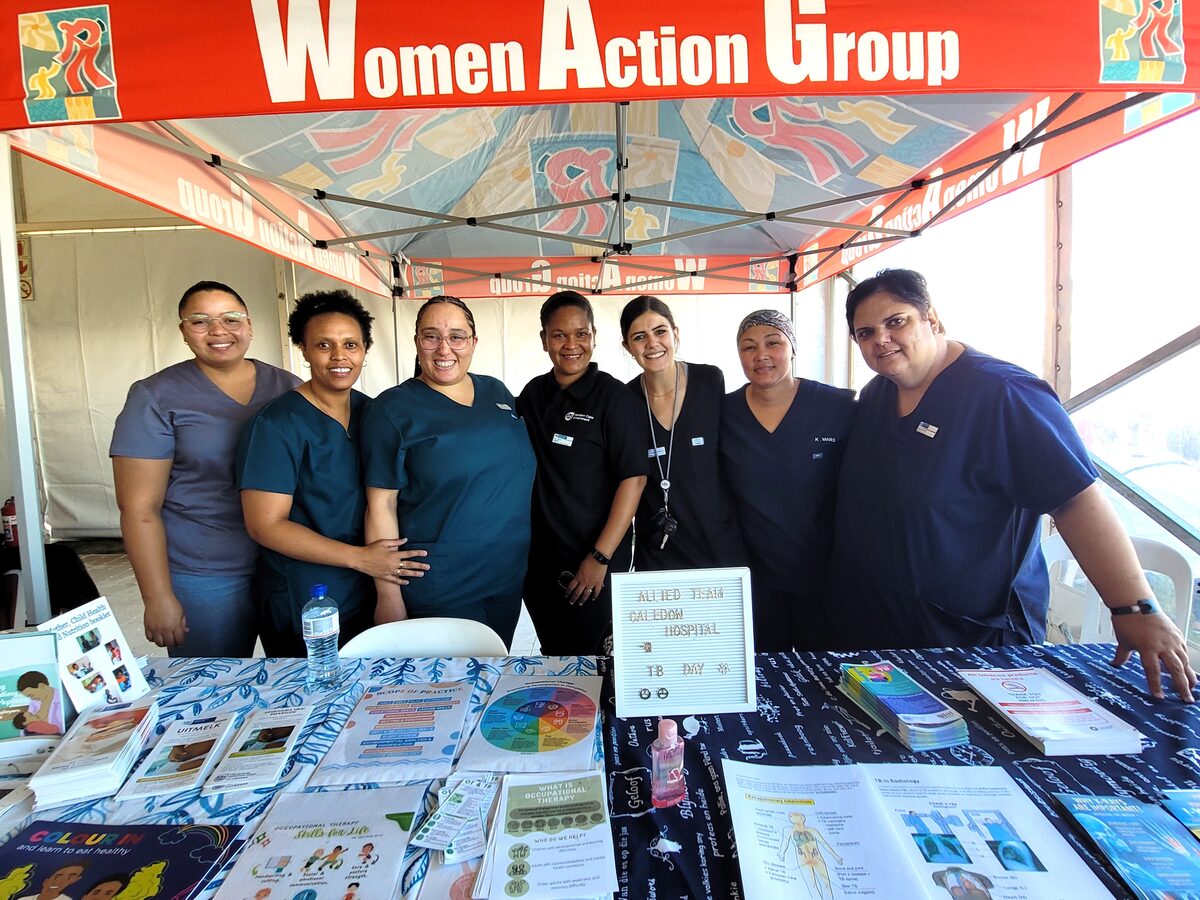
The Sports Grounds had an almost festive air with a number of marquee tents set up. Various institutions had information stands with relevant literature and some even took time to play a few games with the children who attended. Various mobile stations were set up for TB testing. These were well visited and by late morning about 700 people had undergone tests, with many still waiting to be tested.
The official programme began with the arrival of the Deputy President and his entourage. The Agulhas School of Skills Choir opened the event with the singing of the National Anthem. Theewaterskloof Deputy Mayor Alderman Cynthia Clayton delivered the welcoming address. A TB Ambassador, Sarah Bakamela, gave testimony of her TB journey. Various other speakers delivered powerful messages. These included, among others, speeches by Mireille Wenger (Western Cape MEC for Health and Wellness), Dr Lucica Ditiu (Executive Director of Stop TB Partnership) who flew in from Geneva for the event, Shenaaz El- Halabi (World Health Organization Country Office representative – South Africa), Motsoaledi, the president of the SA Local Government (Salga), the president of trade-union federation Cosatu, the SA National Aids Council (Sanac) private-sector forum, the Sanac Civil Society Forum and Alderman Helen Coetzee, Deputy Mayor of the Overberg.
“On World TB Day we honour the millions of lives lost to tuberculosis,” Shenaaz El-Halabi said in her speech, “and we stand in solidarity with the people, families and communities who continue to live with this preventable and curable disease.
“In 2024, globally, an estimated 10,7 million people fell ill wth TB, of which 54% were men, 35% women (15 years and above) and 11% children less than 15 years. Additionally, 1,23 million lives were lost due to TB.
“In our region TB killed 378 000 people and infected 2,7 million more, representing one quarter of the global burden. Every 83 seconds TB claims a life in the WHO African Region. In one day about 1 041 in our region and about 3 500 globally die from TB. It remains one of the deadliest infectious diseases, a major driver of poverty and antimicrobial resistance (AMR).
“On World TB Day today, and under the theme ‘Yes! We can end TB. Lead by Countries. Powered by Communities’ we reaffirm our collective commitment to ending TB as a public health threat. This theme recognises that progress depends on strong national leadership, sustained investment and empowered communities driving change at every level.”
Reflecting on South Africa’s ongoing fight against TB, Mashatile in his keynote address said of TB: “A disease that has stolen too many breaths from our people. It has silenced voices in our homes, emptied chairs at our tables, and left a permanent scar in our communities. Yet today we have gathered not in despair, but in defiance because as a country we are proving that TB can be defeated. Each life saved, each infection prevented, is a victory for dignity and hope for the future.
“TB remains a public health concern and is still the leading cause of death, particularly for people living with HIV. Despite a slight decrease in overall TB deaths, we have only managed a 17% reduction compared to 2015, far short of the 75% target we set for ourselves. This gap reminds us that lives are still being lost unnecessarily, and we must do much more to turn the tide.”
Mashatile mentioned that a 2021 TB Survey showed the harsh reality that 56% of people affected by TB in South Africa continue to face catastrophic socio-economic constraints that push families into poverty.
“We cannot ignore this human and economic toll. We need to make our response more patient-centred meeting people where they are and removing all barriers against access to testing and treatment. We must find TB, to end TB. Early detection is the key to breaking the cycle of infection and protecting families and communities.”
He urged men to get tested as their positivity rate is higher. He also encouraged anyone who has been in close contact with anyone with TB to visit their nearest health facility immediately in order to get tested and start treatment if necessary.
“South Africa has come far, but the journey is not over. Let us keep pushing forward with urgency, compassion and unity. To end TB truly we need a whole-of-society approach.
“Let us commit ourselves anew: to get tested, to seek treatment promptly, to complete treatment if infected, to support one another and to build a healthier, TB-free South Africa. TB is preventable. TB is curable. Yes! You and I can end TB.”