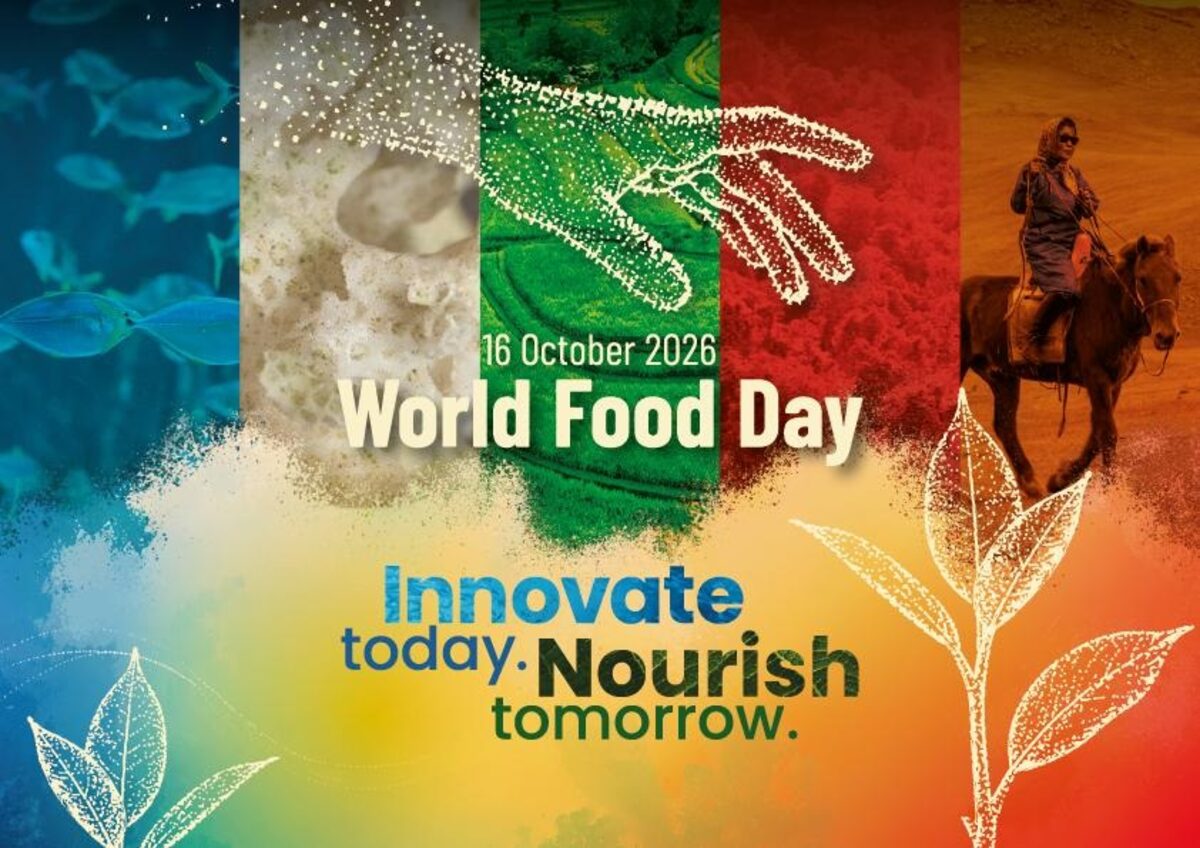
As the world marks World Food Day on 16 October, the focus falls on a persistent contradiction: food is produced across the globe, yet millions of people continue to struggle to access sufficient and nutritious meals.
This year’s theme, “Innovate today. Nourish tomorrow”, highlights the need for innovation to strengthen agrifood systems, improve food security and protect the natural resources future generations will depend on.
According to the United Nations’ 2026 State of Food Security and Nutrition in the World report, an estimated 645 million people faced hunger in 2025, while approximately 2,1 billion experienced moderate or severe food insecurity.
In Africa, the challenge is particularly pronounced, with more than half of the population experiencing moderate or severe food insecurity.
South Africa’s food security challenge
Statistics South Africa’s (Stats SA) General Household Survey 2024 found that 22,2% of households considered their access to food inadequate or severely inadequate, and that 14,7% of individuals experienced hunger in 2024, compared with 11,1% in 2019.
While these figures underscore the need to look beyond food production alone, any statistics must be critically assessed, as a range of factors can affect their accuracy.
Poverty, unemployment and the rising cost of living can prevent households from accessing sufficient food, even when it is available. The affordability of nutritious diets remains a further obstacle for many families.
The World Health Organisation (WHO) has consistently highlighted the importance of healthy diets in preventing malnutrition and supporting good health. Food security therefore involves not only having enough to eat, but also being able to afford a varied and nutritious diet.
Innovation as part of the solution
Innovation could help address these challenges through climate-resilient crops, water-efficient farming, improved food storage, community gardens and initiatives that redistribute surplus food to vulnerable households.
The South African Food Sovereignty Campaign (SAFSC) and the broader Climate Justice Charter Movement (CJCM) have, however, advocated for food systems that address structural inequalities and strengthen communities’ ability to produce and access food. Their approach emphasises access to land and water, support for small-scale farmers and community-led food production.
This perspective raises an important question about the 2026 theme: who benefits from innovation, and does it make food more accessible to those who need it most?
Turning progress into tangible change
For South Africa, the challenge is to ensure that advances in agriculture, food distribution and sustainability translate into tangible improvements for households experiencing hunger.
World Food Day serves as a reminder that building resilient food systems requires more than producing enough food – it also requires addressing the economic and social barriers that prevent people from accessing it.
Ultimately, innovation will only fullfil its promise if it helps ensure that nutritious food is available, affordable and accessible to all.