
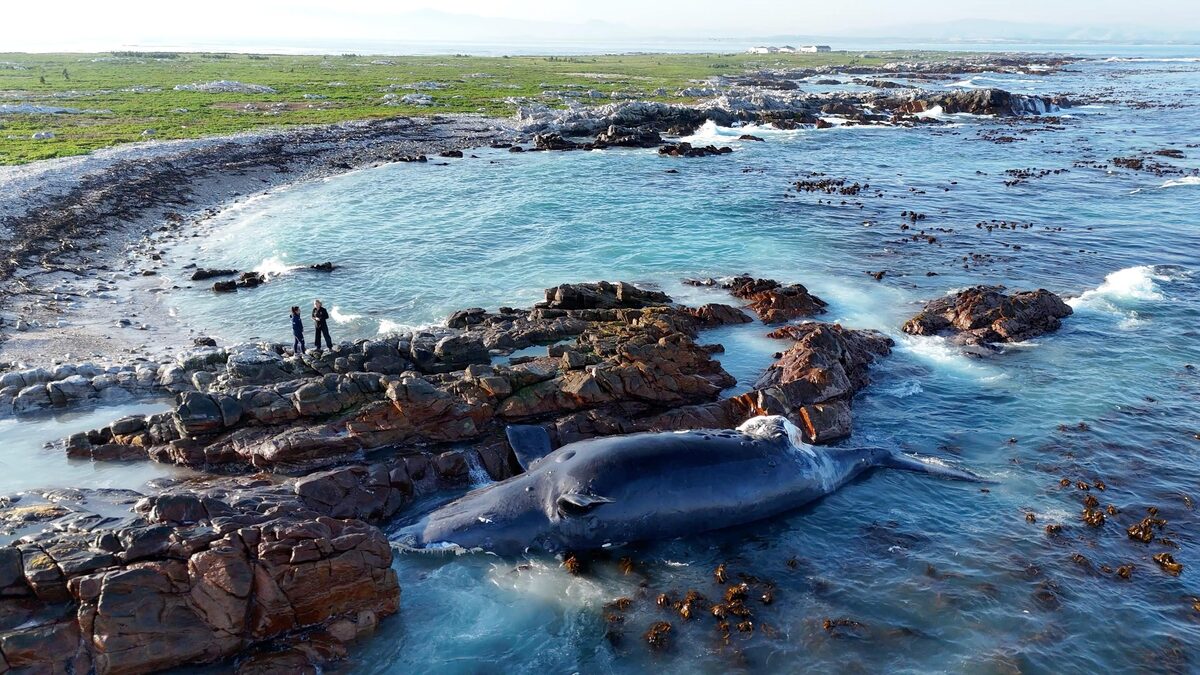
What usually begins as a season of new life has begun with heartbreaking loss, after two southern right whales – an adult and a newborn calf – were found dead near Dyer Island.
The two lifeless whales drifting in the same waters have left researchers asking a devastating question: could a newborn calf have lost its mother days before it ever had a chance to survive on its own?
“The start of the southern right whale season is usually a welcome sight along the South African coastline,” says Christine Wessels of Marine Dynamics. “Sadly, this year’s season has also brought the discovery of two deceased southern right whales in the Greater Dyer Island ecosystem – a sobering reminder of the threats these animals continue to face.”
The southern right whale season is the period in Southern Right Whales return to calve, nurse and breed.
First, an adult southern right whale was found on 2 August during a Marine Big 5 tour by Marine Dynamics. The crew encountered the deceased adult whale floating offshore.
Underwater footage was subsequently collected at sea and “the team documented severe trauma to the adult whale’s head”, according to Wessels. The whale suffered injuries highly consistent with a vessel strike, including “the loss of the upper jaw ahead of the eye, the absence of baleen plates and a severed tongue”.
“The mortality was reported to the Overberg Stranding Network, with a ship strike considered the most likely cause of death,” she says. “As the apparent cause of death was already evident, no additional sampling was initially considered necessary.”
On 3 August, the next day, a second deceased southern right whale was found floating offshore. Examinations revealed that this was a male calf with an unhealed umilicus which meant that it had been born quite recently.
“It was particularly heartbreaking to see the calf’s unhealed umbilicus, which tells us he was only a few weeks old”, says Dr Loraine Shuttleworth. Shuttleworth is the head of research at the Dyer Island Conservation Trust (DICT) and led the response team examining the deaths of these whales.
The close proximity of the whales’ deaths raised another question beyond relatability between them. Could the calf have lost its mother before it could survive on its own?
“It is always sad to encounter such magnificent animals lifeless at sea, particularly at the beginning of the whale season when we look forward to welcoming them back to our coastline,” said Shuttleworth.
Samples collected
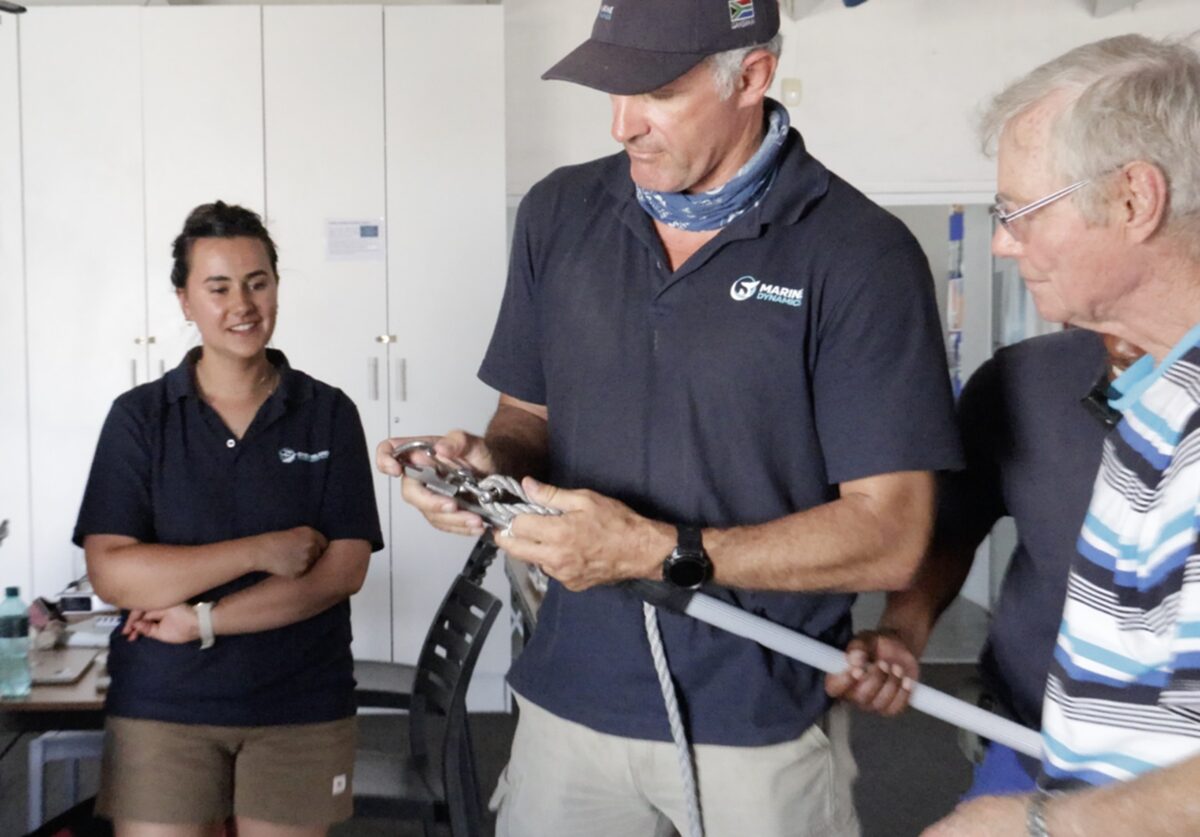
Samples of the whales have since been collected by a team of experts and researchers from Marine Dynamics, DICT and the University of Pretoria’s Mammal Research Institute Whale Unit
“Genetic analysis will determine whether the two animals were related while also contributing to a broader collaborative research project investigating ship strikes on large whales,” Wessels said.
She added that with each case documented, valuable information is gathered and improves understanding of vessel strikes. They also contribute “to evidence-based management measures aimed at reducing their occurrence”. Genetic analysis is yet to reveal any relation between the two whales.
Meanwhile, an African penguin was rescued during a visit to the carcass. The penguin required rehabilitation and was transported to the African Penguin and Seabird Sanctuary, where it will receive specialised care before being released back into the wild.