
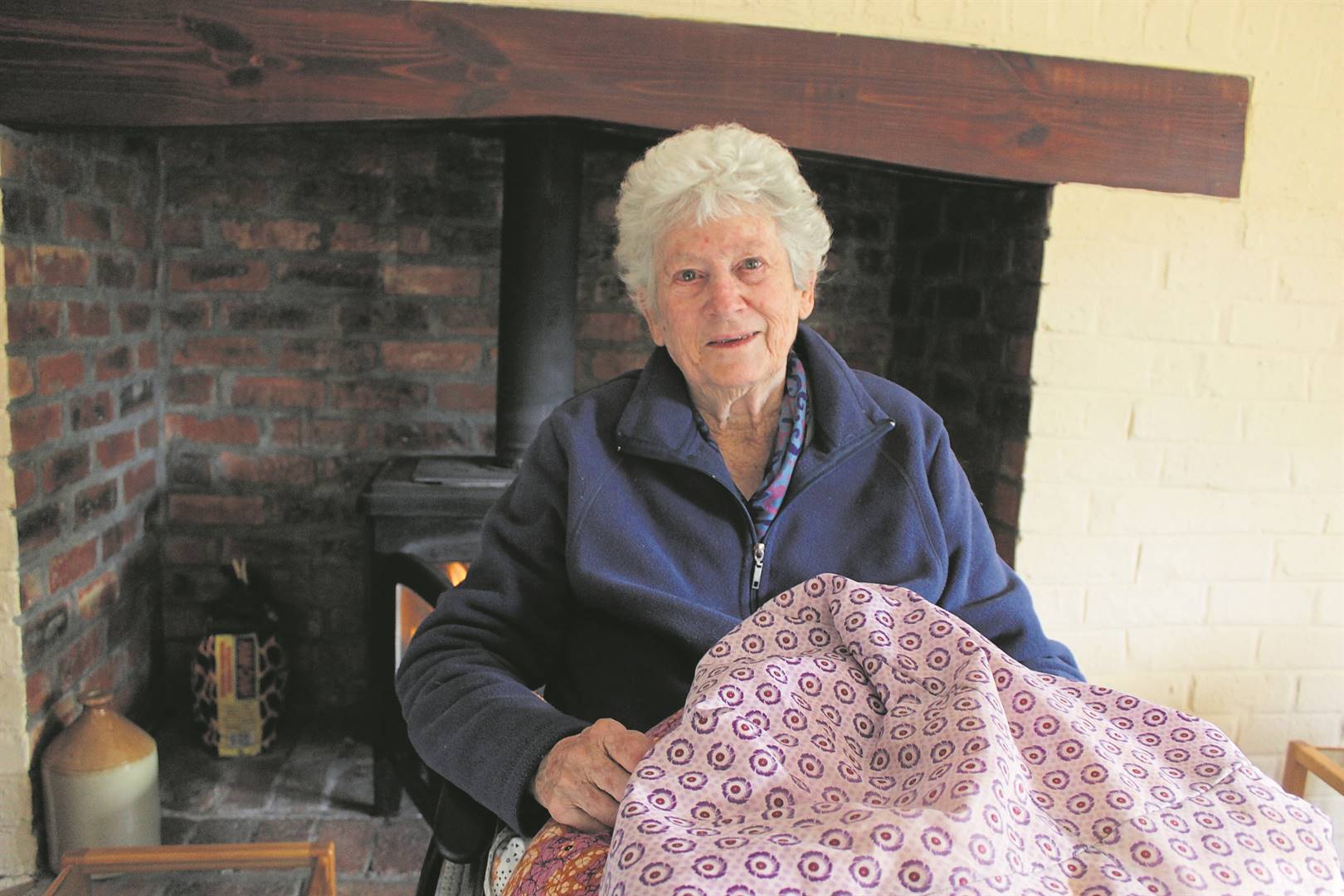
“Meaning making is embedded in caring for others. . . this is my credo in life,” says Elma Hunter, a former Stanford resident, who will be remembered for her unstinting community service in the village.
The 85-year-old, who recently resettled in Knysna, arrived in Stanford in 2007. She soon became a proponent of charitable causes in the village.
Once she had moved there from Noordhoek her role was cut out for her. . . Hunter saw some children walking around, hungry and poorly dressed. She jumped in, joining the pool of socially responsible folk already doing what they could to make life better for the less fortunate.
In 2008 she attended a community-building workshop in Stanford presented by Prof Freddie Crous, an industrial psychologist. Some 170 people of all races attended.
The workshop confirmed that what she was striving for was spot-on. Themes raised were the need to overcome racial barriers, caring, compassion, hope and the opportunity to get together to exchange ideas more often.
Vuka Uzenzele (“Wake up and do it for yourself”), Elma’s brainchild, was her pride and joy. It was an initiative aimed at empowering the community, teaching them how to be innovative and how to help save our planet by reducing, reusing, recycling and reinventing.
Community members, including schoolchildren, were taught to make items that would make life easier for themselves. These included rocket stoves, solar cookers, wonderbox cookers, planter boxes and safe candles.
Hunter soon became the convener of the Rotary Stanford Swopshop project. It was a community-based recycling and social-empowerment project that sought to give the community an opportunity to be environmentally responsible while gaining access to school stationery and equipment, toiletries, household goods, clothing and shoes.
After Rotary had handed the Swopshop to Stanford Conservation, it became known as Stanford Score Shop.
When Hunter was a wee tot her mother, Beryl Munnik, called her Gandhi. “She said although I looked and was soft I had an iron will.” Like mother, like daughter? Her mother was also was known for her caring nature and determination; she played a major role in the establishment of the Village of Happiness (now known as the Hibiscus Village) in Margate, KwaZulu-Natal.
Hunter met her husband, Ian, while she was studying architecture at UCT. Before qualifying as a CA Ian had flown Vampires, Dakotas and Harvards for the South African Air Force. The Hunters’ lives were understandably filled with adventure. They travelled the world . . . They canoed down the St Lawrence River, the boundary waters between Canada and the United States, and they visited China, Nepal, Thailand, Europe and Australia. She loved it all, but knew where her heart lay.
Hunter left the village recently, following the sudden death of her beloved husband, Ian. She moved to Knysna to be near her daughter, Lara. The bets are on that at Millwood Home, her new residence in Knysna, her presence will be felt as strongly as it was in Stanford.
Any departing message for Stanfordians, Elma?
“Oh, yes,” she says. “All residents should rethink what they could do to improve life in Stanford.”– Nelly Roodt