
Port inefficiencies are costing local farmers up to R26 000 per hectare.
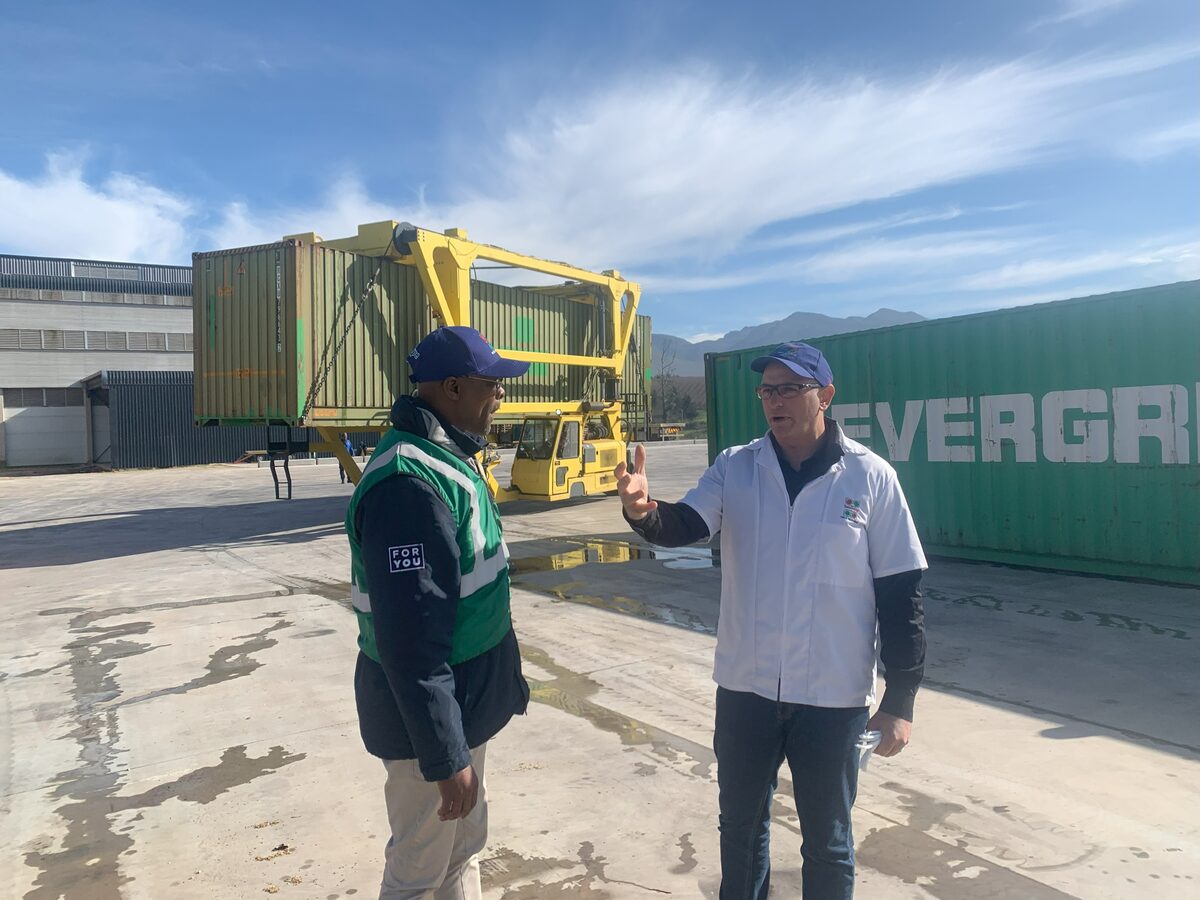
This according to the head of one of Africa’s leading fruit-growing, packing and marketing companies, Two-a-Day (TAD), based in Grabouw, during a visit there from Western Cape Minister of Agriculture, Economic Development and Tourism Dr Ivan Meyer.
Attie van Zyl, managing director of TAD, highlighted that the estimated total cost of inefficiencies at the PoCT to the Western Cape apple and pear industry was R999 million annually.
TAD, previously known as Elgin Fruit Packers Co-operative Limited, comprises more than 50 farms and 3 300 hectares. Total production, including processing, equates to over 200 000 tons per annum.
Regarding the figure port inefficiencies are costing, Van Zyl said: “Our apple and pear growers are directly impacted. The total estimated cost of a dysfunctional port per ha for our farmers is R26 000 per ha.”
Said Meyer: “While we recognise that the Port of Cape Town (PoCT) management is implementing a terminal turn-around strategy and welcome the acquisition of new infrastructure, the worryingly slow pace at which it is happening remains a deep concern and has direct cost implications for the agricultural sector in the Western Cape.”
Premier Alan Winde stated: “While this figure is deeply worrying it does not show the full extent of the loss to the agriculture sector because we are not calculating the opportunities lost of growing into new markets. We are not seen as a reliable supplier to the international market because we cannot guarantee delivery.”
Glen Steyn, the Western Cape Department of Economic Development and Tourism’s Project Manager for Logistics Development, said the department had been working closely with the management team of Transnet Port Authority and Transnet Port Terminals in the Western Region.
“We appreciate our constructive engagement with Transnet Ports Authority. Our conversations include the impact of logistics on the national and provincial economies. A digital logistics planning platform is being developed with Transnet and other agencies in the container logistics chain that should assist in reducing bottlenecks and their disruptive effect on cargo movement.”
A farmer in the area confirmed this, saying there were many obstacles to overcome. “Not only are the input costs very high, but the forces of nature also play a role in our production every year and now the dysfunctional port,” he said.
Meyer concluded: “Our ambitious plan is to grow the Western Cape economy by 5% annually by 2035. Consequently, we need an efficient port, with significantly improved productivity in the lead-up to the fruit export season.”