
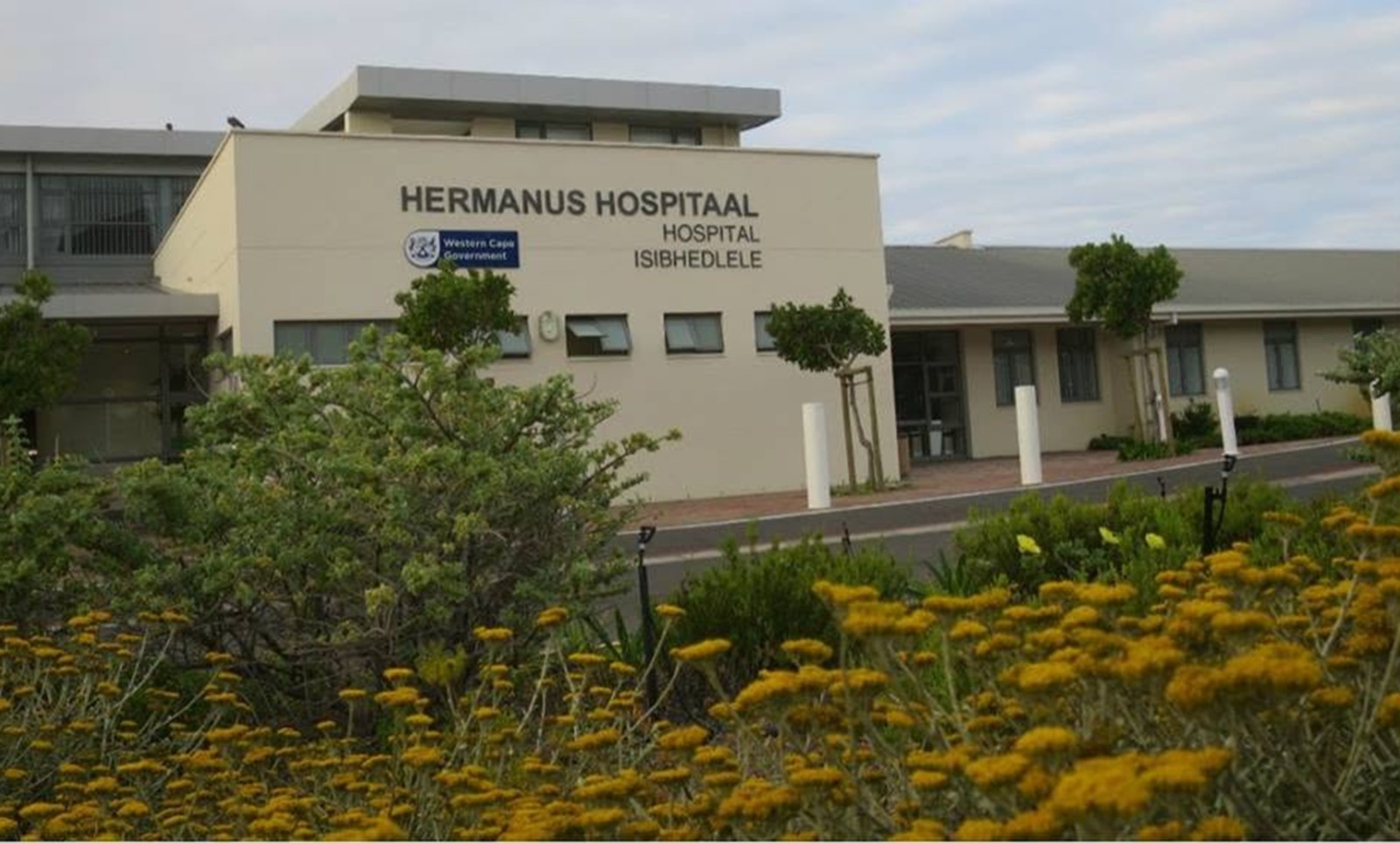
Following Hermanus Times’ recent articles on conditions at Hermanus Provincial Hospital the paper has been inundated with responses from community members sharing their own distressing experiences, from frustration over poor communication to a deeply troubling account of a patient death that a grieving family believes warrants an independent investigation.
Elderly resident escalates matter to Health Ministry
Among those who contacted the newspaper was 90-year-old Adrian Albertyn, a Hermanus resident campaigning for accountability after what he described as a serious decline in service quality.
He had written to the Western Cape Ministry of Health and Wellness on 8 October describing the matter as “extremely urgent” and calling for it to be handled “at the highest level”.
“Once upon a time the service was excellent, but now action is required. Is this a case of the fish rotting from the top?”
Albertyn’s frustration centred on what he saw as a culture of avoidance. He said he wrote twice to the hospital’s head without receiving a response or even an acknowledgement. A meeting with Albertyn was offered through the office of the Primary Health Care Manager, which he declined, calling it a potential mere “talk shop.”
“Your problems commence with communication,” he told department officials. “No excuse on offer can solve your problems.”
The ministry has acknowledged receipt. Ayesha Bougard, ministerial secretary, confirmed the matter had been referred to the Office of the Head of Department for direct response.
ALSO READ: ‘Nine hours in a soiled nappy’: Daughter’s shocking allegations about Hermanus Hospital
Family seeks answers after father’s death
The most distressing account comes from a family who lost their father at the hospital in April this year.
According to their account the patient was admitted in the early hours of 30 March after developing a high fever associated with a urinary infection. He was initially awake, responsive and able to communicate.
Over the following days his condition deteriorated markedly. By 31 March and 1 April he had become weak and needed assistance to drink. His wife was eventually told he had been placed on a drip and oxygen.
On 2 April a family friend visited and found him “extremely weak and struggling to breathe.” The drip the family had been told was providing treatment was standing next to his bed, unconnected. Oxygen was not being administered. After the friend raised concerns a nasal oxygen tube was fitted.
When the family member visited that evening drinks left beside the bed appeared untouched. The patient was “extremely hot, barely responsive and did not respond when repeatedly called.”
His call button was out of reach. The nurse on duty could not say whether he had eaten or taken fluids and told the family that only the doctor would know his diagnosis.
The family telephoned the hospital that evening and spoke to the doctor on duty in the ER, pleading for their father to be examined or moved to the ER for assessment. According to the family the doctor said he was attending to other patients and was not responsible for the men’s ward. He indicated he would check on the patient “if he had time” during the night. In the early hours of 3 April the family was informed the patient had die. His death certificate records the immediate cause of death as sepsis.
Unanswered questions
The family has compiled a list of questions they want answered: when the deterioration was first documented and escalated, when sepsis was diagnosed or suspected, what treatment was administered and when, why the drip appeared unconnected, whether food and fluid intake was monitored, and why the patient was not urgently reassessed when he became barely responsive.
They were subsequently told that telephone calls to the hospital are not recorded.
“Would my father still be alive if his deterioration had been identified and treated sooner?” the family member wrote. “We are not asking for assumptions to be made regarding responsibility. We are asking for the facts to be established.”
The family hoped that by sharing their story the Department of Health will conduct a proper investigation and that corrective action will follow.
Department responds
Hermanus Times has requested formal comment and will report on any further response.