

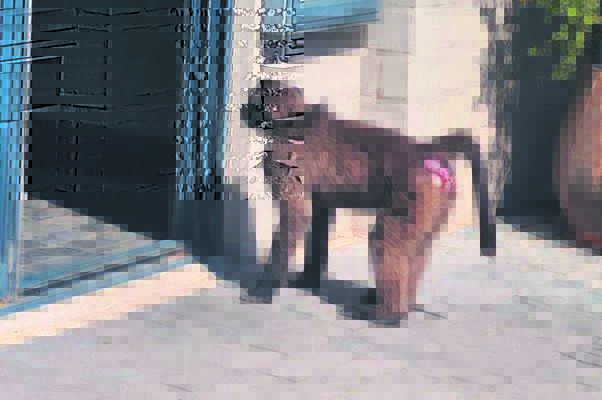
Eating junk food is bad for people, and even worse for the health of baboons which cannot resist the food thrown away by humans.
Although most people living in the Overstrand community encounter baboons regularly, many are unaware that the animals become addicted to high-energy human foods.
Overstrand Municipal Manager Dean O’Neill reports this has led to a female baboon in the Pringle Bay troop, known to officials as PBF1, recently having needed to have her tracking collar removed because she had put on so much weight.
Authorities say the troop’s habit of visiting the town for food has been exacerbated by dispersing males from other areas arriving in Pringle Bay, an immigration which alters the troop’s social dynamics and encourages bin raiding.
“Months of regular feeding on high-energy human food causes several unforeseen effects for unsuspecting baboons,” O’Neill explained. “Not only do they suffer high weight gain, but their natural immunity is severely reduced, and they may suffer from a wide variety of diseases.”
Scientists say baboons, like all wild animals, become stressed by the close proximity of humans, but their desire for an easy meal forces them to counter their natural flight response. Wild animals usually move away from people, yet some baboons in the Overstrand have been recorded taking food from people’s hands, a completely unnatural situation. It is well known that stress, combined with poor diet, is bad for people, and the same applies to baboons.
“Only people, working together, can help address this issue. Please prevent baboons from becoming habituated to people,” O’Neill urged.
“Overstrand Municipality through its service provider is required by operational guidelines agreed to by the authorities, to steer baboons out of urban areas and to manage ‘dispersing’ males in order to maintain a balance in urban troops. Baboons form an integral component of the increasingly threatened wildlife of the Overstrand region, wildlife that makes the region attractive to residents and tourists alike.”
Not only are towns unhealthy places for baboons, but they are also dangerous, and there have been cases of baboons being shot, poisoned, attacked by dogs and hit by cars.
“The reality is that wild baboons are safe baboons, a situation worth striving to achieve,” said O’Neill. “Overstrand Municipality needs the cooperation of residents who live in baboon-affected areas to practise good waste management. Please do not feed baboons and remember to secure your waste.”