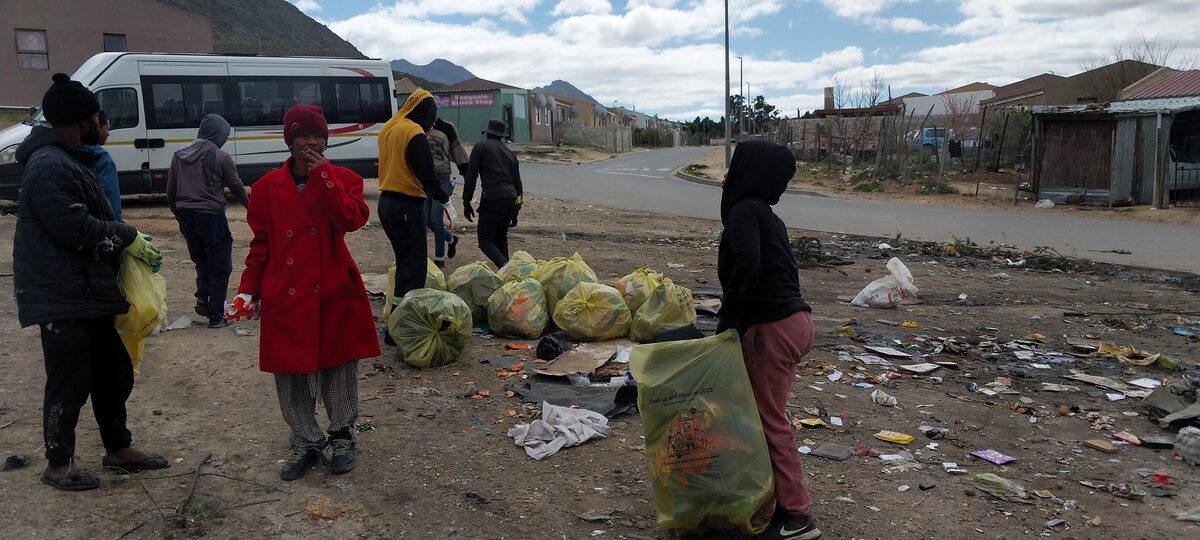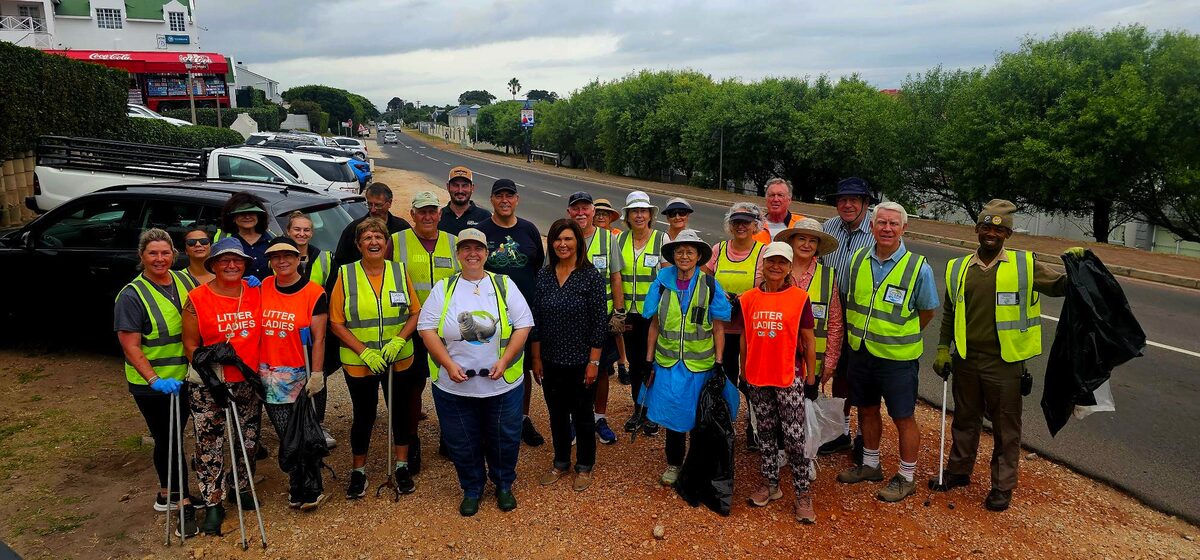

When three of Grabouw’s most prominent businesses decided to roll up their sleeves this Clean-Up and Recycle Month, they didn’t just talk about making a difference; they grabbed their gloves and headed straight to the water’s edge.
In a powerful display of corporate environmental responsibility Two-A-Day, Oude Molen Distillery and Western Cape Fruit Processors joined forces to tackle one of the region’s most pressing environmental challenges – the pollution choking the vital Swannie River.
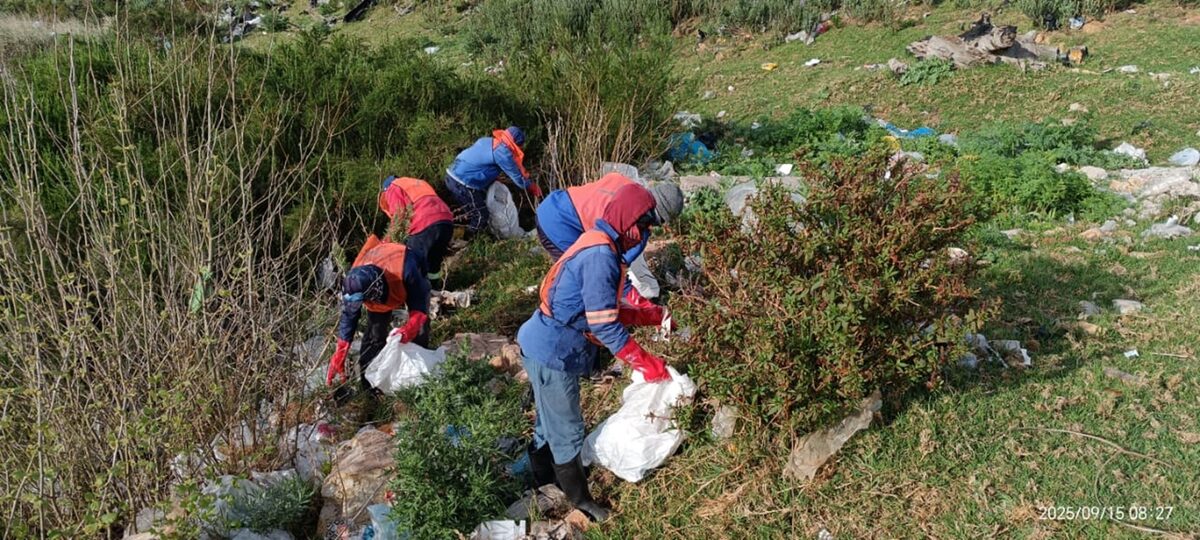
The initiative, which started on Monday 15 September, will run for 14 weeks at a cost of approximately R200 000. Six workers from G&P Transport and Maintenance have been appointed to carry out the clean-up, equipped with protective gear and tools to safely remove waste.
“We cross the river every day on our way to work, and it is heartbreaking to see the plastic, tyres, and even nappies that pollute it,” says Jandré Human, winemaker at Oude Molen Distillery.
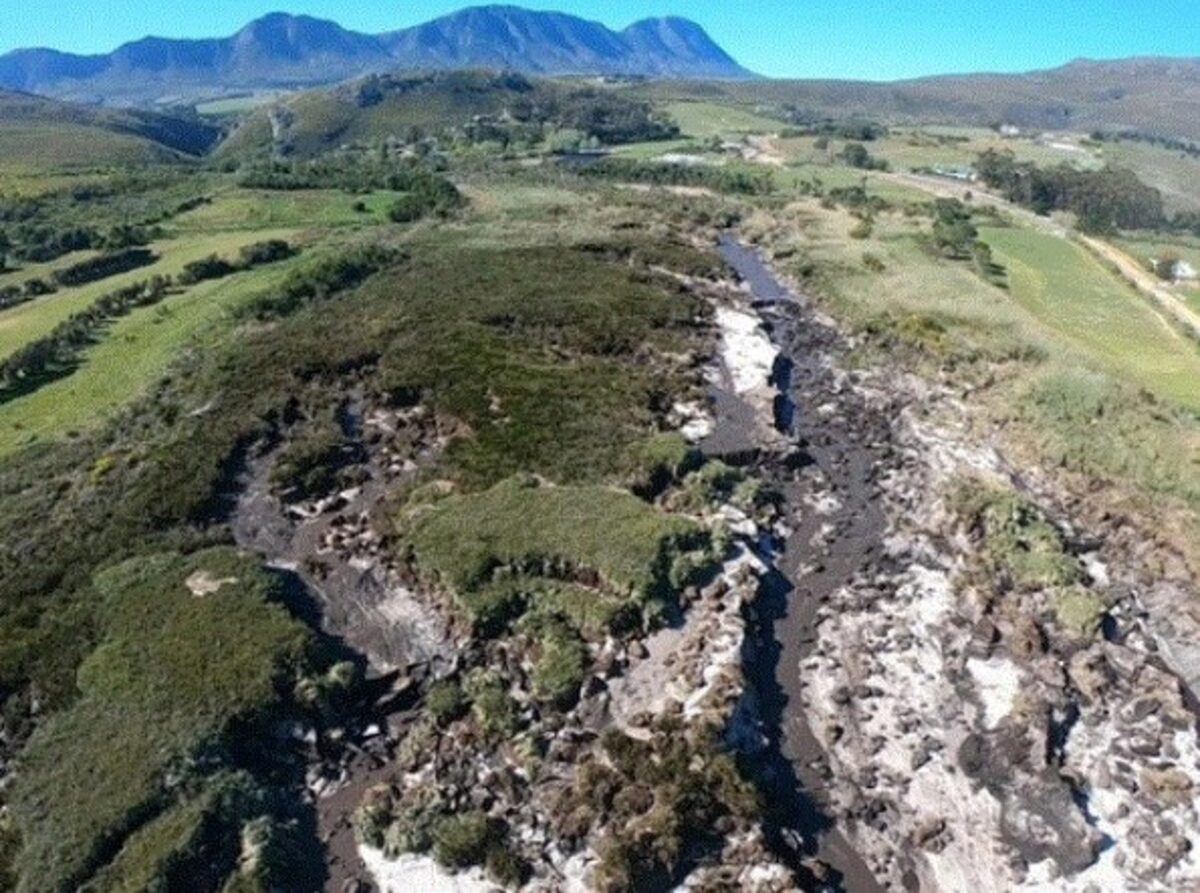
The targeted stretch of river, between Oude Molen and the local pump station, is expected to yield several tons of plastic and other waste. The Swannie River flows into the Palmiet River, which eventually empties into the Atlantic Ocean south of Kleinmond, meaning the project carries broader environmental impact beyond Grabouw.
Last year a smaller clean-up by Oude Molen removed 38 tons of plastic. This year, in a more sustainable approach, collected plastic will not go to landfill but instead be delivered to Beautiful Star Recycling and Projects for resale.
Environmental risk
The pollution poses a significant risk to both the environment and agriculture. Microplastics can find their way into soil, while discarded plastic bags often clog water pumps used for irrigation.
Chris Petzer, Group Operations Director at Two-A-Day, said the project is not only about environmental protection but also about the reputation and well-being of the town itself.
“The accumulation of rubbish, inadequate waste management, and the general lack of tidiness in the town are having a detrimental effect on the image of Grabouw.” He believes cleaner surroundings would have lasting benefits. It is essential for sustaining investor confidence, promoting tourism and fostering community pride.
“Everything that happens in Grabouw impacts our employees, who in turn influence our business. If we lift the standards of the community it will have a direct effect on our people and, eventually, the company.”
Two-A-Day has also called for stronger involvement from Theewaterskloof Municipality. “We have written to our local municipality,” Petzer said, “asking them to play a bigger role in tackling areas where high levels of pollution have become the norm.
“The health of our water sources is incredibly important. Much of our irrigation water comes from the Swannie River, and if we don’t protect it the impact will be felt all the way down to farm level. Our producers depend on clean, good-quality water to grow apples and pears of the highest standard.”
While the river clean-up may feel like a small step it’s something meaningful citizens can do to make a difference, Human believes.
“We hope this initiative inspires other businesses and communities to take action in uplifting the environment. Clearing the river is a short-term solution, but we are already in discussions with the municipality and other stakeholders about long-term measures.”
This collaboration underscores the role local businesses can play in addressing environmental challenges, while highlighting the urgent need for sustainable solutions to protect South Africa’s rivers and farmlands.
“As a shareholder in Two-A-Day and the company responsible for marketing its fruit globally we at Tru-Cape know that healthy rivers and clean water are essential for both the environment and the farming communities who depend on them,” said Roelf Pienaar, Managing Director of Tru-Cape Fruit Marketing. “We are especially proud of the leadership that Two-A-Day is showing in this initiative. It proves that when businesses work together, we can make a real and lasting difference.
“Protecting our natural resources not only safeguards the future of farming but also strengthens the communities and ecosystems that support it.”