
“Everything is different in the south . . . the colours of the earth, the stars in the sky, the smells, the cut of the mountains . . . and the plants . . . the glorious wild scents, colours and textures of the fynbos and its pollinator inhabitants! And yet everything is familiar. My heart is full, I feel at home!”
So said Mary Dillon, internationally acclaimed Irish botanical artist from Kilkenny, Ireland, on her Instagram page shortly after arriving for the first time in the Overberg where she recently presented two botanical painting workshops in Greyton.
“I have been painting for as long as I can remember,” she told Hermanus Times, “but my interest in botanical subjects really came from the fact that my dad was a great gardener.
“From a very young age I grew up walking around the garden with him, watching him plant and all of us enjoying the fruits of his labour.
“At the age of five I moved to a new school where the teacher asked us to paint. I painted a cat and the teacher told me it was a wonderful painting.
“From that moment on I believed I could because she told me I could paint. To this day I thank her for that. I wasn’t any better than anybody else, but she gave me the confidence.”
Dillon has a degree in education and worked as a teacher for 16 years. She said she is pretty much self-taught and had not had formal art training as such until very recent years. During her teaching years she taught art classes to 12- and 13-year-olds.
“I believe if you are trained as an educator you can teach anything.
“By the time I retired I’d had a couple of exhibitions and worked on commissions. I did mainly architectural landscapes and a bit of plant subjects. I had to find my identity again. I realised I was free and had the time and space to paint what I was compelled to paint. More and more I found myself focusing on plant subjects.”
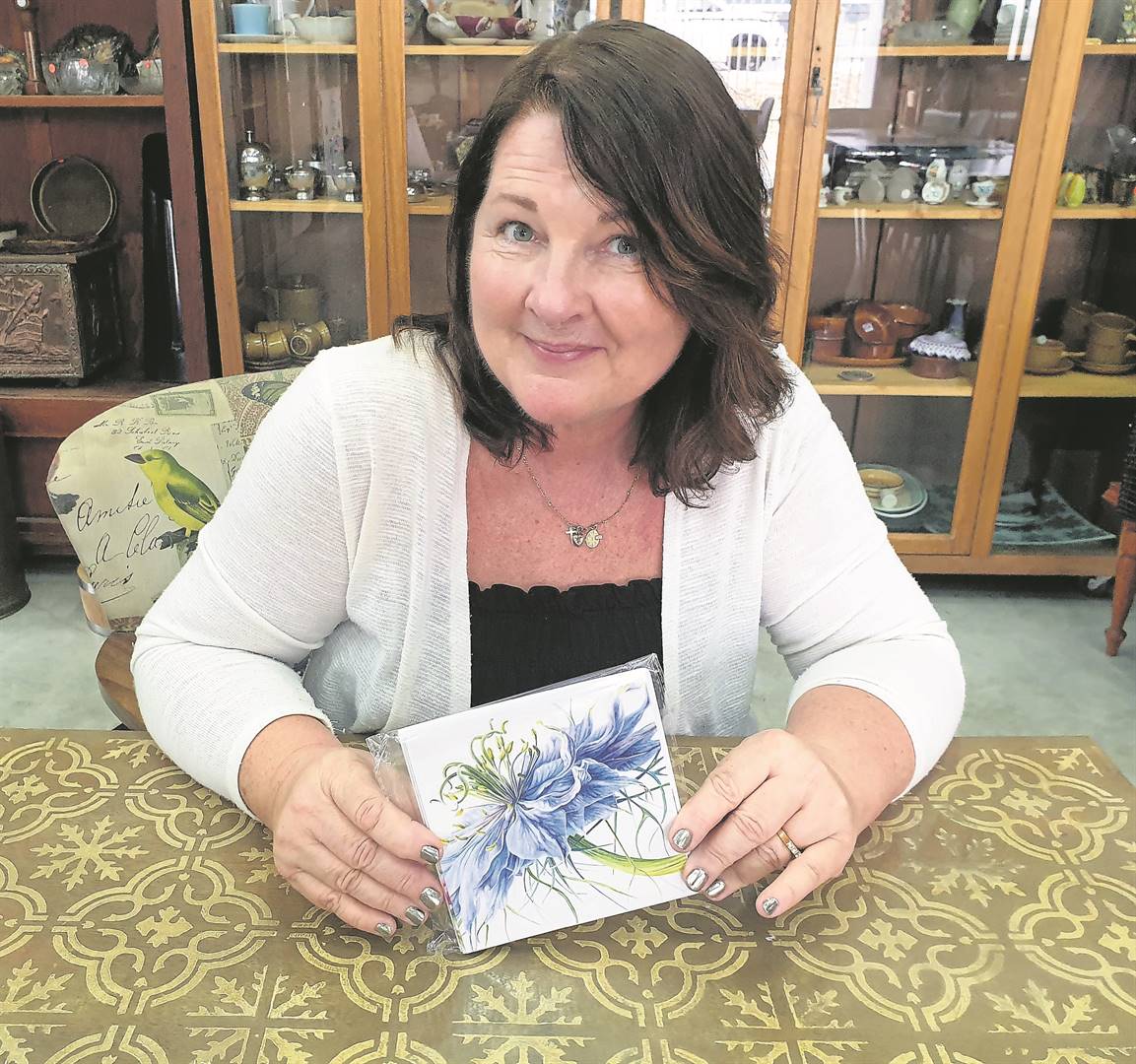
Although she has worked in oils and acrylics, her main passion is watercolour, which she finds challenging.
She always paints from life, making meticulous drawings and colour notes as well as taking many photographs and recording all the nuances of colour.
“It’s almost kind of part of me. In so many ways I find it’s like getting to know a person. It’s all about giving it time and becoming familiar with all the nuances. It has to be true and real and true to science.
“Because of the ephemeral nature of flowers my subject could be fading and dying.
“My work is slow. It takes me many months and some of the changes I like to imbue into the work.”
Initially Dillon painted very large impressive works. That all changed when a friend, a botanist and a science teacher who had lost his sight in one eye, asked her to teach him to paint in water colour.
“He saw the world in a different way and I asked him to help me identify flora. We met regularly and slowly, slowly, the more I looked at plants through a hand lens, the more fascinated I became with detail.
“I realised I wanted to explore the immense beauty that can be found even between the veins of a petal or a leaf.
“That was the conduit to pursue some training to learn techniques and skills. I enrolled in a distance learning course offered by the Society of Botanical Artists in the UK, but I found this way of learning too distant for me. You can learn technique, I believe, not just watching somebody else do it, but only by allowing a tutor to watch you.”
Dillon teaches small classes. “I develop a very systematic approach to teaching.
“I believe that it is important to break down techniques and simplify everything as much as possible.
“Pure botanical illustrations often don’t necessarily require an emotive connection, but I always feel that for the work to be authentic and of the greatest value, to connect with it at every level is important.
“There is also a spiritual connection and hopefully when the viewer sees the work, they will make the connections themselves.”
While teaching in Skiathos, Greece, Dillon met Diddi Johnson of Greyton, who suggested coming to South Africa to teach.
“It has been a privilege to have been invited here,” she said.
“I am very excited about the flora here. The fynbos is incredibly interesting.
“There is something almost familiar about the wildness of it. It sparks my curiosity.”