
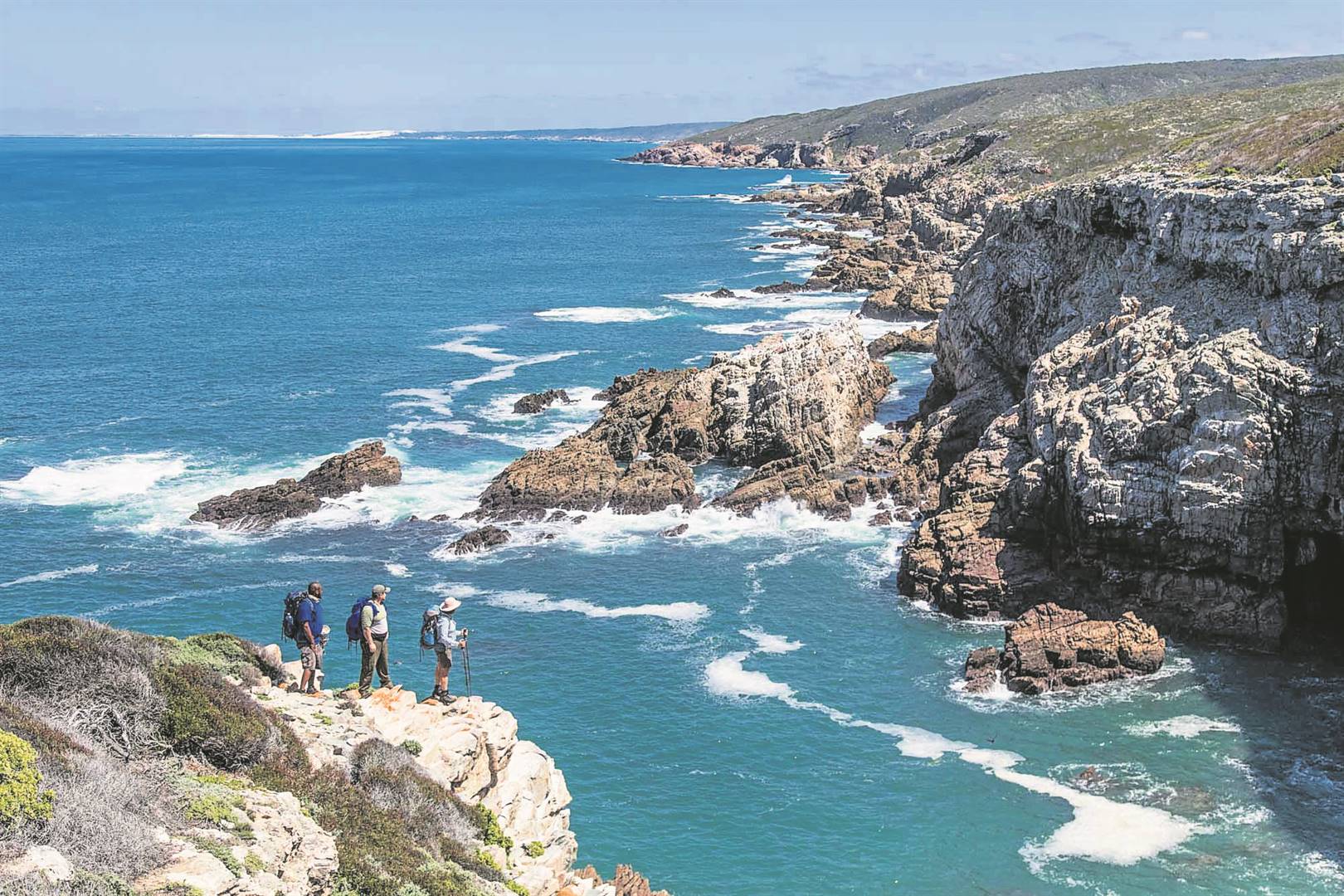
In celebration of Marine Protected Area Day, celebrated annually on 1 August, CapeNature and the National Research Foundation (NRF) were proud to highlight their ongoing efforts to protect marine life through the Acoustic Tracking Array Platform (ATAP) in the Western Cape’s Marine Protected Areas (MPAs).
From 18 to 19 June, a team from CapeNature, including a marine specialist and field rangers, collaborated with the South African Institute for Aquatic Biodiversity (NRF-SAIAB) to perform essential maintenance on ATAP acoustic receivers in the De Hoop MPA. The team was also joined by an ATAP marine technician and a PhD student, ensuring a smooth operation.
ATAP, funded by the Department of Science and Innovation, deploys more than 250 moored acoustic receivers along 2 200 km of South Africa’s coastline, from St Helena Bay in the Western Cape to Ponta do Ouro at the Mozambique border. This extensive network tracks marine animals with acoustic tags, providing invaluable data on their movements and habitat use.
CapeNature’s 6,5-metre vessel Storm Petrel played a pivotal role in this mission, retrieving and deploying receivers in De Hoop and adjacent sites, including the Breede estuary. The operation involved a 130-km round trip from Witsand in the Breede Estuary, navigating challenging conditions with a 28-knot gusting NW wind. Despite these obstacles, the team successfully visited six receiver sites on the first day, using innovative acoustic release technology to retrieve and replace the devices. Unfortunately, one of the acoustic releases was not retrieved. Future recovery efforts will be made for this unit.
Clever acoustic release technology allows NRF-SAIAB researchers to release the deployed receiver at each site from its anchor using surface-based technology.
The following day, the team tackled three additional offshore sites, including the Duiwenhoks Estuary and the remaining receivers in the Breede Estuary, covering 220 km over the two-day operation.
The data collected through ATAP’s network helps MPA managers understand, for instance, how targeted species use MPAs, their migration patterns, and the significance of adjacent habitats such as bays and estuaries. This evidence is crucial for conservation efforts and the expansion of protected areas.