

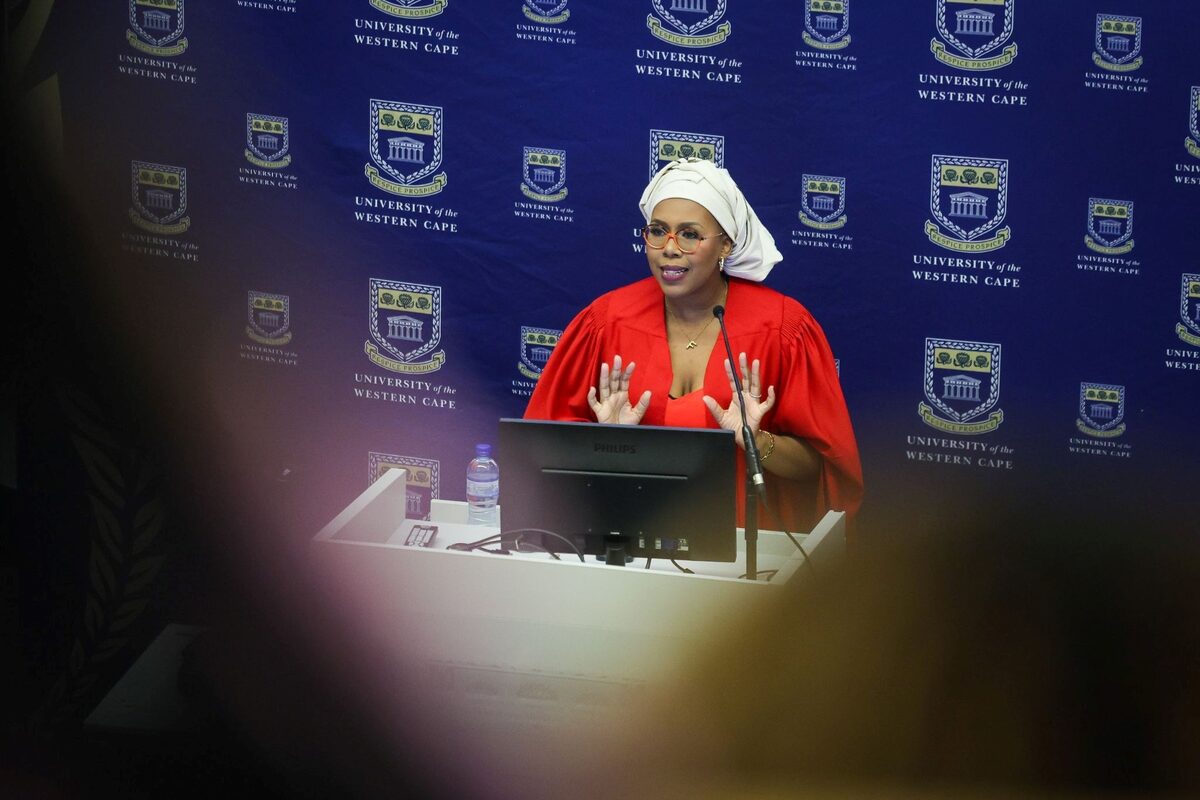
As a schoolgirl in Khayelitsha, she fell in love with drama and dreamed of a life on stage. Today, she is a professor of physical chemistry at the University of the Western Cape (UWC). Professor Fanelwa Ngece-Ajayi did not plan to become a scientist. She wanted to be an actor, until her mother told her there would be no good life in it.
What followed was a journey shaped not by ambition alone, but by the people who stepped in at crucial moments: a mother who insisted on education, employers who paid a university registration fee, and mentors who saw potential she had not yet recognised in herself.
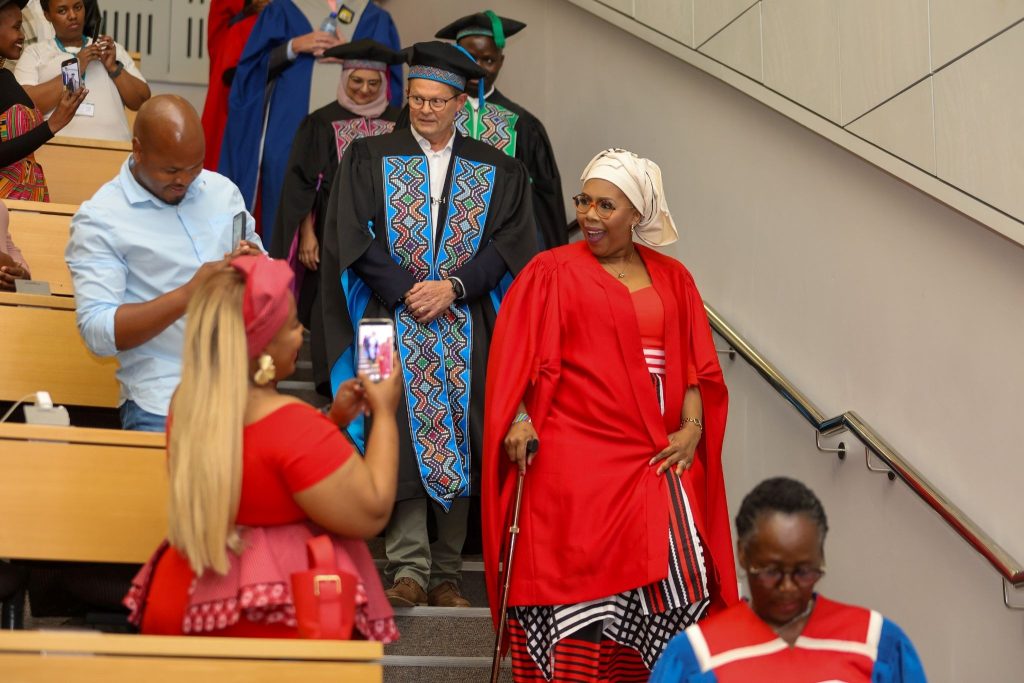
When she delivered her inaugural lecture at UWC in September, she did not begin with her awards or research output. She began with people.”No man is an island,” she said, pointing to the isiXhosa philosophy umntu ngumntu ngabantu, which holds that a person is a person through other people.
“I didn’t get to where I am on my own, but rather with the community.”
Ngece-Ajayi is a C2-rated Professor of Physical Chemistry and Deputy Dean of Research and Innovation in the Faculty of Natural Sciences at UWC. She is one of the lead researchers at UWC’s SensorLab, where her work focuses on green and sustainable nanotechnology, including drug-metabolism sensors.
A mother’s determination
She loved drama at school. A trip to the Baxter Theatre to watch University of Cape Town students perform Shakespeare’s King Lear seemed to confirm the direction her life would take.”I fell in love with it. I thought: ‘Okay, this is the career that I want to do,’” she said.
Her mother was not convinced. “There’s no way that you will have a career or a good life if you continue with this,” she recalled her mother saying.
Her mother was a domestic worker. Her father worked as a security guard before leaving the family. He eventually returned, but by then he was ill and their circumstances had changed. Without someone to look after them during the day, her mother moved Ngece-Ajayi and her brother from township schools to former Model C schools, determined that they should receive a good education.
An act of generosity
University was unfamiliar territory. Her mother had never been to university herself. That is where an unexpected act of generosity changed the trajectory of her life. Her mother’s employers, Janine and Peter Hundemark, knew the family’s circumstances, saw something in her daughter and paid her university registration fee.
It was a crucial intervention, but it came with a responsibility: she should work hard, make the opportunity worthwhile and eventually support her family.
She was already used to making things work. Long before nanomaterials, Ngece-Ajayi worked with her hands. She could braid hair and started a salon at home. On some weekends she worked as a domestic worker, using skills she learned from her mother. The income helped with school expenses and transport, and she continued working at university.
“I knew that my parents needed support.”
That experience would shape the kind of academic and community leader she became.
ALSO READ: UWC lecturer receives commendation at national awards
Finding her place in science
Long before chemistry became her profession, curiosity served her well. She remembers enjoying The Hardy Boys books and how the mystery stories’ investigations were solved, arguably where her passion for science and problem-solving began. She thought about becoming a doctor, but that did not materialise either.
Eventually, chemistry emerged as the discipline in which she found her place. Among her mentors since the third year of her academic journey were Prof Priscilla Baker and Prof Emmanuel Iwuoha. Baker is a prominent UWC scientist and co-head of SensorLab, where her work focuses on analytical and electrochemical approaches to environmental and health-related challenges.
For Ngece-Ajayi, people such as Iwuoha and Baker became part of the academic community that helped her grow from student into researcher. That brings her story back to the idea central to her inaugural lecture: nobody arrives alone.
Science with purpose
Today, her research sits at the intersection of chemistry, health and sustainability. Her work includes developing green nanomaterials for drug-metabolism sensors, with additional applications in water purification, plant enhancement and antimicrobial technologies. Her research into drug-metabolism sensors has focused on technologies relevant to treatments for diseases such as HIV and tuberculosis.
For her, the value of science lies in what happens when discovery leaves the laboratory and engages with society. That principle also explains her commitment to Stem education.
Ngece-Ajayi founded AmaQawe ngeMfundo to promote and enrich Stem education in marginalised communities, rooted in an issue she knows personally: talented young people can have the ability to succeed but lack the resources, exposure or support needed to see themselves in scientific careers.
UWC has reported her goal of building the next generation of scientists in communities including Khayelitsha, Mitchells Plain and Bonteheuwel. As a young woman she had someone help her open the door. Now she is trying to open doors for others.
ALSO READ: UWC professor: Why do African entrepreneurs fail despite leading in start-ups?


You must be logged in to post a comment.