

In a town which often feels like it is bursting at the seams the demand to develop Stellenbosch continues at a staggering rate.
According to Stellenbosch mayor Jeremy Fasser, the municipality receives around 1 200 applications for developments per month. Fasser was part of a panel discussion as part of the Diskoers series at the Toyota Woordfees last Friday (9 October).
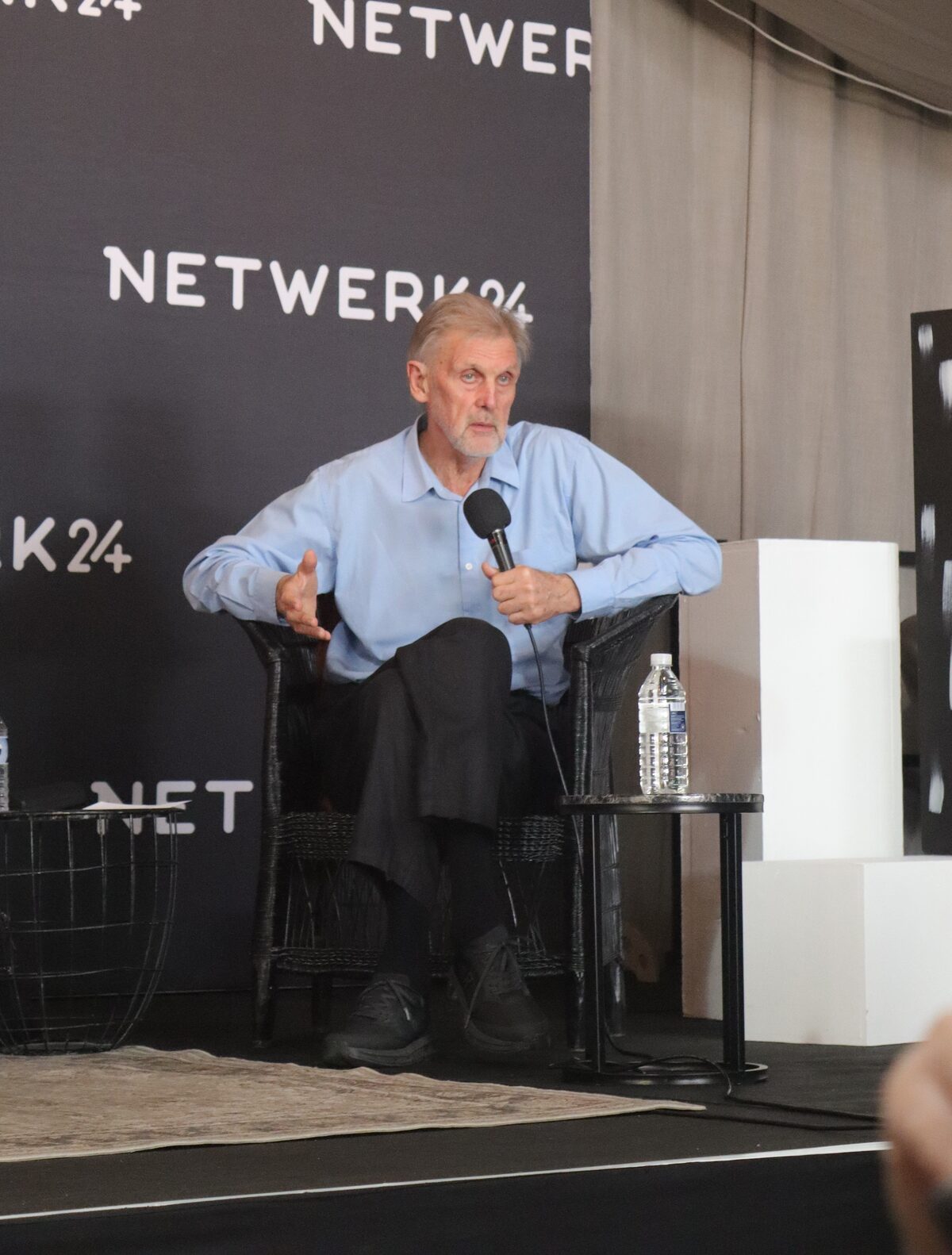
The discussion “Stellenbosch Korridor: Hoe gaan die dorp oor 30 jaar lyk?”, included Nicolette van den Eijkel, Chief Director: Facilities Management for the Stellenbosch University (SU), Fasser and Hannes van Zyl, the mastermind behind the Adam Tas Corridor project. The discussion was led by Kabous Meiring.
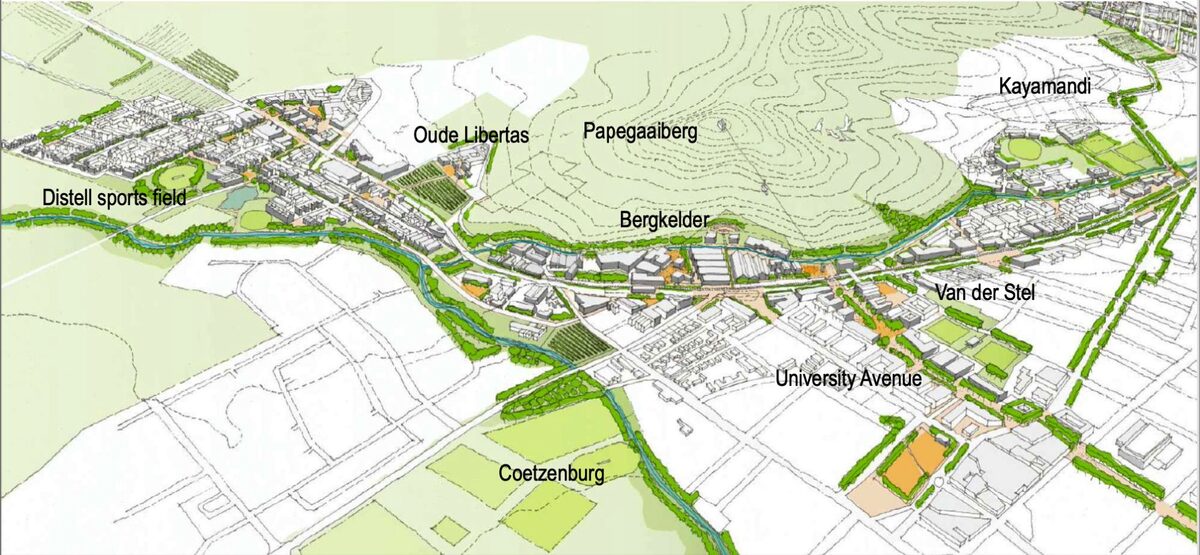
The Adam Tas Corridor is a plan to rework 375 hectares of underutilised industrial land into an inclusive and sustainable city district which will contain residential neighbourhoods, university areas, sport fields, and cultural precincts.
Plan created
Van Zyl explained the idea for the Corridor came after a fire tore through Kayamandi taking out more than 1 400 shacks in 2013.
“By the next week most of those shacks had been rebuilt and I thought that same energy could be utilised in a much more sustainable way and the plan began,” he explained. With the help of partners including the Stellenbosch Institute for Advanced Study (STIAS), Kelvin Campbell, Stephen Boshoff, and other STIAS fellows, together with officials and residents, and broad consultation with over 40 organisations from government, academia, business, and civil society, the plan was created.
Van den Eijkel said the integrated town planning is an important part of the Corridor, also for the SU. “We know that 90% of our staff come from outside of Stellenbosch so if we can provide accommodation for people locally that is very important,” she said.
ALSO READ: Stellenbosch’s student housing demand shows no sign of easing, expert says
“It is very important to understand that the university is here forever and perhaps the developers are not going to be here in 10 years time but that our view is that we are planning for a 100 more years.”
Part of the Adam Tas Corridor development seeks to connect neighbourhoods from east to west and north to south with walkable routes, cycle paths and shared public space. The project now forms part of the Stellenbosch Municipality’s Local Spatial Development Framework. According to Van Zyl this buy-in from the municipality is a step closer to making the Corridor a reality.
Urban renewal
However, the success of the development means getting the support of all the relevant land owners. Van Zyl believes this partnership and long term planning will be create value for landowners of the next three decades.
“It will mean less duplication and by working together there will be a better balance for the town. Working together also means reducing red tape and having early dialogue will mean not impairing each other. There is a signed agreement between parties with the promise to work together [on the development],” he added.
Along with the urban renewal, business opportunities and green spaces the development is set to create, it also seeks to help address the housing shortage.
ALSO READ: Stellenbosch lei met dié huise
Affordable housing close to work, education and transport is what is planned through a balance student accommodation and homes for working residents and families.
The municipality seeks to regulate housing developments through its Inclusionary Zoning Policy. This policy will force developers to set aside 30% of their housing developments for subsidised and gap housing. Where this housing will be and what form the housing takes is not prescribed but it must be within the Corridor’s boundaries.
The expectation is for the Adam Tas Corridor to ultimately become a blueprint for urban development.
The team behind the project entered the 7 Wonders Future Cities The 7 Wonders Future Cities competition, which celebrates innovative urban visions shaping. According to the team the Corridor embodies everything the competition stands for with a city designed for all its people, guided by ecological principles, powered by smart systems, and committed to social inclusion.

You must be logged in to post a comment.